Tuesday, January 22, 2019

Tulip Tree Information, Problems, and Care

Healthy tulip tree liriodendron tulipifera

Liriodendron tulipifera also known as tulip poplar is neither tulip nor poplar. This species is a relative of the magnolia tree and is unbelievably easy to care for.

A native North American species, L. tulipifera is the state tree of multiple states, unique in its rapid rate of growth, and exceptional in its beauty. The tulip tree should be strongly considered for mid-sized and large landscapes.

72tree.com gathered tulip tree information, problems, care tips, and answers several frequently asked questions.

Tulip Tree Information

Liriodendron tulipifera is a blooming tree species native to eastern North America. The tulip tree is among the tallest of the eastern US species, is long-lived, and a favorite specimen tree in landscaping.

Tree Name – Yellow poplar
Scientific Name/Species – Liriodendron tulipifera
Family – Magnoliaceae
Genus – Liriodendron
Nickname(s) – Tulip tree, tulipwood, American tulip tree, tulip tree, tulip poplar, whitewood, and Oonseentia (in the native Miami-Illinois language).
State Tree – Indiana, Kentucky, and Tennessee.

Lifespan – Can live up to 500 years or more when planted in optimal conditions.
Type – Deciduous.
Hardiness Zone(s) – from 4 to 9
Soil Requirements – Prefers well-drained, slightly acidic, moist, rich, and fertile soil with full sun exposure.
Planting Spacing – 35ft between trees.
Watering Requirements – Regular when young or planted. Minimal thereafter.

Height – 80 to 100ft on average (can reach nearly 200ft under optimal conditions)
DBH – 4 to 6ft.
Crown Span – 30ft or more at maturity (can be conical or oval in shape).
Root Spread – Yellow poplar roots will tend to match the growth of the tree. If the tree is 100ft tall by 40ft wide, its roots will likely grow 100ft deep and 40ft wide. In some cases, the roots may extend much farther outward in search of water.
Uses in Landscaping – A magnificent specimen, screen, or large shade tree, and is better suited for more spacious landscapes.
Winter/Fall Colors – Yellow before leaf-drop in the fall.

Tulip Tree Problems

Healthy tulip trees are incredibly resistant to insect infestations and disease. However, when your tree is stressed by drought conditions, soil compaction, soil nutrient depletion, or poor pruning, insects and diseases can successfully attack it.
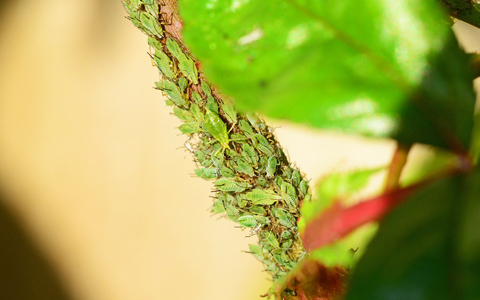
Tulip tree liriodendron tulipifera aphid infestation

Pests – Tuliptree scale, yellow poplar weevil, and aphids, in the spring and summer months.
Disease – Powdery mildew, verticillium wilt, and canker.

Major Disease Threat – Verticillium Wilt

Symptoms of Verticillium wilt are premature foliar chlorosis and necrosis, and discoloration in both stems and roots. Symptoms of wilting become more apparent on warm or hot days.

This pathogen attacks a potential host by colonizing its roots and spreading throughout the roots, trunks, and stems. Due to this, one of the best forms of disease management is to encourage the healthy growth of your tree.

Tulip Tree Care Tips

There isn’t much you will need to worry about as long as your tulip tree is:

• Within its hardiness zone (4-9).
• Growing in partial shade to full sun.
• Planted in moist, well-drained soil with a pH of 3.7 to 6.5.
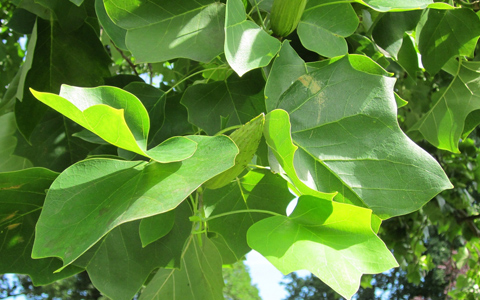
Tulip tree liriodendron tulipifera leaves

Pruning should be done once the tree has entered dormancy in late fall and early winter. However, when cankers are detected, prune out the affected area including the canker (all the way to the trunk if needed).

If the canker is located on the trunk, or when other irregularities are detected, call on a professional tree service or arborist to evaluate the tree and offer guidance.

People Also Ask

Question: Are tulip tree roots invasive?
Answer: No. If they are planted far from structures, walkways, or driveways, and the roots are readily able to absorb moisture.

Answer: Yes. As with all tree species, the purpose of roots is a never-ending quest for water and nutrients. When they are deprived, they will spread, and make their way underneath foundations and other structures.

For more on the destructive capabilities of tree roots, read 72tree.com/tree-roots-buckling-concrete-driveway/

Question: What is tulip poplar wood used for?
Answer: Lumber from tulip poplars is commonly used for fencing, siding, flooring, and some furniture.

Question: Can poplar wood be painted?
Answer: As this wood has a particularly straight grain, paints adhere to it quite well. Stains, on the other hand, have a tendency to blotch and usually require that a conditioner be applied before application.

Question: Is poplar as strong as oak?
Answer: No. While considered to be a hardwood, the fast growth rate of the tree produces a softer/weaker wood making it easy to work with.

Question: Do tulip trees bloom every year?
Answer: Yes. However, this species only produces its first blooms after nearly 20 years of growth. Thereafter, it will bloom annually in late spring or early summer.

Tulip tree liriodendron tulipifera blooming flower

Question: Are tulip trees messy?
Answer: Yes. Like all deciduous tree species, they lose their foliage in the fall. If subjected to drought conditions, tulip trees may drop their foliage prematurely in late summer. Not to mention that when the tree blooms, the flower petals will litter the ground around the tree.

Question: Can tulip trees be planted in Georgia?
Answer: Yes. The entire state is within the required hardiness zone for healthy tulip tree growth. For more on this and other great landscape trees, read 72tree.com/5-popular-alpharetta-ga-shade-trees/

Liriodendron Tulipifera is a Perfect Landscape Specimen

Although sometimes called “tulip” or “poplar,” or both, the Liriodendron tulipifera is neither of the two. This magnificent relative of the magnolia rapidly grows tall and full, making it highly desirable as a landscape specimen tree.

In this article, you discovered tulip tree information and specifications, its problems, how to care for them, and answers to frequently asked questions.

If the tulip tree isn’t a part of your landscape, you are missing out on a fast growing and beautifully shaped shade or screen tree. They are easy to plant and require minimal care efforts.

Sources:
https://extensiongardener.ces.ncsu.edu/extgardener-tulip-poplars-for-large-and-small-landscapes/
http://ipm.ucanr.edu/PMG/GARDEN/PLANTS/tuliptree.html
https://extension.psu.edu/tulip-poplar-diseases
http://www.apsnet.org/edcenter/intropp/lessons/fungi/ascomycetes/pages/verticilliumwilt.aspx
http://hort.ufl.edu/database/documents/pdf/tree_fact_sheets/lirtula.pdf

This article was first published on: http://www.72tree.com/tulip-tree-information-problems-care/

Thursday, December 20, 2018

Pomegranate Tree Information, Questions and Answers

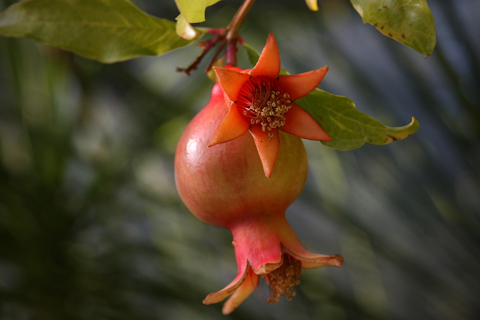
Tree cutting service Alpharetta Ga pomegranate fruit

One of the healthiest fruits you can consume comes from the Punica granatum (pomegranate) tree. But how much do you really know about this amazing tree species?

Pomegranate trees produce the incredible pomegranate fruit and have been cultivated for several millennia. Relatively easy to care for, this tree, its flower, and fruit all have profound historical and cultural significance.

www.72tree.com gathered pomegranate tree information and history, care tips, and answers several frequently asked questions.

Pomegranate Tree Information

Pomegranate is a tree species native to the region of Iran to Afghanistan and Pakistan to Northern India. Today, the species is cultivated throughout the Middle East, Northern and Tropical Africa, Asia, the Mediterranean Basin, and parts of the Southwestern United States.

Tree Name – Pomegranate
Scientific Name/Species – Punica granatum
Family – Lythraceae
Genus – Punica
Nickname – Winter Jewels, Red Ruby, and Chinese Apple

Pomegranate care tree service Alpharetta Ga

Lifespan – Can live up to 200 years or more when planted in optimal conditions.
Type – Deciduous.
Hardiness Zone(s) – from 8a to 13a
Soil Requirements – Versatile, prefers well-drained rich, fertile soil with full sun exposure.
Planting Spacing – 5 to 6ft
Watering Requirements – Regular when young or planted. Minimal thereafter.

Height – 15ft on average. Can reach 30ft under optimal conditions.
DBH – NA
Crown Span – 8 to 10ft or more at maturity.
Root Spread – Wide and shallow (10-25ft from the trunk and 2 to 3ft deep)
Uses in Landscaping – Highlight tree, border or division, and addition to orchards.

Winter/Fall Colors – Yellow before leaf-drop in the fall.

Pests – Healthy pomegranates are incredibly resilient to insect attacks but may see aphids, whiteflies, mealybugs, and thrips in the spring and summer months. Neem oil or other organic insecticides can be used to control them easily.
Disease – Keeping your pomegranate tree healthy will help it avoid or fight rot, anthracnose, and fungal wilt.
Major Disease Threat – Heart Rot

Pomegranate Origin and History

Originating from Iran to the Himalayas in northern India, Punica granatum (pomegranate) has been grown for several millennia, and was cultivated and naturalized over the extent of the Mediterranean region.

It wasn’t until 1769 that Spanish settlers introduced the first pomegranate specimen to California. Two and a half centuries later, pomegranate trees can be found throughout the US in a commercial capacity as well as in private landscapes and potted in our homes.

Armenian culture sees the pomegranate as a semi-religious icon. A symbol representing abundance, marriage, and fertility, the fruit and its juice are used with Armenian food, heritage, and wine.

Tree care Alpharetta Ga pomegranate fruit

As the fruit contains numerous seeds, it is perceived to symbolize fruitfulness. Thus, fostering the tradition to eat the fruit on Rosh Hashana. Besides several mentions in the Bible, some believe the fruit has 613 seeds corresponding to the 613 commandments found in the Torah.

Care Tips for Pomegranate Trees

Pomegranate trees do not require much attention. They are very adaptable to their environment and remarkably resilient to infestation and illness when healthy.

The following tips will assist you in keeping your pomegranate tree(s) healthy and thriving.

Planting Location and Soil – Pomegranates will adapt to nearly any well-drained soil condition regardless of its pH. As long as your specimen receives full sun and is protected from temperatures below 40 degrees Fahrenheit, it should thrive.

Watering – Pomegranate roots grow within the first 2 to 3 feet of soil and do not require deep watering. Keep the soil moist for the first 8 months to 1 year, and again when the tree is bearing fruit.

Tree removal Alpharetta Ga pomegranate watering

Once the tree’s roots are established, you can cut back to 2 waterings per month in the drier months. By this time though, your tree will be able to tolerate drought conditions.

When the tree is bearing fruit, you can prevent the fruit from splitting by keeping the soil moist.

Fertilizer – After planting a pomegranate tree, you do not need to fertilize it for a full year. The use of organic mulch (manure or compost) will suffice.

Thereafter, each spring, you can apply 2 ounces of nitrogen granules. Increase the dose 1 ounce for each subsequent year.

There are fertilizers specially formulated for fruit trees which may be used as well.

Pruning – Pomegranate trees produce flowers on new growth and can be pruned to remove damaged or dying branches, to shape the tree, or to remove suckers, dead wood, and unwanted growth.

The best time to prune your tree is late winter or early spring before the buds break, and when the threat of frost has subsided.

Be cautious of over-pruning, as it will reduce the amount of fruit your tree is able to produce.

Emergency tree removal Alpharetta Ga pomegranate flower

Frequently Asked Questions

Question: Do All Pomegranates Have 613 Seeds?
Answer: No. While some will debate that all pomegranates have this number of seeds, it would be quite easy to prove the contrary.

Question: What Are Pomegranate Seeds Called?
Answer: Arils.

Question: Are Pomegranates Anti-Inflammatory?
Answer: Studies show that pomegranates have excellent anti-inflammatory properties.

Question: What Vitamins Are in Pomegranate Seeds?
Answer: Pomegranates have B vitamins including folate, vitamin C, vitamin K, and potassium.

Question: Are Pomegranates an Antioxidant?
Answer: They have high contents of polyphenols and are renowned for their antioxidant capabilities.

Alpharetta Ga pomegranate tree care tips

Question: How Long Does It Take for Pomegranate to Fruit?
Answer: Pomegranate trees can take up to 7 months for their fruit to fully mature. The tree itself will only bear fruit after two to three years of hearty growth.

Question: When Do Pomegranate Fruits Ripen?
Answer: Pomegranate fruit in the northern hemisphere typically ripens from September to February, and from March to May in the southern hemisphere.

Pomegranate Trees and Fruit for Your Landscape and Health

Cultivated for thousands of years, the pomegranate tree and its fruit have been gracing landscapes and providing powerful antioxidants through vitamin-rich seeds for generation after generation.

In this article, you discovered the history of the pomegranate tree, how to care for them, and the answers to many common questions about the species.

Growing a pomegranate tree is easy when compared to other fruit trees, and should be a part of your landscape. With a little patience and care, you could have ripening pomegranates in under three years.

Sources:

https://www.science.gov/topicpages/t/total+pomegranate+tannin
https://www.crfg.org/pubs/ff/pomegranate.html
https://hgic.clemson.edu/factsheet/pomegranate/

This article was first published on: http://www.72tree.com/pomegranate-tree-information-questions-answers/

Wednesday, November 28, 2018

Preventing and Eliminating Christmas Tree Bugs

Christmas tree bugs Alpharetta Ga

The Christmas tree is the pinnacle of holiday decorating but can also be a nightmare when bugs hitch a ride on the tree into your home.

Infested Christmas trees present a series of problems for the homes and neighborhoods they decorate. Pest control and prevention are essential measures when putting up a live tree for the holidays.

72tree.com collected information on the bugs that can be found on Christmas trees, how to prevent the buying of an infested tree, eliminating any insects found on the tree, and how to properly dispose of the tree.

Bugs on Christmas Trees

When you go to your local Christmas tree lot, keep in mind that just a few days prior, those trees were cut down from a Christmas tree farm or a forest.

Insects may have nested in or laid eggs on these trees. The following are some of the insect species you may encounter living or hatching in your Christmas tree:

Christmas tree farm bug prevention

• Aphids
• Spiders
• Bark Beetles
• Mites
• Scale
• Needle Scale
• Mantises
• Spotted Lanternflies
• Sawfly
• Adelgids
• Stink Bugs

Note: Store-bought wreaths and swags made from live tree stems may travel thousands of miles from where they originated (potentially exposing your ecosystem to a new or invasive insect species). During the manufacturing and packing processes, bugs and the eggs they lay can easily be overlooked.

How To Prevent Bugs on your Christmas Tree

You can prevent bringing bugs into your home on a Christmas tree by following a few easy steps:

Christmas tree selection Alpharetta Ga

Right Time to Shop – Do not shop for a Christmas tree at night. It is easier to spot insects and eggs during the daytime.

Inspect the Under Side of Branches – Lay the tree down and get an up-close look at the underside of the branches and the trunk. Pay particular attention to the lower branches. You are looking for:

• Visible Insects
• Red or Brown Dots (Mites)
• Clusters of Eggs (Mantises and Lanternflies)
• What Appear to Be Snowflakes (Adelgids)
• White or Red Dots on Needles (Scale)
• Brown Cocoons (Sawfly)
• Small Holes in Trunk (Bark Beetle)
• Sawdust Trails (Bark Beetle)

Let It Stand – Attach the base and let the tree stand in the garage for a day or two. As a preventative measure, apply neem oil or insecticidal soap to the tree before moving it inside and decorating it.

How To Get Rid of Christmas Tree Insects

One of the most common insects found on Christmas trees is aphids. Killing aphids and other insects can be accomplished by spraying the tree with non-toxic neem oil or a homemade insecticidal soaps. Read more about killing aphids.

Aphids on Christmas tree Alpharetta Ga

For the most part, newly hatched insects and spiders quickly expire from desiccation (they dry out). However, there are those that do survive.

Beetles, mantises, spotted lanternflies, and sawflies can leave the tree and potentially make their way outside. Again, the application of neem oil and insecticidal soap can be used to control these insects.

If you spot insects or eggs on your tree, DO NOT use commercial aerosol bug sprays. There is no necessity to expose yourself and your loved ones to these harsh chemicals. And, as many of them are flammable, you risk having the tree and your home go up in flames.

For pests that have fallen to the floor or are on your furniture, avoid stepping on them or crushing them (they can leave stains, and some insects have a putrid smell).

Use a vacuum cleaner that doesn’t have a beater bar to suck them up. Then treat the bag or the receptacle with neem oil or insecticidal soap before disposing of them.

How To Dispose of a Christmas Tree

To help preserve the ecosystem in your region, avoid placing the used tree on brush piles or compost heaps. Invasive insects and diseases are able to escape into landscapes and neighboring forests, becoming established, and upsetting the native ecosystem.

Christmas tree disposal Alpharetta Ga

When you take steps to properly purchase, treat, and dispose of a Christmas tree, these risks are dramatically reduced.

Many municipalities and counties nationwide have pickup programs established to retrieve your tree at curbside and properly dispose of it.

If you miss this service or it isn’t available, you can take the tree to a solid waste facility, dump, or landfill. This will keep any pests that may remain in the tree from spreading.

Bug-Free Christmas Tree for the Holiday Season

An infested Christmas tree inside your home probably wasn’t on your wish-list for this holiday season. When bugs hitch a ride into your home, you need to know how to handle them efficiently.

From this article, you have discovered which bugs can be found on a Christmas tree, what to look for when purchasing the tree, how to eliminate any bugs on the tree, and how to properly dispose of the tree once the season is over.

Your home, neighborhood, and neighboring forest are all at risk when the poor management of a Christmas tree infestation allows foreign or invasive insects to disrupt a native ecosystem. Pest control and prevention should be one of the main concerns of a live tree in your home for the holidays.

Sources:

https://hortnews.extension.iastate.edu/insects-christmas-trees
https://christmastrees.ces.ncsu.edu/badbugs/
https://extension.unh.edu/resources/files/resource000986_rep2299.pdf
https://aces.nmsu.edu/ces/yard/2000/122300.html

This article was first published on: http://www.72tree.com/preventing-eliminating-christmas-tree-bugs/

Monday, October 22, 2018

Killing Aphids

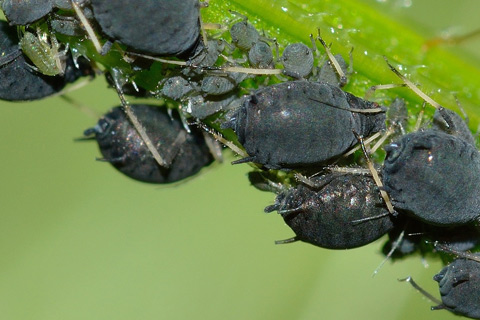
Tree and plant aphid infestation Alpharetta Ga

Disgusting aphids are a severe problem that can destroy your landscape. During an infestation, what appears to be a black tar on your foliage is actually a fungus growing in aphid excrement. The more of this you see, the bigger your problem is.

Aphids can cause the eventual death of your plants and trees, both indoors and outdoors. Upon detection of an infestation, treatment should begin immediately, and only end when all signs of the pest are gone.

In this article, 72tree.com answers some common aphid questions, and offers three easy methods to control them.

How to Get Rid of Aphids

Getting rid of your aphid problem starts with observing how big of a problem you have, determining which actions to take, and following up to ensure the problem is over.

Observation – In many aphid infestations, you may notice the presence of ants. These ants are not attacking the aphids, they are cultivating the honeydew excrement which they produce.

Aphid infestation ants colonize for honeydew

If this is the case, locate the ant trail(s) and treat the ant problem simultaneously with the aphid problem. You will see below that these three treatments work well for both insects.

Action – The following are 3 simple solutions that eliminate aphids without the use of commercial insecticides.

1 – Insecticidal Soap – The ingredients are:

• Liquid dishwashing soap (Dawn, Ivory, etc. but not the special formula varieties)
• Vegetable oil (corn, canola, sunflower, etc.)
• Warm water (filtered or soft water)

Step 1 – Mix 1/2 cup of vegetable oil with 3 Tbsp of dishwashing soap in a measuring cup and mix well.

Step 2 – Pour the mix into an empty (clean) gallon container and fill it halfway with warm water.

Step 3 – Shake the mixture well and fill a spray bottle with it. Keep the remainder of the mixture in a cool, dry place until the next use.

Application – In the early morning or late afternoon, spray the mixture directly on the aphids and ants (if present), you will also spray the area around the infestation, and along the ant trails.

Apply the mixture weekly in the same way for three weeks, or until the pests are eliminated.

2 – Neem Oil – Neem oil is a pungent vegetable oil derived from the fruit and seeds of an evergreen tree called Neem.

Pure Neem oil can be purchased at your local gardening center and comes ready for use.

Application – Again, in the early morning or late afternoon, spray the oil directly on the aphids and surrounding areas.

When sprayed along ant trails, Neem oil is very effective in repelling many species of ants. This is accomplished by disrupting the pheromone trails ants leave for others to follow.

Aphid infestation Alpharetta Ga and ants

Apply on a weekly basis until the ants and aphids are no longer visible.

3 – Vinegar Spray – The ingredients are:

• Vinegar (white or apple cider)
• Water

Step 1 – Mix equal parts of vinegar and water together in a spray bottle.

Application – In the early morning or late afternoon, spray the water and vinegar mixture directly on the infestation and surrounding area.

When sprayed in the affected area and along the ant trail, this solution works well to repel the ants and disrupt their pheromone trail.

Apply weekly until the infestation has been eliminated.

For treating other insect infestations, visit this link http://www.72tree.com/using-dormant-horticultural-oil-treat-tree-insect-infestations/

People Also Ask

Ladybug predator aphid infestation Alpharetta Georgia

Q: Why Do You Apply Insecticides in the Morning?
A: Insecticides and insect deterrents are applied in the early morning or late afternoon to avoid overheating the foliage in direct sunlight.

Q: How Long is the Life of an Aphid?
A: Depending on the species and environment, aphids live from one week to forty days.

Q: How Long Do Aphid Infestations Last?
A: As aphids are able to reproduce rapidly, infestations can occur relatively quickly and may last until the death of the host (without treatment).

Q: What Insects Eat Aphids?
A: The most beneficial predatory insect of aphids is the ladybug. Plant marigolds, sunflowers, dill, and daisies to attract ladybugs, lacewings, and other beneficial insects. Also, consider buying and releasing ladybugs directly into your garden.

Q: Do Ants Eat Aphids?
A: No – Ants cultivate and eat aphid excrement (called honeydew) which is produced after the aphids consume the sap from plant and tree foliage.

Q: What Is the Black Film All Over the Leaves?
A: During an aphid infestation, the black tar-like substance on the foliage is actually a fungus known as “sooty mold” growing in the honeydew (aphid excrement).

Sooty mold on vegetation during aphid infestation in Alpharetta Ga

Keep Your Landscape and Home Aphid Free

With the ability to quickly multiply and infest your landscape, aphids can cause the decline and eventual death of your plants and trees.

In this article, we’ve answered common “aphid” questions, you’ve learned to identify an aphid infestation and take action. You now know how to use three effective control methods and how to attract beneficial insects to your landscape.

By not taking action against an aphid infestation, you are leaving your plants and trees vulnerable to other insect infestations and disease which can kill them even faster.

Sources:

https://www.pestworld.org/news-hub/pest-articles/six-steps-to-an-ant-free-home/

This article was first published on: http://www.72tree.com/killing-aphids/

Monday, September 24, 2018

My Neighbor’s Tree Fell on My House, Now What?

Neighbors tree fell on my house Alpharetta Ga

When your neighbor’s 100-foot tree crashes down onto your house, there is much to be done to get life and your home back to normal. When the adrenaline and nerves settle, you’ll need to know what to do next to quickly and safely resolve the situation.

Within greater Atlanta, trees fall pretty frequently. When one lands on a house, immediate action must be taken to prevent further damage and determine who is responsible.

Neighbor’s trees that have fallen on homes is something 72 Tree service has had more than 45 years of experience in mitigating, and in this article lay out exactly the steps and factors you should consider.

What To Do When Your Neighbor’s Tree Falls on Your House

Similar to a fire or flood, it should be treated as an emergency when a tree crashes down on your home. Fast action is required, and the following steps will help you keep everyone safe while getting your home and life back to normal:

1 – Evacuate the property! Get everyone (including pets) out of the house. Gas, water lines, and electrical systems can be severely damaged creating a fire, explosion, or electrocution hazard.

If the tree damaged any vital home systems, and it is not safe to return to the home, get your loved ones to a safe location until after the repairs.

2 – Call 9-1-1 or Respective Emergency Services, to report the incident if your neighbor’s tree:

• Inflicted any injuries or caused any fatalities

• Crossed power lines or damaged utilities before falling on your home, or

• Threatens pedestrians or is blocking the flow of traffic

In such cases, an emergency dispatcher is able to mobilize Medical Services, utilities, a power company unit, or other necessary departments to ensure your and the public’s safety.

Visit 72tree.com/power-line-interfering-trees-city-alpharetta-ga-ordinance/ for non-emergent interfering power lines.

3 – Turn the power off immediately if you smell gas, or water is coming through the roof or from broken pipes. Next locate and turn off the gas and/or water main.

This is a dangerous situation because a spark can cause an explosion from a gas leak, or you could be electrocuted if water comes in contact with live electrical wires.

4 – Document everything that is taking place! Take pictures of the tree and all related damages. This will help you in supporting your case and recovering your settlement when filing an insurance claim.

5 – Contact your homeowner’s insurance provider to report the situation, and follow their instructions (not doing so will potentially void your policy).

6 – Contract a 24-hour emergency tree removal company and certified arborist to remove the tree, and assess whether or not the tree was diseased, dead or dying before it fell.

Depending on the location of the fallen tree and degree of difficulty in accessing it, be sure to contract a tree service that has the skills, experience, tools and equipment (bucket truck, crane, etc.) to get the job done efficiently and safely.

Watch this Roswell removal team to see the correct process of using a crane to remove a fallen tree.

7 – Contract a 24-hour roofing company to inspect damages, tarp, and repair or replace your roof.

8 – Contract a 24-hour plumber if you have any visible leaks or broken pipes that must be repaired. Otherwise, during regular hours contact a plumber to examine your home’s plumbing system for any unseen or concerning collateral damage.

This is an essential step. The jolt of a tree crashing into your home has the potential to disturb and damage the plumbing throughout, and even on the opposite side of the house.

9 – Contract a 24-hour emergency water removal company if water is flooding your home from a storm or broken pipe(s). It is a top priority to cleanup and extract any water from causing further structural damage, or causing a future issue with mold.

What You Need To Know If Your Neighbor’s Tree Falls on Your House

Your House – When your neighbor’s tree falls on your house, there will be apparent damages to the landing area. This type of impact will typically result in hidden structural, electrical, and plumbing problems throughout the house.

Your Neighbor’s Tree – The state of the tree before it fell is of the utmost importance, and the following scenarios will illustrate why:

Scenario #1 (Your Liability) – If your neighbor’s tree was healthy and thriving when it was uprooted, broken, or blown over by severe weather, it is your own homeowner’s insurance policy that will cover damages to your home.

Scenario #2 (Their Liability) – If it is determined and documented by a certified arborist that your neighbor’s tree was diseased, dying, or dead when the event occurred, your neighbor may be held fully responsible for all damages when the following conditions are true:

• In the State of Georgia, the tree owner can be held liable for damages and injuries resulting from the tree’s falling, only if he or she had preexisting knowledge of the tree being dead, dying, or diseased. If there were no apparent reasons for concern (no visible signs of trouble) or no documentation stating otherwise, the tree owner (your neighbor) could not be considered at fault.

• When it can be proven in written form that an arborist, neighbor, tenant, city employee, or other third party identified and reported to the neighbor the existence of a problem before the tree fell, this constitutes preexisting knowledge on the part of the tree owner.

Adjacent Trees – When a tree is uprooted during a storm, be cautious of the trees close to it. Trees growing close together will often rely on each other’s roots to anchor themselves, and when one of those trees falls, the trees around it may become destabilized and fall as well.

Neighbors trees fell on my house in Alpharetta Georgia

The Insurance Company – Some insurance policies can be complicated and confusing, but if the tree damaged a structure on your property – once you have met your deductible and have not exhausted the total coverage limits of your policy – your insurance provider may be liable to pay for damages up to your coverage limits.

The emergency removal company you contract should specialize in large loss claims, and support your efforts in working with your insurance company. 72 Tree has successfully mitigated insurance claims for over 45 years, working with most platinum insurance companies and insurance adjusters to quickly return your life and home to normal.

Your Home, Emergency Tree Removal, Insurance, and Repairs

Knowing what to do when your neighbor’s tree falls on your home will help you focus on what needs to get done vs. who is to blame. Being able to mobilize the right services quickly will help keep stress levels under control, and allow you to get on track to returning life to normal.

Once your neighbor’s tree (or any tree for that matter) falls on your home, fast action is essential. Move your loved ones to a safe location, call 9-1-1 if needed, and contact your homeowner’s insurance provider. Then, contract a trusted emergency tree removal company, a roofing company with a contractor that can inspect the home’s entire physical structure for collateral damages, and a plumber to look for and repair any pipe ruptures or hidden leaks from the impact.

When your neighbor’s tree falls on your home, protect yourself and your assets by taking swift action. Delays or procrastination can become costly problems, potentially voiding your homeowner’s insurance policy while exacerbating damages to your home and property.

Sources:
https://secure.caes.uga.edu/extension/publications/files/pdf/C%201099_1.PDF

This article was first published on: http://www.72tree.com/my-neighbors-tree-fell-on-my-house-now-what/

Tuesday, August 28, 2018

9 Common Tree Health Problems and Solutions

Tree health care Alpharetta Georgia

Trees get sick. Like any other living organism, a tree can fall ill for various reasons. If left to its own devices, it can eventually fall causing catastrophic damages.

When an otherwise healthy tree shows signs of illness or infestation, you must take action by eliminating the cause or calling on a certified arborist to evaluate the tree and offer a course of action.

The team of arborists at 72tree.com prepared a comprehensive list of 9 common tree health problems and their solutions.

Weather and Tree Health

Trees are affected by inconsistent weather patterns. The following demonstrates how weather impacts trees and how you can help them remain healthy.

1 – Drought:

One of the most common ailments of trees, symptoms of drought can be tricky. Sometimes, the signs won’t appear until as much as a year after the damage has been done. Those symptoms include:

•Drooping, wilting, and yellowing of leaves.

•Premature needle or leaf drop.

•Pronounced dieback.

•Thinning of the canopy.

•Deep cracks in the bark.

•Necrosis of leaves or browning of needles.

•Death of the tree.

Tree care drought Alpharetta Ga

Solution 1 – For planting new trees, make sure they are appropriate for the USDA Hardiness Zone in which you are located. If your area experiences occasional or frequent droughts, seek drought-resistant species.

Solution 2 – Water your trees regularly. New trees will require a deep watering once a week for the first two years (to establish its roots). In addition to watering, add a 3-inch layer of organic mulch around the tree to help the soil retain its moisture.

After two years and through its adult life, trees are very capable of finding water sources. However, throughout dry summer months and near the end of fall, weekly deep watering and mulching will help prevent drought problems.

Solution 3 – Prune back all cracked, dead or weakened tissue. Without pruning these troubled areas, the tree will become vulnerable to infection and infestation. Call on an arborist when pruning removes more than 25% of the tree’s canopy or mass. They can assess the tree and offer a course of action.

2 – Winter Burn:

Also known as desiccation, winter burn occurs primarily in evergreens and causes a discoloration of the foliage. Effects of winter burn are more pronounced where the tree is exposed to the sun and wind. This affliction requires the presence of the following three factors:

Tree winter burn Alpharetta Ga

•Freezing temperatures

•Dry soil

•Wind

Solution – Provide your trees with weekly deep waterings through the end of fall and beginning of winter (before the ground freezes) and mulch the area of the root zone for the soil to retain moisture.

For trees that are highly exposed to the wind and sun, wrapping them with burlap will provide an effective barrier which can be removed as temperatures rise.

3 – Improper Pruning, Trimming, and Cutting:

There is a right way, and a right time to perform tree pruning, cutting, or trimming. When performed improperly, the tree may be left exposed to infection and infestation. When done at the wrong time, new growth may not have enough time to adapt before winter, further stressing the tree.

Solution – Know when to prune. Depending on the species of your tree, it may be better to prune in early spring, late fall, or even in the summer months. Use proper pruning or cutting methods when removing limbs, branches, or stems.

Watch this video to learn more about proper pruning techniques.

Tree Insect Infestation

For the most part, healthy trees can stave off insect infestations. However, when a tree’s health is weakened, or there is an increase in the insect population, no tree is off limits.

4 – Insects on Leaves and Bark:

Insects such as aphids, inchworms, bagworms, spider mites, lace bugs, and tree scale are common and relatively easy to manage.

Solution – Apply insecticidal soap, neem oil, or a horticultural oil directly on the area of the infestation.

5 – Boring Insects:

Insects such as the Emerald Ash Borer, Japanese Beetle, Southern Pine Beetle, and Ambrosia Beetle are more complicated to control. You can identify boring insect activity by seeing “sawdust” from their boring activity and the entry hole they create when entering the tree.

Tree boring insect Alpharetta Ga

Note: Do not inject insecticides, poisons, or other substances into boring insect entry holes. The chemical may end up further damaging the tree leaving it more susceptible to infestation and death.

Solution 1 – Prune back branches and stems that have been infested and destroy them to prevent further spreading. If more than 25% of the tree’s foliage or mass must be removed, seek the assistance of a certified arborist.

Solution 2 – When the infestation is in the trunk of the tree, call an arborist to evaluate the damage and determine a safe approach to halting the infestation.

Solution 3 – Prevent infestations by keeping your trees healthy. When you hear about an outbreak in your area, treat your trees with a bark insecticidal spray to deter the insects from making your tree its host.

Tree Fungal Diseases

Most fungal diseases make their way into a tree through the roots and open wounds. Once a tree is widely infected, it becomes challenging to control the fungi and will often result in the removal of the tree.

6 – Fungal Infection (internal)

Tree decay and fungus Alpharetta Ga

The most alarming sign of fungal trouble is when mushrooms grow on the trunk or branches. Since they require decaying matter to develop, there is a serious issue at play.

Note: The introduction of herbicides to a wounded tree or beneath the bark will only serve to accelerate the death of the tree.

Solution 1 – Prune back and destroy affected foliage, limbs, and branches. Again, when more than 25% of the tree’s foliage or mass must be removed, seek the assistance of a certified arborist. The removal of the tree may be the only way to keep your other trees from being infected.

Solution 2 – Properly prune your healthy trees (or have them pruned) to keep them healthy. A poorly pruned tree is more susceptible to both insect infestation and fungal disease.

7 – Fungal Infection (external)

The wind, birds or insects often carry spores of fungi and pathogens from tree to tree. Cankers, fire blight, rust disease, powdery mildew, and many others are common in the spring and summertime.

Solution – Carefully prune back and destroy affected foliage and apply a fungicidal spray to the affected and surrounding areas. Surrounding trees and shrubs should all undergo treatment as well.

Watch this video to learn about pathogens such as fire blight and cankers which affect tree bark and foliage.

Tree Problems Caused by People and Machinery

All of the threats mentioned above aside, people pose the most significant threat to a tree’s livelihood either by lack of knowledge or accident.

Tree soil compaction Alpharetta Ga

8 – Soil Compaction:

The land that surrounds a tree (especially under its canopy) contains the majority of the roots that draw water for the tree. These roots grow within the top 12 to 18 inches of soil. When this area is compacted, these roots suffocate and die, severely weakening the tree.

Trees compromised by soil compaction are at a heightened risk of toppling in a storm or severe weather event, as their roots are no longer effectively able to anchor them to the ground. Many times, no storm is required, the tree will eventually succumb to its own weight and fall on its own.

Solution – Never drive or park any vehicles underneath a tree’s canopy. Likewise, never store heavy equipment, or erect tool sheds under a tree.

In most municipalities nationwide, tree protection ordinances mandate that protective barriers be placed around trees on construction sites to deter such activities.

The majority of those same ordinances impose heavy fines and replanting requirements known as a recompense for damaged or removed trees.

9 – Lawn Mowers, Motorized Equipment, and Bark Damage:

Alpharetta Ga tree roots

Below the bark of a tree and outer layer of roots, there is a thin layer of cells called the “phloem” which is the conduit for nutrients traveling up and down the tree.

When a tree’s bark is damaged, not only is the tree susceptible to infection and infestation, that flow of nutrients is interrupted and if the damage is around the majority or entirety of the trunk, the tree will be girdled and die.

Solution 1 – Do not allow lawn mowers and other equipment to damage protruding roots or the bark of the tree.

Solution 2 – For protruding roots, either raise the ground level to bury them, or carefully prune them. If you choose to prune the roots, call on a tree professional for detailed instruction or to do the job. Just cutting them out may result in the decline of the tree’s health and its death.

Solution 3 – If the bark of a tree is dried, cracked, or knocked loose, DO NOT remove it. Call an arborist to evaluate the tree’s situation.

Healthy Trees and Arborists

All arborists would agree that healthy, well cared for trees are capable of resisting most infestations and illnesses on their own. However, when a tree does present signs of trouble, knowing what to do can mean the difference between life and death for the tree.

Whether the troubles come from weather, insect, fungi, or people, the solutions are usually simple when detected and treated early. In many cases, to prevent the spreading of a pathogen or the demise of the tree, a certified arborist should be called in to assess the situation and determine a safe course of action.

When your trees show signs of trouble, doing nothing or hesitating to correct the problem may result in the decline of the tree’s health or even its abrupt death.

Sources:
https://www.treesaregood.org/treeowner/planthealthcare
http://www.missouribotanicalgarden.org/gardens-gardening/your-garden/help-for-the-home-gardener/advice-tips-resources/pests-and-problems/environmental/winter-injury/desiccation-or-winter-burn.aspx
https://www.arborday.org/trees/health/issues.cfm

This article was first published on: http://www.72tree.com/9-common-tree-health-problems-solutions/

Thursday, July 26, 2018

Crape Myrtle – A Southern Tree for Your Alpharetta and Roswell Yard

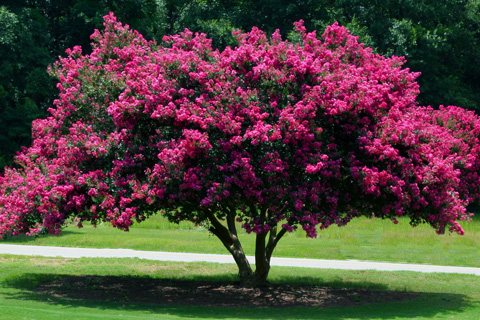
Crepe myrtle tree on landscaped yard in Alpharetta Ga

Lagerstroemia, known as crepe myrtle or crape myrtle is a tree that thrives in US Hardiness zones 7 through 10, making it a perfect choice for your Alpharetta or Roswell yard. The genus came to the US over 200 years ago and got its name from the Swedish merchant Magnus von Lagerstrom.

The most popular species is L. indica. It is a native of southern China and Thailand. For centuries, crepe myrtles have been grown in Asia as ornamentals.

Of all the southern trees and plants, crepe myrtles are among the most desired for their outstanding summer display of blooms and their brilliant fall colors. 72 Tree, Seed & Land Co. prepared an extensive article covering the characteristics, environment, and care these trees need to flourish and light up your landscape.

Are Crepe Myrtles Trees or Bushes

The Lagerstroemia genus contains approximately 50 species of trees and shrubs both deciduous and evergreen. So, this species can indeed grow as a tree or shrub, making it ideal for hedges, container planting, or even in groupings along your landscape.

Height – The L. indica species possesses cultivars and hybrids that remain under 5ft in height, some that reach 11 to 15ft in height, and those that tower over the others, reaching heights of 20 to 30ft.

Canopy – At maturity, the canopy can reach from 6ft to well beyond 15ft depending on the species.

TrunkCrape Myrtles are known to have multiple trunks with beautiful bark which exfoliates in the winter months. Be cautious when pruning or working around these trees, their wood is somewhat brittle, and the trunks may easily crack when put under pressure.

Lifespan – When planted in full sun and fertile soil, Crepe Myrtles can live well beyond 50 years. In fact, dotted along the southeastern landscape, it is common to come across specimens over 100 years old.

Uses – Depending on the species, these trees work as shrubs, hedges, container plants, landscape groupings, and in some cities as street trees.

If you decided you prefer to plant an evergreen instead, visit 72tree.com/3-evergreen-species-alpharetta-roswell-yard/ for some great candidates.

Crepe myrtle lagerstroemia lavender blooms Alpharetta Ga

Crepe Myrtle Tree Care

About two years after planting, these species become very tolerant to drought, heat, humidity, and will do well in nearly any well-drained soil. They become robust enough to resprout even after being completely frozen.

Crepe myrtles are low maintenance. However, you still need to do some planning before planting and a bit of upkeep as they grow.

Planting – Location is critical when planting crepe myrtles. Select a spot that has well-drained soil and gets full sun. Planting in partial or full shade will significantly reduce its ability to flower and may reduce its lifespan as well.

Crepe myrtles have a shallow and very fibrous root system which can extend 3 to 4 times the diameter of the canopy. As with all trees, the planting location should be at least 5 to 10 feet away from cement pathways, foundations, and sidewalks.

Pruning – Very little pruning is required. Improper pruning disrupts the development of a robust branching system and will leave your specimen deformed and vulnerable to weather, pests, and fungi.

If there is a need to prune, it should occur in late winter or early spring to correct the following:

• Removing crossed or rubbing branches.

• Removing suckers from the base.

• Branches growing inward (toward the center).

• Canopy thinning for better air circulation.

• Gradually remove side branches up to 4 or 5 feet as the tree grows.

• Reducing multi-trunk trees to a single trunk (not recommended).

Summer pruning can include:

• Removing old seed pods and spent flowers (removing them after the first bloom encourages further blooming).

• Removing small twig-like growth.

All crepe myrtle species bloom on new wood. The proper and minimal pruning of your tree will encourage this growth and promote a beautiful summer blooming season.

If you are pruning your tree because it has gotten too large for its location, you’ve planted the wrong species.

Watering – Provide newly planted crepe myrtles with a deep and thorough watering. Then, water your tree up to 4 or 5 times per week during hot weather or when planted in sandy soil. When the tree is dormant or during cold weather, your tree will need watering once per week.

Blooms – As previously mentioned, all crepe myrtles bloom on new wood. After the first bloom, removing the spent flowers will encourage further blooming in the season.

Crepe myrtle Roswell Ga pink bloom japanese beetle

Tree Pests and Disease That Attack Crepe Myrtles

These trees like all others on your landscape are susceptible to infestations, disease, and animal damage. The best defense against these threats is to keep your tree(s) healthy, plant, prune, and water them properly and they will be less likely to suffer damage from the following:

Pests that infest crepe myrtles:

Japanese Beetle – This insect is approximately 1/2 inch in length, its body is oval and metallic green, and its wings are copper in color.

Larvae remain underground where they consume grass and young tree roots. Adult beetles feed on the tissues of the leaves and are most active on trees in full sun during the warmest part of the day.

A Japanese beetle infestation can cause severe damage to all of the trees on your landscape. Traps, pyrethrins, and neem oil can help curtail a beetle outbreak. However, this is an urgent situation which needs to be evaluated by a certified arborist.

Crape Myrtle Aphid – These insects are yellowish-green and have black spots on their abdomen. They measure from a sixteenth to an eighth of an inch in length.

Both nymphs and adults feed on the underside of the foliage causing it to droop and yellow leaf spots to appear. Buds, flowers, and branch tips can all be damaged as well from their feeding.

Sooty mold will appear on the leaves when there is an aphid infestation. This mold is a byproduct of the aphid’s excrement and will disappear once the outbreak ends.

Watch this video to learn how to eliminate aphids and “black” sooty mold on your crape myrtle.

When a crape myrtle aphid infestation occurs, apply a 2oz. to 1 gallon solution of molasses and water to the affected areas and release ladybugs around the tree. Neem oil is also very useful in controlling aphids.

Fungi that attack crepe myrtles:

Powdery Mildew – This fungus appears as a white powdery substance and can spread very quickly if not handled properly.

It is worth noting that trees planted in full sun are not typically bothered by this fungus.

To control powdery mildew, spray a fungicide on the affected area and its surroundings.

Sooty Mold – This mold has a tar-like appearance and is a result an aphid infestation (see above).

Bark Shedding – Don’t be alarmed. While it may seem that something has infected your tree, there is nothing wrong with it. Crepe myrtles, once reaching adulthood will naturally exfoliate their bark in winter months, revealing the magnificent color variations of its trunk.

Crape Myrtle with white blooms in Roswell Ga

Crepe Myrtles and Summer Blooms

If you are looking for an incredible addition to your Alpharetta yard or landscape, crepe myrtles are a must have. Besides being low maintenance, they will put on a colorful show every summer.

An added plus in the summer is when the blooms attract birds seeking refuge and nesting and offer their nectar and pollen to the bees.

Sources:
https://en.wikipedia.org/wiki/Lagerstroemia
https://www.leugardens.org/wp-content/uploads/2014/07/Crepe_myrtles.pdf
https://crapemyrtletrails.org/crape-myrtle-history/
http://www.pcmg-texas.org/images/trees/crape_myrtle_pest.pdf
https://crapemyrtletrails.org/pest-control/

This article was first published on: http://www.72tree.com/crape-myrtle-southern-tree-your-alpharetta-roswell-yard/