Showing posts with label Deciduous Trees. Show all posts

Tuesday, January 22, 2019

Tulip Tree Information, Problems, and Care

Healthy tulip tree liriodendron tulipifera

Liriodendron tulipifera also known as tulip poplar is neither tulip nor poplar. This species is a relative of the magnolia tree and is unbelievably easy to care for.

A native North American species, L. tulipifera is the state tree of multiple states, unique in its rapid rate of growth, and exceptional in its beauty. The tulip tree should be strongly considered for mid-sized and large landscapes.

72tree.com gathered tulip tree information, problems, care tips, and answers several frequently asked questions.

Tulip Tree Information

Liriodendron tulipifera is a blooming tree species native to eastern North America. The tulip tree is among the tallest of the eastern US species, is long-lived, and a favorite specimen tree in landscaping.

Tree Name – Yellow poplar
Scientific Name/Species – Liriodendron tulipifera
Family – Magnoliaceae
Genus – Liriodendron
Nickname(s) – Tulip tree, tulipwood, American tulip tree, tulip tree, tulip poplar, whitewood, and Oonseentia (in the native Miami-Illinois language).
State Tree – Indiana, Kentucky, and Tennessee.

Lifespan – Can live up to 500 years or more when planted in optimal conditions.
Type – Deciduous.
Hardiness Zone(s) – from 4 to 9
Soil Requirements – Prefers well-drained, slightly acidic, moist, rich, and fertile soil with full sun exposure.
Planting Spacing – 35ft between trees.
Watering Requirements – Regular when young or planted. Minimal thereafter.

Height – 80 to 100ft on average (can reach nearly 200ft under optimal conditions)
DBH – 4 to 6ft.
Crown Span – 30ft or more at maturity (can be conical or oval in shape).
Root Spread – Yellow poplar roots will tend to match the growth of the tree. If the tree is 100ft tall by 40ft wide, its roots will likely grow 100ft deep and 40ft wide. In some cases, the roots may extend much farther outward in search of water.
Uses in Landscaping – A magnificent specimen, screen, or large shade tree, and is better suited for more spacious landscapes.
Winter/Fall Colors – Yellow before leaf-drop in the fall.

Tulip Tree Problems

Healthy tulip trees are incredibly resistant to insect infestations and disease. However, when your tree is stressed by drought conditions, soil compaction, soil nutrient depletion, or poor pruning, insects and diseases can successfully attack it.
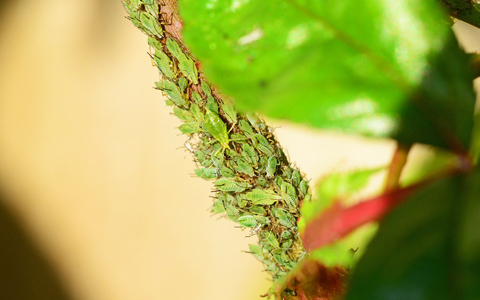
Tulip tree liriodendron tulipifera aphid infestation

Pests – Tuliptree scale, yellow poplar weevil, and aphids, in the spring and summer months.
Disease – Powdery mildew, verticillium wilt, and canker.

Major Disease Threat – Verticillium Wilt

Symptoms of Verticillium wilt are premature foliar chlorosis and necrosis, and discoloration in both stems and roots. Symptoms of wilting become more apparent on warm or hot days.

This pathogen attacks a potential host by colonizing its roots and spreading throughout the roots, trunks, and stems. Due to this, one of the best forms of disease management is to encourage the healthy growth of your tree.

Tulip Tree Care Tips

There isn’t much you will need to worry about as long as your tulip tree is:

• Within its hardiness zone (4-9).
• Growing in partial shade to full sun.
• Planted in moist, well-drained soil with a pH of 3.7 to 6.5.
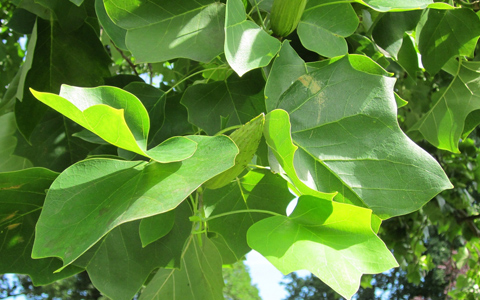
Tulip tree liriodendron tulipifera leaves

Pruning should be done once the tree has entered dormancy in late fall and early winter. However, when cankers are detected, prune out the affected area including the canker (all the way to the trunk if needed).

If the canker is located on the trunk, or when other irregularities are detected, call on a professional tree service or arborist to evaluate the tree and offer guidance.

People Also Ask

Question: Are tulip tree roots invasive?
Answer: No. If they are planted far from structures, walkways, or driveways, and the roots are readily able to absorb moisture.

Answer: Yes. As with all tree species, the purpose of roots is a never-ending quest for water and nutrients. When they are deprived, they will spread, and make their way underneath foundations and other structures.

For more on the destructive capabilities of tree roots, read 72tree.com/tree-roots-buckling-concrete-driveway/

Question: What is tulip poplar wood used for?
Answer: Lumber from tulip poplars is commonly used for fencing, siding, flooring, and some furniture.

Question: Can poplar wood be painted?
Answer: As this wood has a particularly straight grain, paints adhere to it quite well. Stains, on the other hand, have a tendency to blotch and usually require that a conditioner be applied before application.

Question: Is poplar as strong as oak?
Answer: No. While considered to be a hardwood, the fast growth rate of the tree produces a softer/weaker wood making it easy to work with.

Question: Do tulip trees bloom every year?
Answer: Yes. However, this species only produces its first blooms after nearly 20 years of growth. Thereafter, it will bloom annually in late spring or early summer.

Tulip tree liriodendron tulipifera blooming flower

Question: Are tulip trees messy?
Answer: Yes. Like all deciduous tree species, they lose their foliage in the fall. If subjected to drought conditions, tulip trees may drop their foliage prematurely in late summer. Not to mention that when the tree blooms, the flower petals will litter the ground around the tree.

Question: Can tulip trees be planted in Georgia?
Answer: Yes. The entire state is within the required hardiness zone for healthy tulip tree growth. For more on this and other great landscape trees, read 72tree.com/5-popular-alpharetta-ga-shade-trees/

Liriodendron Tulipifera is a Perfect Landscape Specimen

Although sometimes called “tulip” or “poplar,” or both, the Liriodendron tulipifera is neither of the two. This magnificent relative of the magnolia rapidly grows tall and full, making it highly desirable as a landscape specimen tree.

In this article, you discovered tulip tree information and specifications, its problems, how to care for them, and answers to frequently asked questions.

If the tulip tree isn’t a part of your landscape, you are missing out on a fast growing and beautifully shaped shade or screen tree. They are easy to plant and require minimal care efforts.

Sources:
https://extensiongardener.ces.ncsu.edu/extgardener-tulip-poplars-for-large-and-small-landscapes/
http://ipm.ucanr.edu/PMG/GARDEN/PLANTS/tuliptree.html
https://extension.psu.edu/tulip-poplar-diseases
http://www.apsnet.org/edcenter/intropp/lessons/fungi/ascomycetes/pages/verticilliumwilt.aspx
http://hort.ufl.edu/database/documents/pdf/tree_fact_sheets/lirtula.pdf

This article was first published on: http://www.72tree.com/tulip-tree-information-problems-care/

Monday, June 25, 2018

3 Evergreen Tree Species for Your Alpharetta and Roswell Yard

Flowering magnolia tree with new bloom

The difference between evergreen trees and deciduous trees becomes very obvious in the fall. Evergreens stay green and keep their foliage, while deciduous trees typically change the color of their leaves before dropping them and going dormant.

Evergreen trees do drop foliage, just not all at once. Throughout the year, they will drop small portions of their foliage and grow it back. These trees do not experience a dormant period like their deciduous counterparts, but they do slow down in the winter months.

For those with an aversion to raking up leaves in the fall, the arborist at 72tree.com identified 3 evergreen tree species to enhance your Alpharetta and Roswell Ga landscape.

Pine Trees

Of the North American native tree species, pine trees are one of the most widely spread and varied classes. Because of their ability to adapt and the ease to care for them, pines remain very popular landscaping trees from coast to coast.

Height – Within the pine family, some of the species can reach an astounding 150 feet tall and live to be more than 450 years old.

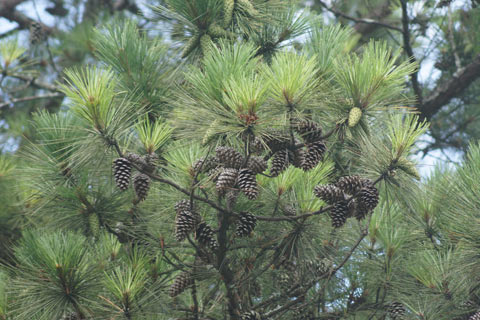
Mature pine tree with pinecones

Crown Width – Mature pine tree canopies can stretch from 15 t0 30 feet in diameter depending on the species and the environment it is planted in.

DBH – When pines such as these reach maturity, their trunk DBH (diameter at breast height) can measure from 2.5 to 4 feet. As with most trees, there is just as much happening below ground.

Root System – As pines develop an extensive, deep, expansive, and invasive root system, they should not be planted within 20 feet of permanent structures like fences, underground utility lines, or homes.

Pest Problems – Bark beetles, aphids, and bagworms are a few of the pests that enjoy making a meal of pine trees. Mites and tree scale are also likely.

Disease – Some of the more common diseases that affect pine trees are needlecast, root rot, and pine wilt.

Pesticides and fungicides can be used to curb the progress of these pests and diseases. However, in cases of severe infestation and infection, an arborist should be called to evaluate the tree and what actions should be taken (including the tree’s removal if necessary).

Magnolia Trees

This classic Southern beauty (magnolia grandiflora) is very distinctive with its wide glossy leaves and enormous fragrant white blossoms. When it comes to year-round beauty, there are few trees that can keep up with it.

Magnolia tree with new spring foliage

Its full luxurious look has made it a popular ornamental around the world.

This tree, although evergreen will drop leaves throughout the year. Growing anything beneath this tree (including grass) is difficult due to its dense foliage casting full shade and its shallow roots.

Height – A magnolia tree planted in a location with rich soil, little to no obstacles for the root system, and good soil drainage can reach heights of more than 80 feet.

Crown Width – While this tree possesses a pyramidal to rounded crown at the top, its width can reach 30 to 40 feet at the base and mid section.

DBH – Adult magnolias can reach a DBH of 24 to 36 inches. To reach this size takes anywhere from 80 to 100 years.

Root System – The species itself is a deep rooted one. First to develop is a strong tap root, then as the tree grows, many sunken roots will grow down from the root collar, and as the tree ages, major lateral roots will grow. When planted in areas with a high water table, the roots will grow more shallow and outward.

The optimum soil for this species is a rich, well drained, and slightly acidic one. When planting a magnolia, add generous amounts of organic material to the soil for the best growing conditions.

Roswell Ga yard with two mature magnolia trees

Although magnolia roots are not considered invasive, when planted too close to sidewalks or foundations, they will eventually cause undesired cracking and buckling.

Pest Problems – Varieties of scale, aphids, striped mealybug, spider mites, and magnolia leafminers are all potential infestation culprits.

Disease – There are a number of fungi which cause leaf spots. For the most part, they are unable to cause any significant damage to adult magnolias.

As well, there are a number of Polyporus fungi and Fomes which can cause heart rot.

Again, pesticides and fungicides can be used to curb the progress of these pests and diseases. When a severe infestation or infection is detected, an arborist should be called to assess what actions should be taken.

Eucalyptus Trees

Of all of the evergreen trees you could want in your yard, eucalyptus should be at or near the top of the list. This species is a fast growing, insect repelling, and gorgeous tree that adds beauty and practicality to whatever landscape it grows in.

Mature eucalyptus tree with koala bear

For most, the image you get when you hear “eucalyptus” is a koala bear latched on to a branch, munching away at the leaves. You may be surprised to learn that only the koala, some possum species, and a select few insects are actually able to consume parts of this species. In large quantities, this tree’s secret weapon (cineole) is toxic.

It is the cineole aka: eucalyptol in eucalyptus trees that make up the greatest part of its signature aroma. Eucalyptus essential oil has been used for centuries in the treatment of respiratory ailments, as a disinfectant, and as an antibacterial or anti-fungal agent in medicine.

Height – Eucalyptus tree sizes vary. Their height at maturity can range from 30 to 35 feet for smaller varieties all the way to over 200 feet for the tallest of the species.

These trees must be planted away from physical structures. Mature eucalyptus trees are known to unexpectedly drop branches.

Crown Width – The eucalyptus tree species will typically grow tall and relatively slender, with mature crowns reaching from 12 to 30 feet in diameter. Many varieties of the species are able to reach much greater diameters as they age.

Eucalyptus tree trunk and crown

DBH – Adult eucalyptus trees can reach a DBH of 15 to 20 inches.

It is worth mentioning that this species is able to reach maturity within 10 years of growth. That’s less than half (in some cases less than a third) of the time it takes for the majority of other species to reach maturity.

Root System – This species quickly adapts to the soil it is planted in. In rich, fertile soil, the roots have no need to go deep. The tree is on a fast track for height and the roots will spread horizontally staying close to the surface.

In more nutrient deprived soil, the roots will dive deep for their food and moisture source. Counterintuitively, it is the eucalyptus planted in poor soil that grows to be the more stable and wind or storm resistant.

Pest Problems – Little to none (as long as the tree remains healthy). High concentrations of cineole in all parts of eucalyptus trees acts a natural insect repellant.

Two species of Australian tortoise beetles (family Chrysomelidae) (still isolated in the west) chew semicircular holes or notches on edges of eucalyptus leaves.

These beetles are able to remove most of a leaf’s surface, leaving only the midvein.The damage caused by these beetles is unsightly but not life threatening to the tree.

If a tree is stressed enough, an opportunity opens up for the eucalyptus longhorn borer. The female of this species lays her eggs on stressed trees, producing larvae that burrow their way to the cambium layer.

A heavily infested tree can die within weeks, which is due to the larval galleries girdling the tree and disrupting the flow of water and nutrients.

Infestations must be treated immediately. Because of the speed at which death can occur, an arborist should be called to evaluate the tree and determine what actions to take.

Disease – Canker, heart rot, and Phytophthora can infect a stressed eucalyptus tree. All three of these fungi attack and damage the tree from the inside.

Signs of infection are discolored leaves and in severe cases, splitting of the trunk. In any of these cases, the tree should be removed, destroyed (burned) and all equipment disinfected to prevent the disease from spreading to other trees.

Tree Care for Evergreens

As long as evergreens are planted in hardiness zones where they can thrive and get ample summer sunlight and winter shade (possibly on the north side of your property), caring for these trees is relatively simple.

Water them regularly and mulch around their trunk. This will keep them strong and winter injury resistant. Evergreens (when not mulched or watered well) can be severely injured by the drying effects of the sun and wind through winter months.

A major benefit of evergreens in your yard is that there is no bad season. Even during the coldest days of winter, your landscape will be filled with full, and vibrantly-green trees.

Sources:
http://ipm.ucanr.edu/PMG/PESTNOTES/pn74104.html
http://homeguides.sfgate.com/care-maintenance-evergreen-trees-59096.html
https://en.wikipedia.org/wiki/Salix_babylonica#Horticultural_selections_and_related_hybrids
https://gardenerdy.com/types-of-evergreen-trees
https://www.ambientbp.com/blog/7-facts-eucalyptus-trees

This article was first published on: http://www.72tree.com/3-evergreen-species-alpharetta-roswell-yard/

Monday, October 23, 2017

Helping Your Trees Survive the Winter

Dormant deciduous tree in winter

There are a number of things you can do to help your trees survive the winter when they go dormant. Almost everything about winter; the ground freezing, the heat of daytime followed by freezing nights, snow and ice storms can all damage your tree.

Trees are known for their ability to survive through the winter and then spring back to life during the spring. Today we’ll be taking a look at just how trees are able to do this, and we’ll learn something about nature as we go.

Let’s start by looking at dormancy and some of the measures 72 Tree and you can take to help your trees survive the coldest months.

Dormancy in Deciduous Trees

Dormancy is one of the coolest tricks Mother Nature knows. This is when a tree stops producing food during the winter and no longer needs the photosynthesis process or the leaves involved in it. So leaves have to be removed to conserve energy. Deciduous trees produce a chemical called abscisic acid (ABA) in the terminal buds that connect leaves, telling leaves it’s time for them to go.

ABA prevents both deciduous and coniferous trees from growing. This impeded growth is another part of the dormancy process, further reducing how much energy the tree consumes. As the tree enters a conservation state, the metabolism of the tree slows down; using the energy from stored food slowly to maintain vital functions.

Winter Tree Care

Pruning – You should wait until dormancy to prune your tree, when you aren’t likely to damage new growth. Late season growth is particularly at risk from pruning, as it hasn’t had the time to prepare for winter months. Ice crystals may form within new growth and rupture cell walls. If they aren’t pruned properly, they are likely to die off during the spring.

Visit here for more pruning tips and instructions.

Mulching – Winter drought is a problem caused by a tree shrub or plant losing more moisture than can be absorbed. While you aren’t able to control the weather, you have some influence of the effects of it. Putting a thick layer of organic mulch down before winter temperatures set in helps to insulate the roots. The mulch also prevents runoff and moisture loss, benefiting the overall health and hydration of the tree.

Please note that trees don’t freeze entirely, even in a dormant state. Looking at the tree shows you they prepare on the cellular levels. It sounds incredible, but much of the work a tree does to survive winter is happening under the bark inside the tree.

Remove Build-up of Ice and Snow – It’s likely that you might see snow build up on your tree or cling to the branches of it following some bad winter weather. It’s important that you leave the snow be and don’t shake it off. There’s a good chance that the branches have frozen solid and become brittle. Shaking them could damage the tree or even cause these limbs to break off and fall, which is a serious hazard. If you find yourself in this situation then call in a tree professional to evaluate the situation. They will be able to advise the best course of action to take.

Trees Spring Into Life Following Dormancy

Trees will start springing back to life as the days get longer and the temperatures get warmer. If you took care of them properly, then you’re in for another year of beauty and shade provided by a healthy tree. Taking care of them, by the way, means doing absolutely nothing and letting nature take its course. After taking care of the seasonal pruning, you’ll have done enough to protect your tree. Trust the natural survival mechanisms of your tree to handle everything else.

Your trees are often stressed during winter. Knowing ways to lessen the impact is helpful. Learn these preventative tree stress methods to give your trees a greater chance at prolonged health and life. 72tree.com/winter-tree-stress-prevention-and-protection-tips/

This article was first published on: http://www.72tree.com/helping-trees-survive-winter/