
The difference between evergreen trees and deciduous trees becomes very obvious in the fall. Evergreens stay green and keep their foliage, while deciduous trees typically change the color of their leaves before dropping them and going dormant.
Evergreen trees do drop foliage, just not all at once. Throughout the year, they will drop small portions of their foliage and grow it back. These trees do not experience a dormant period like their deciduous counterparts, but they do slow down in the winter months.
For those with an aversion to raking up leaves in the fall, the arborist at 72tree.com identified 3 evergreen tree species to enhance your Alpharetta and Roswell Ga landscape.
Pine Trees
Of the North American native tree species, pine trees are one of the most widely spread and varied classes. Because of their ability to adapt and the ease to care for them, pines remain very popular landscaping trees from coast to coast.
Height – Within the pine family, some of the species can reach an astounding 150 feet tall and live to be more than 450 years old.
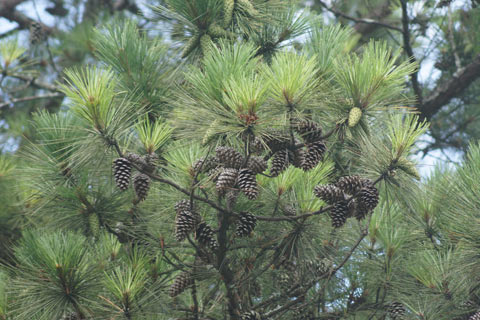
Crown Width – Mature pine tree canopies can stretch from 15 t0 30 feet in diameter depending on the species and the environment it is planted in.
DBH – When pines such as these reach maturity, their trunk DBH (diameter at breast height) can measure from 2.5 to 4 feet. As with most trees, there is just as much happening below ground.
Root System – As pines develop an extensive, deep, expansive, and invasive root system, they should not be planted within 20 feet of permanent structures like fences, underground utility lines, or homes.
Pest Problems – Bark beetles, aphids, and bagworms are a few of the pests that enjoy making a meal of pine trees. Mites and tree scale are also likely.
Disease – Some of the more common diseases that affect pine trees are needlecast, root rot, and pine wilt.
Pesticides and fungicides can be used to curb the progress of these pests and diseases. However, in cases of severe infestation and infection, an arborist should be called to evaluate the tree and what actions should be taken (including the tree’s removal if necessary).
Magnolia Trees
This classic Southern beauty (magnolia grandiflora) is very distinctive with its wide glossy leaves and enormous fragrant white blossoms. When it comes to year-round beauty, there are few trees that can keep up with it.

Its full luxurious look has made it a popular ornamental around the world.
This tree, although evergreen will drop leaves throughout the year. Growing anything beneath this tree (including grass) is difficult due to its dense foliage casting full shade and its shallow roots.
Height – A magnolia tree planted in a location with rich soil, little to no obstacles for the root system, and good soil drainage can reach heights of more than 80 feet.
Crown Width – While this tree possesses a pyramidal to rounded crown at the top, its width can reach 30 to 40 feet at the base and mid section.
DBH – Adult magnolias can reach a DBH of 24 to 36 inches. To reach this size takes anywhere from 80 to 100 years.
Root System – The species itself is a deep rooted one. First to develop is a strong tap root, then as the tree grows, many sunken roots will grow down from the root collar, and as the tree ages, major lateral roots will grow. When planted in areas with a high water table, the roots will grow more shallow and outward.
The optimum soil for this species is a rich, well drained, and slightly acidic one. When planting a magnolia, add generous amounts of organic material to the soil for the best growing conditions.

Although magnolia roots are not considered invasive, when planted too close to sidewalks or foundations, they will eventually cause undesired cracking and buckling.
Pest Problems – Varieties of scale, aphids, striped mealybug, spider mites, and magnolia leafminers are all potential infestation culprits.
Disease – There are a number of fungi which cause leaf spots. For the most part, they are unable to cause any significant damage to adult magnolias.
As well, there are a number of Polyporus fungi and Fomes which can cause heart rot.
Again, pesticides and fungicides can be used to curb the progress of these pests and diseases. When a severe infestation or infection is detected, an arborist should be called to assess what actions should be taken.
Eucalyptus Trees
Of all of the evergreen trees you could want in your yard, eucalyptus should be at or near the top of the list. This species is a fast growing, insect repelling, and gorgeous tree that adds beauty and practicality to whatever landscape it grows in.

For most, the image you get when you hear “eucalyptus” is a koala bear latched on to a branch, munching away at the leaves. You may be surprised to learn that only the koala, some possum species, and a select few insects are actually able to consume parts of this species. In large quantities, this tree’s secret weapon (cineole) is toxic.
It is the cineole aka: eucalyptol in eucalyptus trees that make up the greatest part of its signature aroma. Eucalyptus essential oil has been used for centuries in the treatment of respiratory ailments, as a disinfectant, and as an antibacterial or anti-fungal agent in medicine.
Height – Eucalyptus tree sizes vary. Their height at maturity can range from 30 to 35 feet for smaller varieties all the way to over 200 feet for the tallest of the species.
These trees must be planted away from physical structures. Mature eucalyptus trees are known to unexpectedly drop branches.
Crown Width – The eucalyptus tree species will typically grow tall and relatively slender, with mature crowns reaching from 12 to 30 feet in diameter. Many varieties of the species are able to reach much greater diameters as they age.

DBH – Adult eucalyptus trees can reach a DBH of 15 to 20 inches.
It is worth mentioning that this species is able to reach maturity within 10 years of growth. That’s less than half (in some cases less than a third) of the time it takes for the majority of other species to reach maturity.
Root System – This species quickly adapts to the soil it is planted in. In rich, fertile soil, the roots have no need to go deep. The tree is on a fast track for height and the roots will spread horizontally staying close to the surface.
In more nutrient deprived soil, the roots will dive deep for their food and moisture source. Counterintuitively, it is the eucalyptus planted in poor soil that grows to be the more stable and wind or storm resistant.
Pest Problems – Little to none (as long as the tree remains healthy). High concentrations of cineole in all parts of eucalyptus trees acts a natural insect repellant.
Two species of Australian tortoise beetles (family Chrysomelidae) (still isolated in the west) chew semicircular holes or notches on edges of eucalyptus leaves.
These beetles are able to remove most of a leaf’s surface, leaving only the midvein.The damage caused by these beetles is unsightly but not life threatening to the tree.
If a tree is stressed enough, an opportunity opens up for the eucalyptus longhorn borer. The female of this species lays her eggs on stressed trees, producing larvae that burrow their way to the cambium layer.
A heavily infested tree can die within weeks, which is due to the larval galleries girdling the tree and disrupting the flow of water and nutrients.
Infestations must be treated immediately. Because of the speed at which death can occur, an arborist should be called to evaluate the tree and determine what actions to take.
Disease – Canker, heart rot, and Phytophthora can infect a stressed eucalyptus tree. All three of these fungi attack and damage the tree from the inside.
Signs of infection are discolored leaves and in severe cases, splitting of the trunk. In any of these cases, the tree should be removed, destroyed (burned) and all equipment disinfected to prevent the disease from spreading to other trees.
Tree Care for Evergreens
As long as evergreens are planted in hardiness zones where they can thrive and get ample summer sunlight and winter shade (possibly on the north side of your property), caring for these trees is relatively simple.
Water them regularly and mulch around their trunk. This will keep them strong and winter injury resistant. Evergreens (when not mulched or watered well) can be severely injured by the drying effects of the sun and wind through winter months.
A major benefit of evergreens in your yard is that there is no bad season. Even during the coldest days of winter, your landscape will be filled with full, and vibrantly-green trees.
Sources:
http://ipm.ucanr.edu/PMG/PESTNOTES/pn74104.html
http://homeguides.sfgate.com/care-maintenance-evergreen-trees-59096.html
https://en.wikipedia.org/wiki/Salix_babylonica#Horticultural_selections_and_related_hybrids
https://gardenerdy.com/types-of-evergreen-trees
https://www.ambientbp.com/blog/7-facts-eucalyptus-trees


