Showing posts with label Tree Diseases. Show all posts

Thursday, January 30, 2025

Dutch Elm Disease

Dutch Elm Disease is a destructive fungus that kills elm trees. This 72tree.com guide covers how to identify, manage, and prevent it.

dutch elm disease

Key Takeaways

• Dutch Elm Disease is primarily caused by the fungal pathogens Ophiostoma ulmi and Ophiostoma novo-ulmi, and its spread is significantly facilitated by elm bark beetles.

• Early detection of symptoms, such as wilting leaves and brown streaks in sapwood, is crucial for managing the disease effectively and preventing widespread devastation.

• Preventive measures, including tree inoculation with fungicides and community engagement in management efforts, are essential for safeguarding elm populations from Dutch Elm Disease.

Understanding Dutch Elm Disease

Dutch Elm Disease is caused by the invasive fungal pathogens Ophiostoma ulmi and Ophiostoma novo-ulmi, with the latter being the most prevalent today. The disease was first described in the Netherlands around 1920, though it is believed to have originated in Asia. This invasive fungus leads to the wilting and death of elm trees, significantly reducing their populations and impacting biodiversity. The historical event known as the ‘Elm Decline’ in northwest Europe around 4000 BC was also caused by similar diseases, highlighting the long-standing battle between elm trees and fungal pathogens.

Since its introduction to regions like Minnesota in the early 1960’s, Dutch Elm Disease has profoundly impacted elm populations. The Dutch elm disease spread rapidly, causing symptoms within weeks to a couple of years, depending on the health of the tree. During the summer, fungal spores grow within the tree’s vascular system, leading to characteristic symptoms of the disease.

Elm bark beetles, including the native elm bark beetle, are significant vectors for spreading Dutch Elm Disease. These beetles carry the fungal spores from infected trees to healthy ones, contributing to the rapid proliferation of the disease. Knowledge of the biology and history of Dutch Elm Disease helps in creating effective management and prevention strategies.

Identifying Symptoms of DED

Detecting the early symptoms of Dutch Elm Disease enables timely intervention. One of the first signs to look for is the yellowing and wilting of leaves, often starting in late spring and summer. The leaves may turn from a dull green to yellow, indicating the onset of the disease. This initial phase is known as ‘flagging,’ where a small patch of wilting foliage appears, gradually expanding towards the trunk as the infection progresses.

In addition to wilting leaves, infected branches may exhibit brown streaks in the sapwood, which can be observed when the bark is removed. These streaks are a telltale sign of the disease and highlight the need for immediate action. Catching the disease at this stage can make a significant difference in managing its spread and impact.

an infected elm tree showing signs of Dutch elm disease

Prompt detection and intervention are key to battling Dutch Elm Disease. Identifying these symptoms enables tree owners and care professionals to manage and treat infected trees, potentially preventing complete devastation.

How Dutch Elm Disease Spreads

The spread of Dutch Elm Disease is primarily facilitated by elm bark beetles, including the native elm bark beetle and the banded elm bark beetle. These beetles carry fungal spores from infected trees to healthy ones, initiating new infections through their feeding activities. The fungus survives in the wood of infected trees, and as beetles feed, they transfer the spores, thus spreading the disease.

Another significant mode of transmission is through root grafts. When adjacent elm trees’ root systems are interconnected, the disease can spread quickly from one tree to another. This underground pathway allows the fungus to move rapidly, infecting multiple elm trees in a short period. Pruning of elm trees is restricted during specific months to reduce the risk of attracting beetles.

Practical measures to control the spread include the removal of infected trees and proper disposal of infected wood. Understanding the spread of Dutch Elm Disease allows communities to implement strategies to curb its proliferation and protect healthy elm populations.

Vulnerable Elm Species

Certain elm species are more vulnerable to Dutch Elm Disease than others. For instance, the American elm is one of the most affected species. Other species, like the red elm and rock elm, are also significantly impacted. With their majestic canopies and historical significance, these species have suffered greatly due to the disease.

In contrast, Asiatic elms, such as Chinese, Japanese, and Siberian elm, have shown higher resistance to Dutch Elm Disease. Hybrid Asian elms have been bred specifically to exhibit resistance to this devastating disease. Some notable resistant cultivars of American elm include Princeton and Prairie Expedition, which, though less susceptible, are not completely immune.

Recent developments in breeding programs have led to the introduction of ten resistant cultivars of American elm. However, these resistant varieties may require significant pruning in their early years to establish an optimal structure. Knowing the susceptibility and resistance of different elm species aids in effective management and replanting efforts.

Managing Infected Trees

certified arborist examining an infected tree for Dutch elm disease

Managing infected trees involves a combination of early detection, proper pruning, and appropriate disposal. Infected branches should be removed before the infection reaches the tree’s main stem, ideally cutting at least 5 feet, preferably 10 feet, below the last sign of streaking in the sapwood. Fungicide treatments can also be applied, although they are not effective against infections spread through root grafts.

Community-wide management programs are essential for controlling Dutch Elm Disease. These programs include preventative actions, sanitation measures, and early pruning of infections. Sanitation measures involve the early detection, isolation, removal, and proper disposal of weakened or dead trees to remove potential beetle breeding sites and sources of the DED fungus.

Pruned elm wood must be disposed of properly, either by chipping or de-barking and burying it to prevent the spread of the disease. Fungicide injections can protect elm trees from infection when done properly and repeated every 1-3 years, although they are not effective against root graft infections. Adhering to these management strategies allows communities to combat Dutch Elm Disease and protect their elm populations effectively.

Preventive Measures

Preventive measures are essential to safeguard healthy elm trees from Dutch Elm Disease. Here are some effective methods:

1. Inoculation of elm trees with fungicides such as Arbotect 20-S can provide protection for up to three years.

2. Use of fungicides with active ingredients, such as thiabendazole and propiconazole, which show effectiveness in managing fungal issues.

3. Ensure that a certified arborist supervises the fungicide injection procedure to guarantee proper treatment.

In addition to chemical treatments, planting disease-resistant varieties of elm, such as Asiatic elms, lacebark elm (Ulmus parvifolia), and other resistant cultivars, can help reduce the impact of Dutch Elm Disease.

Mechanical trenching can effectively prevent the spread of Dutch Elm Disease through root grafts, safeguarding healthy trees. Implementing these preventive measures helps communities ensure the longevity and health of their elm populations.

The Role of Elm Bark Beetles

elm bark beetles on a tree - spreading Dutch elm disease

Elm bark beetles play a critical role in the spread of Dutch Elm Disease. The native elm bark beetle, smaller European elm bark beetle, and banded elm bark beetle are known to carry the Dutch Elm Disease fungus on their bodies. These beetles contribute to new infections by carrying fungal spores and dropping them while feeding on healthy trees.

Elm bark beetles lay their eggs under the bark of dead or dying trees and in firewood or logs that still have bark. Adult European elm bark beetles emerge in the spring to feed on healthy tree twigs, particularly attracted to stressed or dying elms. These beetles can produce multiple generations in a single year, typically ranging from two to three generations.

Knowledge of the biology and behavior of elm bark beetles is vital for creating effective management strategies. Targeting beetles and their breeding sites helps communities reduce the spread of Dutch Elm Disease and protect healthy elm trees.

Regulatory and Community Efforts

Local regulations play a crucial role in managing Dutch Elm Disease. Infected elm trees cannot legally remain on any lot as per city ordinances. For instance, Oregon has declared an emergency quarantine regarding elm wood, requiring it to be chipped or de-barked and buried to prevent further spread. Local authorities have the legal power to inspect and destroy elm trees suspected of infection to prevent disease spread.

Community involvement is equally important. Local community organizations often collaborate to raise funds for inoculating elm trees and replanting efforts after removals. Fundraising and initiatives for tree inoculation are vital components of a successful community-wide management program.

Human activities like improperly disposing of infected wood, for example, can exacerbate the spread of Dutch Elm Disease. Adhering to regulations and participating in community efforts allows individuals to contribute to effective disease management.

Biological Insights into DED

The fungal pathogen Ophiostoma novo-ulmi, responsible for Dutch Elm Disease, has a complex genetic makeup. Its genetic capacity includes around 310 enzymes that break down carbohydrates, aiding in its pathogenicity.

Fungal spores travel through the elm tree. They are transported upward by the water flow in the vascular system. Trees produce structures known as tyloses to try and stop fungal movement; Ophiostoma novo-ulmi’s evolution has been influenced by acquiring genes from its close relative Ophiostoma ulmi through hybrid formation. The fungus also utilizes terpenes from elm trees, which may play a role in its pathogenic interactions with the host.

Knowing these biological mechanisms helps create effective strategies to combat Dutch Elm Disease. Advanced knowledge of the fungus’s genetics and interactions with elm trees can lead to more targeted and effective treatments.

Research and Future Directions

Ongoing research is essential for combating Dutch Elm Disease. Monitoring the genetic diversity of Ophiostoma novo-ulmi populations is critical due to their rapid evolution and adaptation. Current genetic studies suggest that elm resistance to Dutch Elm Disease is likely controlled by multiple genes. Biotechnology may enhance our understanding of elm resistance processes, enabling the deployment of trees with durable resistance.

Initiatives for elm breeding and restoration are currently being pursued in both Europe and North America to combat Dutch Elm Disease. The phenomenon of phenotypic plasticity in wych elms indicates that their resistance to disease can vary depending on environmental conditions. Research shows that the timing of wood formation in elms directly influences their susceptibility to Dutch Elm Disease.

Continuing to explore these areas helps develop more effective strategies for managing and preventing the disease.

Additional Resources

Several organizations and resources are available to those seeking more in-depth information on Dutch Elm Disease. The U.S. Forest Service provides essential guidelines for understanding how to manage and mitigate the impact of the disease. Plant pathology references are also valuable tools for professionals studying the biology of the fungi causing Dutch Elm Disease and its management techniques.

Connecting with local certified arborists can provide personalized advice and practical solutions for dealing with Dutch Elm Disease within specific communities. Utilizing these resources enables tree care professionals and tree owners to better understand and manage the disease.

Dutch Elm Disease Summary

Dutch Elm disease

In summary, Dutch Elm Disease is a formidable foe that requires a comprehensive approach to management and prevention. By understanding the biology of the disease, recognizing early symptoms, and implementing effective management and preventive measures, we can protect our cherished elm trees. The role of elm bark beetles, local regulations, community efforts, and ongoing research are all critical components of a successful strategy.

We must continue to work together, leveraging scientific advancements and community involvement, to combat Dutch Elm Disease. By doing so, we can ensure the longevity and health of our elm populations for generations to come.

Dutch Elm Frequently Asked Questions

What are the early symptoms of Dutch Elm Disease?

The early symptoms of Dutch Elm Disease include yellowing and wilting leaves, which typically begin in late spring to summer. Infected branches may also show brown streaks in the sapwood when the bark is removed.

How does Dutch Elm Disease spread?

Dutch Elm Disease spreads primarily through elm bark beetles that transport fungal spores from infected to healthy trees and through root grafts connecting neighboring elms. This dual mode of transmission underscores the importance of monitoring and managing both beetle populations and tree health.

Which elm species are most vulnerable to Dutch Elm Disease?

The American elm is particularly vulnerable to Dutch Elm Disease, along with the red elm and rock elm. In contrast, Asiatic elms like Chinese, Japanese, and Siberian elms display greater resistance to the disease.

What measures can be taken to manage infected trees?

To effectively manage infected trees, early detection and proper pruning of infected branches are crucial, along with appropriate disposal methods. Additionally, fungicide treatments may be beneficial, but they do not address infections spread through root grafts.

How can communities help prevent the spread of Dutch Elm Disease?

Communities can effectively prevent the spread of Dutch Elm Disease by engaging in fundraising, tree inoculation, and replanting initiatives while also ensuring compliance with local regulations and the proper disposal of infected wood. These collective efforts are vital for protecting local elm populations.

This article was first published on: https://www.72tree.com/dutch-elm-disease/

Tuesday, December 13, 2022

5 Pine Tree Diseases and Treatments

Pine tree diseases attack all pinus species

Keep treatable diseases from infecting and killing your pine trees. Recognizing the signs of disease and taking action to stop them will help you keep your pine trees robust and stable.

72tree.com gathered the following information and tips about pine tree disease signs, treatments, and prevention.

Pine Tree Disease

In years with heavy rainfall or severe drought, pine trees may brown in response. Browning is typically caused by the pine tree’s inability to uptake sufficient water to keep its needles fresh and alive. When moisture is overly abundant (and drainage is poor), root rot and other diseases are often the culprits. Consider the following pine tree diseases:

1. Annosus Root Disease (Heterobasidion annosum)

Pine tree diseases include heterobasidion annosum

Heterobasidion annosum is a basidiomycete fungus in the Bondarzewiaceae family. It is considered one of the most economically damaging forest pathogens in the Northern Hemisphere. Heterobasidion annosum is widespread in US forests and is responsible for $1 billion in annual pine tree losses.

Appearance – In some cases, resin flow may appear near the root collar as the tree attempts to defend itself against attack. Diseased pines may show crown thinning and yellowing. In pine trees, the disease is most active in the sapwood, killing tissues and heartwood as it progresses.
Treatment – Carefully remove and destroy infected trees and stumps. Any stumps left in the ground should be treated with borax.
Prevention – This disease typically enters a pine tree stand when spores land on freshly cut limbs or stump surfaces. The fungus grows from the stump into nearby live trees via root grafts or contacts. For prevention, treat stumps with borax whenever thinning in a high-hazard area.

2. Diplodia Tip Blight (Sphaeropsis sapinea)

Pine tree diseases include sphaeropsis sapinea

Diplodia blight, previously called Sphaeropsis tip blight, is a common fungal disease of stressed conifers, most typically pines with needles in bunches of 2's and 3's.

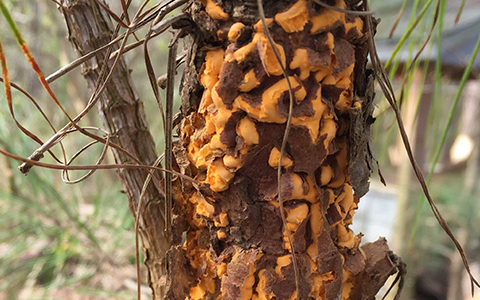
Appearance – Needles of new shoots will remain stunted, turn straw-colored, and will be glued in place from excess resin. Mature needles on branches end up killed by girdling cankers. Sticky, clear-to-white resin is found on dead twigs, the main stem, or branches with cankers.
Treatment – If you previously had problems with Diplodia, consider applying fungicides as the candles are expanding and then two more applications at 2-week intervals (bud break, half candle, and full candle). This typically prevents any spores from being disseminated from infecting the tree’s succulent new growth.
Prevention – Proper tree care, including increased irrigation during drought, pruning, and equipment sanitation are often effective methods for control of Diplodia tip blight and canker, especially when pines are newly infected.

3. Dothistroma Needle Blight (Dothistroma septosporum)

Pine tree diseases include dothistroma septosporum

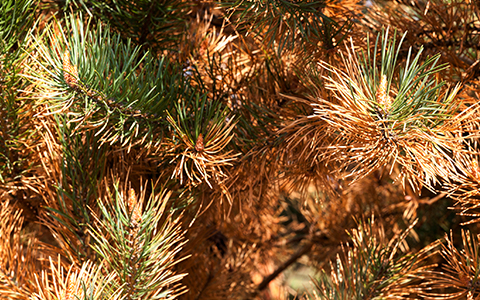
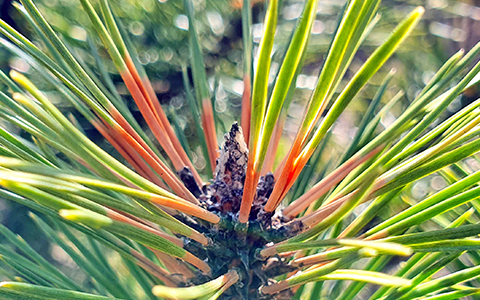
Pine trees of all ages can become infected. Symptoms are typically first seen at the base of the crown on older needles. Infected needles develop yellow and tan spots and bands, which soon turn red. As the disease progresses, the ends of the needles turn reddish-brown while the needle base oddly remains green.

Appearance – Reddish brown spots or bands appear on needles in the fall. Needle spots girdle the pine’s needles. The needle beyond the band dies and turns brown, leaving the bottom portion of the needle green. Tiny black fungal fruiting bodies will appear in the bands or the needle’s dead areas.
Treatment – A copper fungicide spray is an effective method to prevent needle cast. Other useful fungicides are chlorothalonil and mancozeb.
Prevention – If your trees have a history of Dothistroma needle blight, copper fungicides can protect new needles from infection. Fungicides need to be applied before buds open in the spring.

4. Fusiform Rust (Cronartium quercuum)

Pine tree diseases include cronartium quercuum

Fusiform rust is caused by a curious fungus that produces five spore stages and requires an oak and a pine tree to complete its life cycle.

Appearance – Fusiform rust is caused by Cronartium quorum f. sp. fusiforme. It produces bright orange spores on southern yellow pines, especially loblolly pine, in springtime.
Treatment – Avoid planting any rust susceptible pine tree species in locations where fusiform rust is or has been an issue. Pruning branch cankers and completely removing diseased branches can help lower potential trunk infection. However, once the trunk is infected, branch pruning is no longer recommended (careful tree removal and destruction is).
Prevention – Disease prevention is best accomplished by planting resistant pine species and treating all oak trees growing anywhere in the vicinity of your pine trees.

5. Needle Rust (Chrysomyxa ledicola Logerh)

Pine tree diseases include chrysomyxa ledicola logerh

Pine or spruce needle rust is easily identified by pale, white, or orange blisters appearing on infected needles (in summertime). White blisters will appear on the current year's needle growth.

Appearance – Yellow-to-orange spots or bands appear on green needles in spring. In late spring to early summer, tiny, raised, white tubes form on needles breaking open to release powdery, orange spores. These infected needles can remain attached to the tree for several years.
Treatment – Needle rust is considered a minor stress on pine trees and typically requires no management efforts. However, when necessary, the most efficient rust disease control is to carefully prune and destroy affected areas and remove any visible galls (abnormal growths) in late winter or early spring before they can produce spores.
Prevention – Follow these best practices to help prevent spruce needle rust:

• Redirect lawn sprinklers away from pine branches and needles.
• Plant your spruce trees far enough apart to allow good air circulation between them.
• Prune out and destroy wilted or blighted stems and branches.

Note: In most cases, pine needle rust is a cosmetic issue, and no management is needed.

Pine Tree Disease Control

In this article, you discovered essential information and pro tips on identifying, treating, and preventing several pine tree diseases.

Knowing how to identify, control, and prevent deadly pine tree diseases will help you keep your pine trees thriving while stopping these diseases from spreading across your landscape.

Failing to recognize signs of diseased pine trees will lead to their death, potentially causing catastrophic damages and life-threatening injury when they fall.

Sources:
tfsweb.tamu.edu/uploadedFiles/TFSMain/Manage_Forest_and_Land/Forest_Health/Stewardship/Annosum_Root_Disease.pdf
fs.usda.gov/Internet/FSE_DOCUMENTS/stelprdb5299327.pdf
extension.umn.edu/plant-diseases/diplodia-shoot-blight-and-canker
forestry.ces.ncsu.edu/2017/04/so-what-is-the-orange-stuff-on-my-pine-trees/
extension.psu.edu/spruce-needle-rust

Photo Credit: craven.ces.ncsu.edu

This article was first published on: http://www.72tree.com/5-pine-tree-diseases-and-treatments/

Tuesday, October 20, 2020

Why Do Trees Die

Trees dying from hydraulic failure

Prevent the environment, disease, and insect activity from killing your trees. Knowing why trees die will help you take notice and intervene on threats to your tree’s life.

72tree.com assembled the following information about the many factors that lead to the death of trees, the signs and symptoms of a dying tree, and what to do about it.

1. Tree Diseases

Tree diseases can wreak havoc on your trees, and in some instances, kill them in a single growing season. The following are some of the more common diseases that infect trees:

• Anthracnose (Glomerella cingulata)
• Fire Blight (Erwinia amylovora)
• Diplodia Tip Blight (Sphaeropsis sapinea)
• Oak Wilt (Ceratocystis fagacearum)
• Dutch Elm Disease (Ophiostoma ulmi)
• Canker Diseases (caused by multiple fungal pathogens)

Signs and Symptoms – Trees infected with different diseases will display different symptoms. However, all should be treated with haste to prevent the decline and death of the infected tree. The following symptoms can help you diagnose the disease you are dealing with

• Anthracnose – Sunken spots or lesions of various colors in foliage, stems, fruit, and/or flowers. Some infections lead to cankers on twigs, branches, and trunk.

Treatment – If this disease is caught early enough, extensive pruning may halt its progression, allowing the tree to compartmentalize affected areas.

Read more about anthracnose at 72tree.com/symptoms-of-anthracnose/

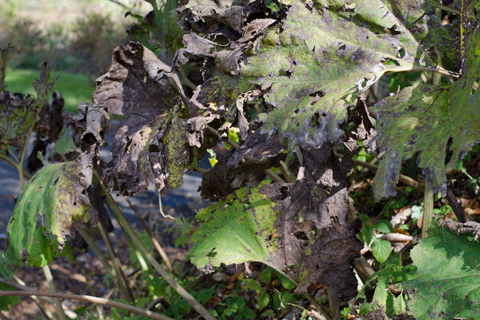
• Fire Blight – Sudden brownish-black withering and death of blossoms, leaves, twigs, fruit spurs, and branches are signs of this disease. Heavily affected trees will appear scorched by fire and may die altogether.

Leaves infected and blackened by fire blight

Treatment – Extensive pruning of affected areas and copper fungicides. However, there is no cure for fire blight. Removal of the tree should be considered before the pathogen spreads to neighboring trees and shrubs.

Further reading on fire blight can be found at 72tree.com/preventing-fire-blight-tree-disease/

• Diplodia Tip Blight – This disease infects conifers, first killing needles at the tips of branches. Symptoms typically appear on the lower half of the tree, progressing upwards. When new needles begin expanding, they end up stunted, turn yellow, then tan or brown.

Treatment – This pathogen responds to fungicide treatments. Treatment should start at bud break in the spring for effective control. Pruning out damaged areas, and cones should also be removed, as they hold fungal spores.

This blight can be controlled, but not cured. As with any needle blight disease, the objective of spraying the tree is to break the cycle of infection in emerging needles. Many seasons of treatments are needed before noticeable results are achieved.

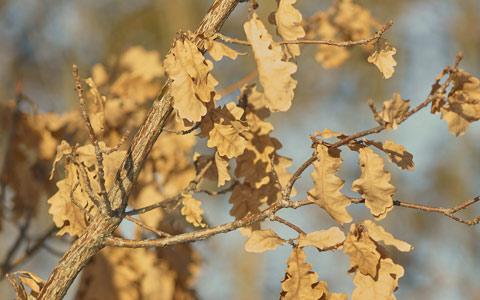
• Oak Wilt – This disease infects oak trees. It can be identified as mature foliage develops a dark green water-soaked appearance, or may turn pale green or bronze, starting at the leaf margins and progressing toward the center of the leaf. This usually begins on a single branch and quickly spreads throughout the entire crown. Red oaks can die within 4 to 6 weeks after symptoms appear.

Dead leaves on tree with Bretziella fagacearum oak wilt disease

Treatment – Once an oak tree is infected with oak wilt, there is no known treatment capable of ridding the tree of the disease. Infected trees should be professionally removed.

Note: Healthy oaks can be injected with a fungicide known as Propiconazole to suppress oak wilt disease. Since Oak Wilt is spread by root grafts and insect carriers, treat those trees close to infected ones to slow the disease’s spread.

For more oak wilt information, visit 72tree.com/oak-wilt-identification-treatment-prevention/

• Dutch Elm Disease (DED) – DED is a vascular wilt disease in trees. External symptoms of infection are yellowing and wilting of leaves on individual branches. These leaves then turn brown and curl up as the branch dies, foliage eventually may drop off.

Treatment – Much like oak wilt, Dutch Elm Disease must be treated proactively before the disease is present in the tree. This disease spreads so quickly that diseased trees may not respond to any form of treatment.

Note: Healthy elms can be professionally treated in the same manner as healthy oaks with the Propiconazole fungicide.

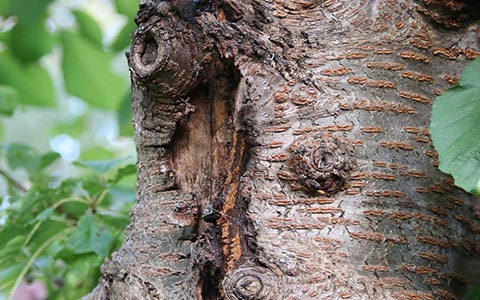
• Canker Diseases – Symptoms may include round-to-irregular sunken, swollen, flattened, cracked, discolored, or dead areas (appearing as bruises or open wounds) on tree stems, twigs, limbs, or trunk.

Canker from tree fungi on tree trunks and branches

Treatment – There is no cure for canker diseases on fruit and shade trees, but the disease’s spread can be controlled by pruning out infected areas. In late winter or early spring, carefully remove and destroy infected branches 4 inches below the canker where the tree is releasing amber color sap. If the canker is located on the trunk, request professional help to treat the infected area or remove the tree.

When treating, pruning, or interacting with diseased trees, you can reduce the chances of spreading the disease by:

• Sanitizing all equipment, including gloves, rakes, saws, etc. before and after use
• Destroying (burning) dropped or pruned foliage, twigs, and limbs (never add infected material to compost piles)
• Never spraying infected trees with overhead watering or irrigation

When in doubt, don’t take the chance of making a bad tree situation worse. Reach out to an ISA certified arborist for professional help. Read more about tree fungi control and prevention at 72tree.com/how-to-get-rid-of-tree-fungi/

2. Weather-Related Tree Damage

Trees have spent millennia adapting to their climate and region. That said, severe weather can still inflict significant and sometimes lethal damages to a tree. For example:

Bark Stripping – During catastrophic weather events like tornadoes and hurricanes, bark can be stripped from a side of or from the entire tree, effectively killing it.

Impact Damage – Also, during severe weather events, yard ornaments, statues, bicycles, and even vehicles can be carried by wind or floodwater, impacting and severely damaging the tree’s bark. If enough bark is damaged or stripped from the tree, it will be girdled and quickly die.

Drought – When the weather is dry, trees still need water. Most tree roots live within the first 30-inches of soil, and without water for prolonged periods, a tree can suffer hydraulic failure and die. Proper mulching and increased watering patterns can prevent this peril.

Severe or Repeated Flooding – In contrast to drought, this can lead to the destabilization of a tree’s root plate. When this condition occurs, the tree may develop a lean or suffer windthrow from the slightest wind.

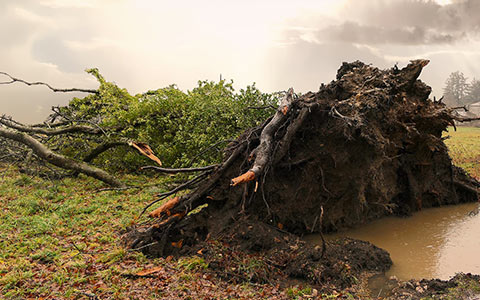
Windthrow – This condition occurs when trees are toppled by wind. When windthrow occurs, a tree is uprooted as it is blown over.

Severe weather can uproot and knock trees over this is known as windthrow one of many ways blowdown occurs

Windsnap – This condition also occurs when trees are toppled by wind. When windsnap occurs, a tree is broken off at the trunk as it is blown down. Proper seasonal pruning activities and crown thinning can significantly reduce the potential for windthrow or windsnap.

For further reading and preventative measures on windthrow and windsnap, read 72tree.com/blowndown-windthrow-windsnap/

3. Boring Insect Infestations

When it comes to tree killers, boring insects are perhaps the most prolific and persistent. Larvae feed in galleries beneath the bark, consuming the tree’s cambium layer, while adults consume the host’s foliage. Aerial views of forested land demonstrate (in large swaths) the devastation these insects are capable of. A boring insect infestation can be identified as follows:

• Adults found in traps (visual confirmation)
• Partially consumed foliage (Leaf notches)
• Chlorosis of foliage in sections of the crown
• Extreme dieback of foliage and stems
• Frass (sawdust) found on the bark from burrowing activities
• Exit holes in tree bark
• Bulging or vertical splits in the bark (over larval galleries)
• Suckers and water sprouts growing in the crown, on the trunk, and/or from the roots
• Woodpecker damage (woodpeckers hunt beetle larvae)
• Squirrel activity (some squirrel species feed on beetle larvae)

Agrilus planipennis emerald ash borer eab boring insect

As larvae feed season after season, they channel through their host’s cambium layer in a zigzag or ribbon pattern (interrupting the flow of water and nutrients. This feeding ultimately leads to a partial or total girdling of the host, resulting in hydraulic failure and death.

Boring Insect Control and Prevention – Due to the larvae’s occult feeding activities, preventing a wood-boring insect infestation is not always possible. However, these practices will help reduce the potential of an infestation:

• Plant well-adapted species of trees not commonly attacked by wood borers in your region.
• Choose and prepare a suitable planting site to avoid tree stress like freeze damage, sunscald, windburn, and other natural stressors.
• Promote your tree’s health with proper watering, mulching, and fertilization methods.
• Use proper seasonal pruning practices (winter/dormant season).
• Avoid mechanical injury to tree trunks from lawnmowers and/or construction.

If you detect a wood-boring insect infestation, contact an ISA certified arborist to not only confirm the infestation but to mobilize local and regional forestry support if needed. Such infestations can cause catastrophic damages in very little time.

Note: In the absence of stressed or ailing trees, boring insects will attack healthy specimens.

Read more exciting literature about boring insects by visiting 72tree.com/metallic-wood-boring-beetles/

4. Lifespan of Trees

While rare, a tree can die of “old age.” However, what is considered old age for one species may be merely infancy for another. Consider the following species and their average lifespan:

• Willow (Salix) 30 years
• Birch (Betula) 40 – 50 years
• Poplar (Populus) 50 years
• Magnolia (Magnolia) 80 – 120 years
• Maple (Acer) 100 – 300 years
• Oak (Quercus) 100 – 300 years
• Ash (Fraxinus) 120 – 300 years
• Aspen (Populus tremuloides) 150 – 200 years
• Walnut (Juglans) 150 to 250 years
• Fig (Ficus carica) 200 years
• Spruce (Picea) 200 years
• Beech (Fagus) 300 – 400 years
• Elm (Ulmus) 300 years
• Pecan (Carya illinoinensis) 300 years
• Pistachio (Pistacia vera) 300 years
• Giant Sequoia (Sequoiadendron giganteum) 500 – 2,000 years
• Sycamore (Platanus occidentalis) 600 years
• Bristlecone (Balfourianae) 5,000+ years

Signs and Symptoms – Trees in decline due to age may present many symptoms, including the following:

• Chlorosis (loss of color in foliage)
• Extreme dieback (multiple dead branches)
• Cladoptosis (randomly falling branches)
• Sudden Death (the tree just dies)

When a tree reaches or surpasses its lifespan it may die

If you have a tree that is nearing or surpassing its lifespan and is in decline, there is little to nothing you can do to save it. When in these circumstances, call on an ISA certified arborist’s expertise to evaluate the tree and recommend a course of action.

Note: While most tree species can outlive a human being, the vast majority of trees succumb to weather, biological, or human interference factors long before reaching their full lifespan.

Saving Dying Trees

In this article, you discovered information about the lifespan of trees, diseases, weather, and insects that are commonly responsible for why trees die.

By taking preventative measures to halt the spread of disease and insect infestations, you are helping your tree to live up to or surpass its lifespan.

When you ignore the warning signs of a dying or sick tree, you risk suffering grave consequences when that tree dies and falls on your property.

Sources:
extension.umn.edu/plant-diseases/oak-wilt-minnesota
mortonarb.org/trees-plants/tree-and-plant-advice/help-diseases/canker-diseases
ipm.ucanr.edu/PMG/PESTNOTES/pn7414.html
fs.usda.gov/naspf/sites/default/files/publications/how_to_identify_and_manage_dutch_elm_disease.pdf
plantclinic.cornell.edu/factsheets/sphaeropsisdiplodia.pdf

This article was first published on: http://www.72tree.com/why-do-trees-die/

Monday, November 25, 2019

Common Maple Tree Diseases, Symptoms, Treatment, and Prevention

Stop your maple tree from needlessly dying. If caught in time, diseases that attack maples can be treated with success.

72tree.com of Alpharetta Ga, assembled the following list of diseases that affect maple trees, how to identify, treat, and prevent them.

Why do My Maple Tree Leaves Have Spots?

One of the easiest ways to detect maple tree diseases is through irregularities in shape or size, spots, and/or blemishes on the tree’s foliage.

The following diseases may cause spots to appear on your maple tree’s foliage:

Leaf Spot (Phyllosticta minima) – This fungal infection causes round spots about a quarter of an inch in diameter to appear on leaves. These spots will have a pronounced purple border and blackish dots in the center of the spot (fungal fruiting structures).

Treatment: Before fall, prune dead twigs, stems, and branches. Collect all clippings and destroy them (burning them is highly recommended) to prevent the spread of the fungus.

Have the tree evaluated to determine the extent of the infection and whether further action like using fungicides should be taken to protect your tree and surrounding landscape.

Maple tree infected with leaf spot phyllosticta minima disease

NOTE: Sanitize all equipment, including gloves and protective clothing that come in contact with an infected tree and its foliage.

Anthracnose (Aureobasidium apocryptum or Discula – Gloeosporium) – Anthracnose is a fungal infection that causes purple or brown streaks to occur alongside and between leaf veins. In some maple species, drought and heat stress can produce similar symptoms. You can confirm an anthracnose infection by locating small, brown fungal fruiting structures near the veins of affected leaves.

Treatment: The same measures and precautions for leaf spot should be used in the treatment of anthracnose.

NOTE: Anthracnose can lead to severe defoliation during a wet spring season.

Root Rot (Fomes fomentarius, Ganoderma lucidum, or Laetiporus sulfureus) – Once a fungal infection embeds itself in the trunk or the roots of a maple tree, there are three types of symptoms to watch for:

• Foliage in the entire crown or a section of it may suffer from chlorosis, wilt, die and eventually fall. This happens as the fungi cause hydraulic failure within the roots, trunk, and branches.

• Fungal fruiting structures (mushroom conks) will appear from late spring to mid-fall. For these structures to form, there must be rotting organic material within the tree.

Maple tree root rot with mushroom conks diseased and dying

• Large black ants known as carpenter ants will make a nest for their colony within trees that suffer from heart rot. These ants do not burrow through heartwood, they remove the tissues rotting and softened from the infection.

Treatment: Once root rot or heart rot has been confirmed, have the tree professionally removed as quickly as possible.

NOTE: The presence of carpenter ants and fungal fruiting structures only occur after significant damage has been done to the tree. When the affected tree is within striking distance of your home, places where people congregate, or other structures and vehicles, the situation should be treated as an emergency.

Galls – These spots are irregular growths or swellings that occur from a reaction to tissue feeding or egg-laying by various species of mites and insects (commonly mistaken for fungal infection).

Maple tree disease galls formed on the top side of a leaf

Galls appear in various ways. Each mite or insect species produces a distinctive gall shape and can range from wart-like bumps to felt-like patches to spindle-shaped protrusions. Galls develop in the spring, and once formed, the pest remains protected within the structure. Arborists can often identify which mite or insect has infested your tree by the shape and appearance of the galls.

Treatment: Leaf galls are relatively innocuous and rarely result in any long term damage to the tree. Applications of pesticides are relatively ineffective, as the pests are protected within the gall structure.

The most effective manner of gall removal is to handpick and destroy affected foliage before exit holes form and allow the pest(s) to move on. If the presence of galls is overwhelming, hire a professional tree service to evaluate the situation and recommend a course of action.

Maple Tree Disease Prevention

Maple tree disease prevention begins with good tree care practices. The healthier your tree is, the more vigorously it can fight back against diseases and infestations.

However, when the tree’s defenses fail, here are steps to prevent the disease or infestation from infecting surrounding trees:

• Prune affected limbs (before leaf-drop)
• Burn all pruned limbs and foliage
• Always sanitize pruning equipment after use on an infected tree
• Avoid tracking soil from around infected trees to areas around uninfected trees (many fungi and other pathogens thrive in the soil). Clean boots, protective clothing, tools, and equipment before leaving an infested area
• Replant resistant species after tree removal
• Avoid planting maple trees in areas with a history of tree diseases
• Have annual tree inspections and soil testing performed to detect any issues early on.

Black Spots on Maple Leaves

In this article, you discovered how to identify diseases that cause spots on maple tree leaves, how to treat them, and how to prevent them.

Prevent the decline of your maple tree by knowing what to do when a fungus or pathogen begins showing signs of infection.

Your choice to ignore signs that your tree is diseased or in decline can result in catastrophic fungal outbreaks to your landscape, or costly damages to your property when the tree falls.

Sources:
extension.psu.edu/maple-diseases
hgic.clemson.edu/factsheet/maple-diseases-insect-pests/
pnwhandbooks.org/plantdisease/host-disease/maple-acer-spp-verticillium-wilt

This article was first published on: http://www.72tree.com/maple-tree-diseases-symptoms-treatment-prevention/

Friday, May 24, 2019

Oak Wilt Identification, Treatment, and Prevention

Bretziella fagacearum oak wilt disease fungus

Don’t let oak wilt (Bretziella fagacearum) kill your tree. While few fungi can bring down the mighty oak tree, this is one of them.

Oak wilt is one of the most destructive tree diseases in the United States, and it’s on the loose, killing oak trees at nearly epidemic proportions. If your oak tree(s) appear to be in trouble, its problems may be caused by a fungus that, if not halted, will kill your tree in a matter of months.

72tree.com gathered essential information about oak wilt disease, how to identify it, treat it, and prevent it.

What is Oak Wilt?

Bretziella fagacearum, formerly known as Ceratocytis fagacearum, is the scientific name for oak wilt, and this fungal disease affects all species of the oak (Quercus) genus by disabling the water conducting system in these trees.

Based upon porosity and leaf shape, oaks are divided into two groups; red oaks and white oaks. Bretziella fagacearum affects these two groups differently:

White Oak Group – The species below that are part of this group have rounded leaf edges and pores clogged by tyloses.

• Quercus alba (the most commonly known white oak species)
• Quercus lobata (California white oak or valley oak)
• Quercus polymorpha (Mexican white oak or Monterrey oak)
• Quercus bicolor (swamp white oak)
• Quercus arizonica (Arizona white oak)
• Quercus garryana (Oregon white oak or Garry oak)

Tyloses are outgrowths on cells of xylem vessels. Tyloses fall from the sides of the cells and seal a tree’s vascular tissue to prevent or reduce damage.

White oak rounded leaves low susceptibility to Bretziella fagacearum

Red Oak Group – The species below that are part of this group have pointed leaf edges and large open pores:

• Quercus falcata (southern red oak)
• Quercus graciliformis (Canby oak or Chisos oak)
• Quercus buckleyi (Texas red oak)
• Quercus rubra (the northern red oak)
• Carnarvonia araliifolia (an Australian rainforest tree)

Red oak pointed leaves highly susceptible to Bretziella fagacearum

Due to the difference in porosity, species in the red oak group are more easily infected by oak wilt and die more quickly than the white oak group species. In fact, infected trees in the red oak group may die off within a single summer season, where those in the white oak group can persist for several years after being infected.

Another difference is that trees in the red oak group produce fungal spore mats that facilitate the “above ground or overland” spread of the pathogen, whereas the trees in the white oak group rarely produce them.

How to Identify Oak Wilt Disease

Oak trees infected with oak wilt present the following symptoms:

• Leaf chlorosis
• Leaf drop (off-season)
• Dieback from the top down
• Veinal necrosis (Live oak species only)

Dead leaves on tree with Bretziella fagacearum oak wilt disease

In most cases of infection, oak leaves will turn pale green and then brown while still attached to the tree. By the time they fall, the tree is likely dead.

This disease is dangerous in that it is extremely fast acting; it can kill a mature oak tree in a matter of two to four months while spreading from tree to tree via grafted roots.

Grafted roots occur when the roots of two or more compatible tree species meet and fuse together. Once roots are grafted, they gain the ability to interchange nutrients, water, and disease to each other.

If you suspect that your oak tree is infected with oak wilt, have your tree inspected by an arborist immediately.

How to Treat Oak Wilt Disease

Once Bretziella fagacearum has infected your tree, your fast action is required to halt this pathogen. There are two principle ways to treat oak wilt disease:

Fungicide Treatment – Propiconazole applications are an effective preventative measure. During the earliest stages of infection, this fungicide is injected through holes drilled in the root flare, to the tree’s water-conducting vascular system.

The success of this treatment is greatly influenced by the health of the tree and the fungicide application rate. Any time holes are drilled into a tree for this type of treatment, a professional should be hired to make sure the fungicide is applied correctly and that the holes do not become sources of further infection or infestation.

Trenching to Sever Root Connections – When a tree has been infected and fungicide treatments are no longer viable, trenching will help stop the pathogen from being transmitted from tree to tree by grafted roots.

Trenching to sever grafted tree roots and prevent oak wilt disease from spreading

After identifying infected trees, a trench should be dug with a trenching machine, ripper bar, rock saw, or walk-behind trencher to a depth of at least 4 feet (trenches deeper than 4 feet may be required in deeper soil), and a minimum 100 foot radius around the infected tree(s).

Healthy trees within the trench are considered high risk and should be uprooted or removed to improve the effectiveness of the barrier. Tree removal should start immediately after trenching, beginning with the trees closest to the trench, and working inward thereafter until all of the trees within the trench have been eliminated.

An oak wilt contamination can be more easily contained when treatment begins early. Trees outside the trenched area should be monitored for several years after the infected area has been treated, and in the event of further infection, the same procedure (trenching and tree removal) should be repeated while the contaminated area is still manageable.

Oak Wilt Disease Prevention

Tree disease prevention begins with tree health. However, when it comes to oak wilt disease, special care must be taken to avoid infecting otherwise healthy trees. The following will help you avoid spreading the Bretziella fagacearum pathogen to your oaks:

Healthy tree free from Bretziella fagacearum oak wilt disease

Tree Health – A healthy tree has defense mechanisms that help it stave off attacks from fungi and insect infestation. Whether it be exuding sap to close wounds made by insects, or compartmentalization to contain invading pathogens, the healthier your tree is, the more effective its defense will be. The following steps help you increase your tree’s vitality:

During prolonged dry seasons:

• Provide weekly deep waterings for your trees.
• Fertilize your trees before the growing season begins (February, and early March).
• Mulch your trees to avoid losing soil moisture.
• Inspect your trees frequently for wounds and weather damage (including surface roots), use tree wound dressing, wax based dressing, or latex paint to seal these wounds.

Pruning Activities – Pruning encourages new growth. However, in the case of oak trees, pruning them may provide an opportunity for Bretziella fagacearum to invade and kill your tree. Adhere to the following guidelines when pruning oak trees:

Oak tree branch cutting and pruning in winter to prevent wilt disease infection

• From February through July, avoid pruning or wounding your oak tree(s). This period is when oak wilt fungal mats are most easily formed, and oak bark beetles (Scolytinae) and sap beetles (nitidulid) are most active.
• Pruning activities should take place during midwinter or extended periods of hot weather in late summer. (these are the periods which present the least threat to your oaks)
• Sterilize all pruning equipment between trees.
• Paint all pruning wounds with a tree wound dressing, wax-based dressing, or latex paint to create an immediate barrier to contaminated beetles or airborne pathogens, regardless of the time of year.
• Freshly cut stumps and wounded surface roots should be dressed immediately, as Bretziella fagacearum can be transmitted from tree to tree through grafted roots.

Diseased Tree Removal – Oak trees that are dead or dying from oak wilt disease should be removed and immediately burned or buried to prevent dissemination of the disease’s spores.

When dealing with infected trees, call on a professional tree service to handle the removal and destruction of these trees. They will also be able to assess the potential risk to surrounding trees and advise you on any further necessary preventative measures.

Firewood Awareness

– Avoid purchasing or transporting unseasoned firewood. Since fungal mats may form on unseasoned oak firewood, you could be unintentionally spreading the pathogen to uninfected areas.

Oak tree seasoned firewood does not spread Bretziella fagacearum

Seasoned firewood has been dried for a minimum of one year and poses little to no threat of spreading the oak wilt pathogen.

Oak Tree Disease – Bretziella Fagacearum

Your mighty oak tree can become infected and die in a matter of months. The Bretziella fagacearum fungus can spread by way of insects, airborne spores, and through grafted roots. By the time you identify the problem, you may be dealing with several infected trees on a fast-track to death.

In this article, you discovered vital information about oak wilt disease, how you can identify it, what you need to do to treat it, and prevention tips.

Your slow response to this fast-acting disease can not only result in the death of your tree, but also to the spread of oak wilt to numerous trees in surrounding environments. At the first sign of trouble, call a professional to help you assess the damage and required measures for containment.

Sources:
https://tfsweb.tamu.edu/OakWiltFAQS/
http://www.inspection.gc.ca/plants/plant-pests-invasive-species/diseases/oak-wilt/fact-sheet/eng/1325629194844/1325632464641
https://www.annualreviews.org/doi/abs/10.1146/annurev.en.07.010162.001551?journalCode=ento
https://www.canr.msu.edu/news/oak_wilt_disease_1
http://www.austintexas.gov/blog/oak-wilt-101

This article was first published on: http://www.72tree.com/oak-wilt-identification-treatment-prevention/