Friday, May 19, 2023

Why Do Trees Suddenly Lean

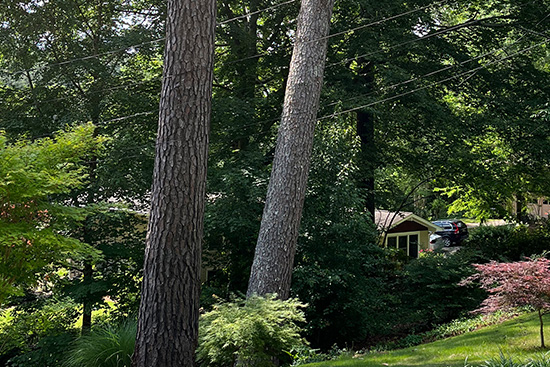
leaning tree

Need help figuring out why your tree is leaning? Understanding why trees suddenly lean will help you prevent catastrophic damages and them falling on your property.

72tree.com gathered the following information to help you accurately identify why your tree is leaning and what you can do to protect your property, home, and well-being.

Why Do Trees Lean?

Some trees lean, and you may have wondered why this happens. Consider the following reasons trees lean, what it means for their health and safety, and what you should do about it.

There are multiple reasons why trees lean. The most common cause is strong prevailing winds or heavy snow and ice loads pushing the tree from its vertical axis. Trees naturally tend to grow straight up towards the sun, but environmental factors like wind and snow can cause them to tilt. Over time, this tilt can become more pronounced, resulting in a leaning tree.
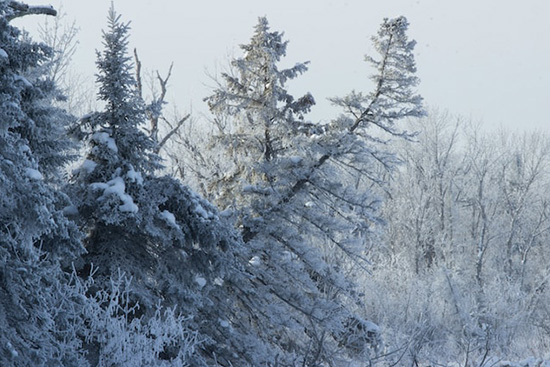
tree with snow leaning

Another reason for tree lean is the uneven weight distribution on the trunk. Trees with a heavy canopy (on one side) or those growing on a slope may develop a lean towards the lighter side to maintain balance. This is common in deciduous trees that have lost multiple or heavy branches on one side.

Tree lean can also be a sign of root rot or damage. A tree's root system is fundamental for providing a tree’s stability and anchorage. A tree may lean when roots rot or are damaged due to soil erosion or compaction. This is common in areas with a high water table or soil prone to erosion.

Note: Some tree species are more prone to leaning than others. Conifer trees, like pines, are more likely to develop a lean due to their shallow root system. While trees like oaks have deep taproots that provide greater stability and reduce the risk of leaning.

While some tree lean is natural and harmless, excessive leaning can indicate a severe health issue. A leaning tree may indicate root rot, a fungal disease that can cause a tree's root system to weaken and ultimately fail.

Tip: If you notice a tree leaning significantly, it's crucial to have it inspected by a professional arborist quickly to determine the cause and assess the risk of the tree falling.

When to Worry about a Leaning Tree

For property owners, a leaning tree can be an alarming cause for concern. While some tree lean is natural and harmless, excessive leaning can indicate a health issue that must be quickly addressed. Here are some factors in determining whether a leaning tree is a cause for concern:

Degree of Lean - If your tree is leaning at an angle greater than 15 degrees, it may be a sign of a significant problem. Trees severely leaning can be dangerous and may need to be removed to ensure people’s and property’s safety.

Leaning Speed - If you notice the tree has started to lean suddenly or at a fast pace, it may indicate an advanced health issue. This could result from root damage or other underlying problems that must be addressed quickly.

Tree Condition - If your tree has dead or broken branches, signs of decay, or other visible damage, it may be more likely to lean. A weakened tree may not withstand strong winds or other environmental factors, leading to a more significant lean.

Location - If the leaning tree is growing near a building or other large structure, it could pose a significant risk. In such cases, it's crucial to have the tree inspected by a professional arborist to assess the tree’s health and risk and determine the best course of action.
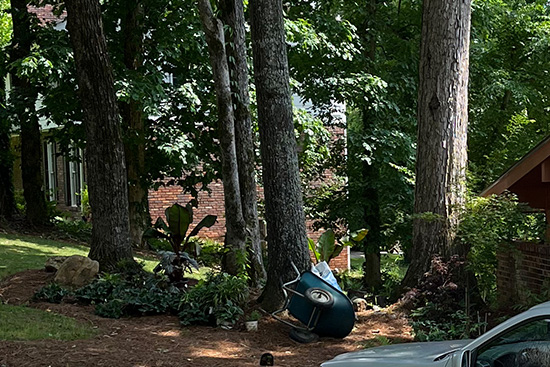
If you notice a leaning tree on your property, don't delay in deciding when to remove it. Taking prompt action is crucial because waiting can significantly increase the risk of it falling and causing catastrophic or life-threatening injury.

Tip: An arborist can inspect the tree, determine the cause of the lean, and recommend the best course of action, whether pruning, cabling, or removal. Protecting your tree is paramount to ensuring your family and property’s safety.

What is Phototropism

Phototropism is a plant's natural response to light. It's a process in which a plant's cells respond to the direction and intensity of light, causing the plant to grow, lean, or move toward the sun or light source.

Trees also utilize phototropism to grow toward the sun. When a tree's leaves or branches are shaded by other trees or structures, the tree will instinctively grow towards the light source to ensure maximum exposure to sunlight. This allows the tree to produce maximum energy through photosynthesis.

The phototropic response in trees is controlled by hormones called auxins. Auxins are produced in the growing tips of the tree's shoots and are transported down the stem, where they promote cell elongation (on the tree’s shaded side). This process causes the tree to bend towards the sun, resulting in positive phototropism.

Positive phototropism is crucial for a tree’s healthy growth. Without it, trees may be stunted or malformed from inadequate exposure to sunlight.

Note: Phototropism allows trees to adjust growth patterns in response to changing light conditions, like the sun’s shifting angle during different seasons.

Leaning Trees

In this article, you discovered several reasons that trees lean and what you can do to keep your property, home, and loved ones safe.

Knowing what causes trees to lean will help you take swift and appropriate action to save or remove your tree.

Failing to quickly identify and properly address the potential cause of your leaning tree may result in catastrophic damages to your property or injury to a person.

Sources:
extension.tennessee.edu/publications/Documents/sp573.pdf
extension.umd.edu/resource/how-do-you-decide-when-remove-tree
extension.psu.edu/what-to-do-about-leaning-trees
bio.libretexts.org/Bookshelves/Introductory_and_General_Biology/General_Biology_1e_(OpenStax)/6%3A_Plant_Structure_and_Function/30%3A_Plant_Form_and_Physiology/30.6%3A_Plant_Sensory_Systems_and_Responses

This article was first published on: https://www.72tree.com/why-do-trees-suddenly-lean/

Wednesday, April 12, 2023

10 Alpharetta Tree Diseases - Identification & Treatment

Tree diseases cause severe damage to branches foliage and fruit appearing as scabs die back and mushroom conks

Need help identifying a potential tree disease? Recognizing when your tree is diseased will help you take prompt action to prune, treat, or call in an arborist or professional to halt the disease’s progression.

72tree.com gathered the following information to help you identify tree diseases and how to effectively treat your tree to prevent further decline or death.

What Does a Diseased Tree Look Like?

Diseased trees can physically manifest their ailments in multiple ways. Some common indicators of a diseased tree include:

• Low hanging dead or dying branches (lacking bark and have no leaves)
• Dropping dying or dead branches
• Weak, V-shaped branch unions, where two branches have grown together
• An excessively thick or dense canopy that could easily break
• Excessive wilting
• Leaf problems (spots, holes, odd colored, or deformed leaves)
• Fuzzy or moldy patches
• Water sprouts (water shoots) grow on the trunk or roots

Note: An alarming sign of advanced tree disease is when a tree starts to lean. This is an urgent problem requiring immediate professional attention.

Common Tree Diseases

The following tree diseases and their host species may require a professional assessment to determine an effective treatment plan. For an arborist in Alpharetta, we can help, or find a local arborist by visiting treesaregood.org/findanarborist. A third option is to collect samples of the tree and have them analyzed at your local university extension.

Consider the following 10 tree diseases:

1. Dutch Elm Disease (DED) (Ophiostoma ulmi) – A fungal disease that infects elm trees, causes rapid decline and death and is spread by bark beetles.

Tree diseases cause severe damage to branches foliage and fruit like Dutch elm disease

Treatment: When caught early, DED infections can be pruned out, and the tree can be protected by fungicides. Several DED-resistant elm varieties are available.

2. Oak Wilt (Ceratocystis fagacearum) – A fungal disease that affects oak trees and is spread through root grafts and sap-feeding, boring beetles.

Treatment: Trees infected with or have died from oak wilt should be completely removed, properly treated, and destroyed to prevent spore mat development. These treatments may include debarking, chipping or splitting, drying, and burning the wood.

3. Apple Scab (Venturia inaequalis) – A fungal disease that affects apple trees and causes leaf spotting and premature leaf drop.

Treatment: Scab control for edible apple and crabapple trees includes captan, lime-sulfur, and powdered or wettable sulfur applications.

Tree diseases cause severe damage to branches foliage and fruit like apple scab

4. Pine Wilt Disease (Bursaphelenchus xylophilus) – A bacterial disease that affects pine trees and is spread by pinewood nematodes and pine sawyer beetles.

Treatment: Once infected with pinewood nematodes, pesticides are no longer effective. Once a tree is infected, there is no cure for pine wilt, and dead trees left in the landscape become sources of nematodes and pine sawyer beetles. Diseased trees should be destroyed by burning, chipping, or burying.

5. Chestnut Blight (Cryphonectria parasitica) – A fungal disease affecting chestnut trees, causing cankers on the trunk and branches.

Treatment: Chestnut trees with blight cankers can be treated and often cured with mud packs applied to each canker.

6. Black Knot (Dibotryon morbosum) – A fungal disease that affects cherry and plum trees, causing black, warty growths on the branches.

Tree diseases cause severe damage to branches foliage and fruit like black knot

Treatment: Black knot can be controlled by removing all knots and swellings by pruning 3 to 4 inches below the knot during the dormant season. Where infections occur on larger branches, excise infected tissue down to healthy wood.

7. Cedar Apple Rust (Gymnosporangium juniperi-virginianae) – A fungal disease affecting apple trees but is spread by cedar trees.

Treatment: Fungicides with Myclobutanil are most effective in preventing rust. Spray trees when buds first emerge until spring weather becomes consistently warm and dry.

Tip: Fungicides are only effective when applied before leaf spots or fruit infections appear.

8. Fire Blight (Erwinia amylovora) – A bacterial disease affecting apple and pear trees, causing wilting and blackening of the branches. There is no cure for fire blight, only control.

Treatment: Once an infected tree is removed, the fire blight bacteria are also removed. You can safely plant another apple or pear tree in its place (choose a fire blight-resistant variety).

9. Verticillium Wilt (Verticillium dahliae and Verticillium albo-atrum) – A fungal disease that affects a wide range of trees and causes foliage chlorosis and wilting. There is no effective treatment for verticillium wilt.

Tree diseases cause severe damage to branches foliage and fruit like verticillium wilt

Treatment: Prune out affected branches and dispose of them immediately. Do not use infected wood for chips for landscape mulch.

Tip: Sanitize all pruning equipment before moving to another tree to prevent the spreading of the disease.

10. Sudden Oak Death (SOD) (Phytophthora ramorum) – A fungal disease affecting oak trees, causing leaf spots, cankers, and rapid death.

Treatment: Reliant Systemic Fungicide is a phosphonate compound injected into the tree or mixed with a surfactant and sprayed on the trunk for absorption through its bark.

Note: This treatment is not a cure but can help protect trees from infection and effectively suppress disease progression in early infection stages.

Tree Diseases

In this article, you discovered information to help you identify and treat several tree diseases before they cause your tree’s rapid decline or death.

Knowing how to identify when your tree is diseased will help you spring into action with effective treatments or get professional help.

Your inability to detect or identify when your tree is diseased can lead to rapid decline, death, and catastrophic personal or structural damage when it collapses or falls on your property.

Sources:
extension.umn.edu/plant-diseases/dutch-elm-disease
dec.ny.gov/docs/lands_forests_pdf/oakwiltusda.pdf
portal.ct.gov/CAES/Fact-Sheets/Plant-Pathology/Protecting-Chestnut-Trees-from-Blight
extension.umaine.edu/ipm/ipddl/publications/5091e/
fs.usda.gov/wildflowers/plant-of-the-week/gymnosporangium_juniperi-virginianae.shtml
ipm.ucanr.edu/PMG/PESTNOTES/pn7414.html
invasivespeciesinfo.gov/terrestrial/pathogens-and-diseases/sudden-oak-death

Image credit: mndaily.com
Image credit: web.extension.illinois.edu
Image credit: hortnews.extension.iastate.edu

This article was first published on: https://www.72tree.com/10-alpharetta-tree-diseases-identification-treatment/

Wednesday, March 15, 2023

Armillaria Root Rot Identification, Treatment, and Prevention

Armillaria root rot produces honey mushrooms at an infected tree base

Need help figuring out how to identify and stop root rot from killing your trees, shrubs, or plants? Your ability to quickly identify Armillaria root rot will help you take swift action to eradicate it from your landscape.

72tree.com gathered the following information about the causes, identification, treatment, and prevention of Armillaria root rot.

What is Armillaria Root Rot

Armillaria root rot is a severe tree and woody plant disease. Armillaria can also affect palms, succulents, ferns, and other herbaceous plants. This disease is caused by multiple fungi in the genus Armillaria, also known as shoestring root rot, oak root fungus, honey agaric, or honey fungus.

Note: Armillaria mycelia may live hundreds of years or die within months. Armillaria’s lifespan depends on an available food supply. As long as nourishment is accessible and temperature and moisture are suitable, an Armillaria mycelium network will produce new sporophores (mushrooms) each fruiting season (late summer and fall).

What Causes Armillaria Root Rot?

Armillaria root rot is caused by several species of Armillaria fungus. The disease can occur in many different evergreen and deciduous tree, shrub, and plant species. Armillaria can survive many years in wood debris like old stumps or root systems. New infections typically occur when healthy roots grow close to or graft (inosculate) with diseased roots.

Armillaria Infection Identification

Armillaria root rot causes chlorosis wilting and tree death

Many known species of Armillaria exist in North America and are not easily distinguishable from one another. The most common and pathogenic species to trees (specifically conifers) are Armillaria mellea and Armillaria ostoyae.


Trees show symptoms and signs of Armillaria infection at different rates. Trees under stress, like during the summer heat or drought, are more likely to become infected and show rapid decline symptoms. Young trees may show symptoms and die within months or days compared to older trees, which may show symptoms for years before dying. Symptoms typically appear as the following:

• Dramatically reduced terminal growth
• Yellowing and browning of foliage
• Whitish resin around a tree’s base
• Creamy-white fans of fungus between bark and wood at the root flare
• Brown or black fungal rhizomes (resembling shoestrings) beneath the bark, on the roots, and in the soil
• Large groups of tan-colored mushrooms (honey mushrooms) near decaying wood in late summer and fall
• Sudden death of young trees (often in groups)

Note: An Armillaria-infected tree’s foliage typically wilts, turns yellow, and browns without falling from the tree.

How Does Armillaria Root Rot Spread?

Some species of Armillaria will produce mushrooms near (or on) infected tree roots or trunks. While new infections can result from airborne spores released by Armillaria mushrooms, the most common way this disease spreads is by underground rhizomorph growth originating from an infected tree, shrub, or plant.

Armillaria root rot rhizomorphs spread the disease between hosts

Tip: Infected plants can spread this disease to shrubs and trees with roots in their vicinity (and vice-versa).

Can Armillaria be Treated?

No. Once a host is infected, there is no effective treatment (cure) for Armillaria root rot. The disease can be managed (somewhat) by consistently removing dead trees, shrubs, plants, infected stumps, and entire root systems. Armillaria requires consistent moisture to survive. In large stands or groves, excavation around the root crown can be an effective deterrent but not a cure.

Can a Tree Recover from Root Rot?

Slowing Armillaria root rot in plants, shrubs, and trees is possible by removing affected roots and dead wood if the foliage is in the early stages of root rot or if the decay isn’t widespread. Unfortunately, because digging up larger trees to access decayed or dead roots is virtually impossible, slowing root rot in established trees is very difficult.

There are no chemical controls for honey fungus at present. The only viable option is to dig out the affected plant, shrub, or tree complete with all its roots and burn it.

Which Fungicide is Best for Root Rot Prevention?

Apply any of the most effective fungicides (those with thiophanate-methyl, polyoxin-D, triflumizole, or fludioxonil) preventively to uninfected soil. Once a plant, shrub, or tree is infected with Armillaria root rot, the fungi’s mycelia also contaminate the surrounding soil and are highly resistant to fungicides and other chemical treatments.

Armillaria Root Rot Elimination

Armillaria root rot infected trees plants and shrubs should be incinerated

The only absolute method to eliminate Armillaria root rot is the complete removal and incineration of infected plants, shrubs, and trees, including their foliage, trunks, stems, and roots.

Eliminating this fungus in contaminated soil requires extended desiccation and exposure to sunlight.

Note: If planting in previously exposed soil, select Armillaria-resistant species. Armillaria-resistant tree species include the following:

• Ginkgo (Ginkgo biloba)
• Tulip tree (Liriodendron tulipifera)
• Ash (Fraxinus)
• Cypress (Cupressus)
• Cherry (Prunus avium)
• Crabapple (Malus)
• Eucalyptus (Eucalyptus globulus)
• Holly (Ilex)
• Leyland cypress (Cuprocyparis leylandii)
• Maple (Acer)
• Sweetgum (Liquidambar)

Tip: Hire a certified arborist to help you completely remove infected plants, shrubs, and trees, sterilize contaminated soil, and plant new, resistant species in their place. Find an ISA-certified arborist (or verify one’s credentials) by visiting treesaregood.org/findanarborist.

Armillaria Root Rot

In this article, you discovered crucial information about Armillaria root rot and how to eliminate it from your property.

Knowing how to identify and deal with Armillaria root rot will help you remove and destroy infected specimens and preserve unaffected trees, shrubs, and plants.

Failure to quickly identify and prevent Armillaria root rot from spreading across your property will result in tree, shrub, and plant death, leaving your soil virtually useless.

Sources:
fs.usda.gov/Internet/FSE_DOCUMENTS/stelprdb5187208.pdf
ipm.ucanr.edu/PMG/PESTNOTES/pn74171.html
extension.umn.edu/plant-diseases/armillaria-root-rot
extension.psu.edu/armillaria-root-rot
extension.unh.edu/blog/2022/02/inosculation-making-connections-woods

This article was first published on: https://www.72tree.com/armillaria-root-rot-identification-treatment-and-prevention/

Friday, February 17, 2023

What is Well-Drained Soil

Well drained soil promotes plant shrub and tree health

Tired of pooling water and dying plants, shrubs, and trees on your property? Understanding what well-drained soil is and the crucial role it plays in keeping your landscape alive will help you take action to correct poor soil drainage.

72tree.com gathered the following information about what well-drained soil is, why it is essential to plant life, and what you can do to improve your soil’s drainage.

Well-Drained Soil Defined

Well-drained soil allows water to move through it quickly and not pool. Standing water or saturated soil deprives roots of oxygen and can lead to root rot, disease, and decline (ironically) from hydraulic failure in the plant’s vascular system. Some plants, shrubs, and tree species are adapted to tolerate saturated conditions longer than others but will eventually suffer a similar fate.

Poor Soil Drainage Symptoms

Besides pooling water and soil erosion, plants growing in poorly-drained soil suffer from a lack of oxygen, resulting in root death and the plant’s rapid decline. Other indicators include:

• Stunted or slow growth with yellowing leaves
• Leaf scorch or leaf burn
• Edema (spots and blisters) may appear on stems and leaves
• The plant’s crown may quickly wither and rot

Poor soil drainage is detected when plants wilt and die

Note: Edema is a plant disorder caused by roots absorbing more water than the leaves can transpire (a common problem resulting from poor soil drainage). This excess water ruptures cells and appears as water-soaked patches turning corky and unsightly.

When soils are improperly managed, they can become compacted. This condition can occur during and after construction. Foot and vehicular traffic also compresses the soil pores and limits the oxygen and water that would otherwise move through the soil.

How Do I Know if My Soil is Well-Drained

Besides watching for pooling water and other symptoms, you can test and improve your soil by doing the following:

1 – Dig a hole about 12 inches wide and 12 inches deep
2 – Fill the hole with water
3 – After it completely drains, refill it with water and mark the time
4 – Note how long the water takes to drain

The water level in soil with excellent drainage should drop 1 to 2 inches per hour. Any longer, and you should take steps to improve the soil.

How to Improve Soil Drainage

Soil is composed of sand, silt, and clay particles varying in size. Sand has the largest particle size, and clay has the smallest. When soil contains large sand proportions, it has more pore space and is more sharply drained (similar to a sandy beach). Soil with high clay content has significantly less pore space. Reduced pore space slows water drainage and causes the soil to hold water for longer periods. Consider the following soil structure improvement methods:

Amend the Soil with Compost – Add organic matter to improve drainage in poorly drained soil. Organic matter, like compost, improves soil structure by increasing soil aggregation (soil aggregates are groups of soil particles). The space between these aggregates creates the space required for holding and exchanging air and water.

Spread compost 3 inches thick over the soil surface and work it into the top 10 inches of soil with a shovel, garden fork, or tillage.

Tip: Using a rototiller too frequently breaks down soil aggregates, defeating your soil improvement efforts.

Plant Cover Crops – Cover crops can help significantly improve soil drainage by increasing organic matter, and their roots help break apart or expand compacted soil. Some popular cover crop plant species include:

Ground cover like crimson clover help preserve soil structure

• Alfalfa (Medicago sativa)
• Buckwheat (Fagopyrum esculentum)
• Oat (Avena sativa)
• Winter Rye (Secale cereale)
• Crimson Clover (Trifolium incarnatum)
• Mustard (Brassica napus)

Cover crops are sometimes called “green manure” or “living mulch.” These species can add nitrogen to your soil, improve drainage, and boost fertility (without applying chemical fertilizers).

Aerate the Soil – Aerating can help relieve soil compaction. A core aerator removes soil plugs, leaving holes to loosen the soil, improving drainage, and getting air to roots.

Add Earthworms – Earthworms naturally and quickly improve soil pore size, water infiltration rate, water content, and water-holding capacity. Their burrowing tends to reach over 3 feet in depth, breaking up hardpans and promoting deep soil structure and aggregation.

Note: Soil with healthy earthworm populations drains up to 10 times faster than soil without them.

Well-Drained Soil

In this article, you discovered information defining well-drained soil, why it is essential to plant life, and how you can reverse poor soil drainage.

Recognizing when your soil is not draining properly will help you take prompt action to correct it and keep your plants, shrubs, and trees alive and thriving.

Your misunderstanding of soil drainage can lead to hydraulic failure in your landscape’s plant life, leaving you with diseased, declining, or dead plants, shrubs, and trees.

Sources:
agebb.missouri.edu/agforest/archives/v10n2/gh14.htm
missouribotanicalgarden.org/gardens-gardening/your-garden/help-for-the-home-gardener/advice-tips-resources/pests-and-problems/environmental/overwatering
hortnews.extension.iastate.edu/testing-and-improving-soil-drainage
dpi.nsw.gov.au/agriculture/soils/guides/soil-biology/earthworms

This article was first published on: https://www.72tree.com/what-is-well-drained-soil/

Wednesday, January 11, 2023

5 Self-Pollinating Fruit Trees for Alpharetta Georgia Landscapes

Standalone self pollinating flowering and fruiting trees for alpharetta georgia include peach

Need help choosing standalone fruit trees for your Alpharetta, Georgia landscape? Knowing which fruit tree species self-pollinate will help you choose individual fruit-bearing trees that provide your Alpharetta, Georgia landscape with shade, beauty, and delicious fruit.

72tree.com gathered species and growing information for several self-fruiting trees hardy to Alpharetta, Georgia, landscapes.

What is a Self-Pollinating Fruit Tree?

Most fruit trees are self-sterile for their own pollen (requiring a second compatible tree and a pollen vector). However, self-pollinating fruit trees only need their pollen to self-fertilize and bear fruit, and they can be planted as a standalone tree. As the name suggests, these trees do not require pollen vectors (bees, flies, wasps, etc.). Consider the following self-pollinating fruit trees for your Alpharetta, Georgia, landscape:

1. Pomegranate (Punica granatum)

Standalone self pollinating fruit trees for alpharetta georgia include pomegranate

Pomegranates can be grown as large shrubs or small trees with smooth, evergreen leaves, and showy orange to red flowers. It produces rounded and seeded fruit with a dry outer covering.

Mature Size – Pomegranates reach 10 to 20 feet in height and have a 10 to 20-foot spread.
Soil Needs – This species thrives in loam, sandy, and clay well-draining soil with a 5.5 to 7.2 pH.
Sun Requirement – Full sun (minimum 6 hours daily)
Water Needs – Irrigate every 7 to 10 days during dry conditions. Pomegranate trees require approximately 60 inches of water annually.
Fruiting – Pomegranate trees typically produce a harvest two to three years after planting. Most varieties flower from spring into fall and fruits (set in March or April) will be ready for harvest between August and October.
Hardiness Zone – 7 through 10

2. Peach (Prunus persica)

Standalone self pollinating fruit trees for alpharetta georgia include peach

Peach trees typically grow a rounded crown with upward-reaching branches draped in three to six-inch-long, dark green, deciduous leaves.

Mature Size – Peach trees reach 25 feet in height and have a 25-foot spread (when left unpruned).
Soil Needs – This species thrives in lightweight loamy, well-drained soil with a 6.0 to 6.8 pH.
Sun Requirement – Full sun (minimum 6 hours daily)
Water Needs – Irrigate daily with 35 – 40 gallons during summer months. Peach trees require approximately 36 inches of water annually.
Fruiting – Peach trees typically bear fruit 2 to 4 years after planting. A peach tree may bear fruit from June through August, with some species bearing fruit through September.
Hardiness Zone – 4 through 9

3. Apricot (Prunus armeniaca)

Standalone self pollinating fruit trees for alpharetta georgia include apricot

Apricot trees have an upright growth pattern with a broad canopy. The leaves are ovate with a rounded base, pointed tip, and serrated margin. The tree produces white to pink flowers and fleshy yellow to orange fruit. Apricots are self-pollinating, but planting two different varieties (blooming simultaneously) can result in a significantly larger harvest.

Mature Size – Full-size apricot trees reach 25 feet in height and have a 25-foot spread.
Soil Needs – This species thrives in loamy, well-drained soil with a 6.5 to 8.0 pH.
Sun Requirement – Full sun (minimum 6 hours daily)
Water Needs – Provide your apricot tree with an inch of water every ten to 12 days.
Fruiting – Apricot trees typically bear fruit 3 to 4 years after planting. Blooming in early spring only on two-year or older wood. Fruits ripen and should be harvested from June through August.
Hardiness Zone – 4 through 9

4. Fig (Ficus carica)

Standalone self pollinating fruit trees for alpharetta georgia include fig

The common fig tree is a deciduous, multi-trunk tree with smooth, gray bark and a wide but low, open canopy. This species has large multi-lobed, showy, dark green leaves and produces small, inconspicuous flowers.

Mature Size – Fig trees reach 10 to 30 feet in height with a 20-foot spread.
Soil Needs – Figs prefer moist, well-drained, organically rich soil with a 6.0 to 7.5 pH.
Sun Requirement – Full sun (minimum 6 hours daily)
Water Needs – Fig trees need 1 to 1-1/2 inches of irrigated water or rainfall per week (minimum).
Fruiting – Most fig trees take three to five years before ripening fruit. Figs typically form on new stem growth each year and ripen from May through November.
Hardiness Zone – 8 through 10 (6 and 7 if protected)

5. Persimmon (Diospyros virginiana)

Standalone self pollinating fruit trees for alpharetta georgia include persimmon

The common persimmon is a deciduous tree grown for its beautiful foliage and delicious fruit. When the fruit ripens, they range in color from yellow to red-orange.

Mature Size – Persimmon trees reach 35 to 60 feet in height with a 20 to 30-foot spread.
Soil Needs – Persimmon trees grow best in loamy, well-drained soil with a 6.0 to 6.5 pH.
Sun Requirement – Full sun (minimum 8 hours daily)
Water Needs – Water a persimmon tree for 10 minutes once or twice weekly in the spring and summer. Persimmon trees can withstand short drought periods.
Fruiting – Persimmons are a fall crop typically ripening from early fall through early winter. There are two primary varieties of persimmons (The astringent fruit is consumed when it becomes soft, and the non-astringent fruit is eaten while firm.
Hardiness Zone – 4 through 9

Self-Pollinating Fruit Trees

In this article, you discovered species and planting information for several self-pollinating fruit trees ideal for landscapes in Alpharetta, Georgia.

Knowing which self-pollinating trees to plant in your Alpharetta, Georgia landscape will help you grow magnificent shade trees that provide an abundant annual fruit harvest.

Avoid planting trees that require attention, pollination, or not knowing which self-pollinating species are most suitable for your Alpharetta yard.

Sources:
extension.uga.edu/publications/detail.html?number=C997
sites.redlands.edu/trees/species-accounts/peach/
plants.ces.ncsu.edu/plants/prunus-armeniaca/
hgic.clemson.edu/factsheet/fig/
missouribotanicalgarden.org/PlantFinder/PlantFinderDetails.aspx?taxonid=279917

This article was first published on: http://www.72tree.com/5-self-pollinating-fruit-trees-for-alpharetta-georgia-landscapes/

Tuesday, December 13, 2022

5 Pine Tree Diseases and Treatments

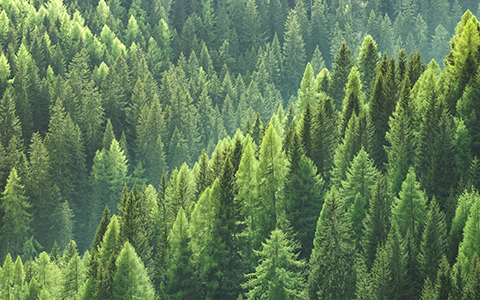
Pine tree diseases attack all pinus species

Keep treatable diseases from infecting and killing your pine trees. Recognizing the signs of disease and taking action to stop them will help you keep your pine trees robust and stable.

72tree.com gathered the following information and tips about pine tree disease signs, treatments, and prevention.

Pine Tree Disease

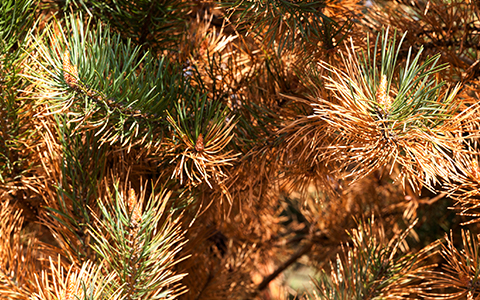
In years with heavy rainfall or severe drought, pine trees may brown in response. Browning is typically caused by the pine tree’s inability to uptake sufficient water to keep its needles fresh and alive. When moisture is overly abundant (and drainage is poor), root rot and other diseases are often the culprits. Consider the following pine tree diseases:

1. Annosus Root Disease (Heterobasidion annosum)

Pine tree diseases include heterobasidion annosum

Heterobasidion annosum is a basidiomycete fungus in the Bondarzewiaceae family. It is considered one of the most economically damaging forest pathogens in the Northern Hemisphere. Heterobasidion annosum is widespread in US forests and is responsible for $1 billion in annual pine tree losses.

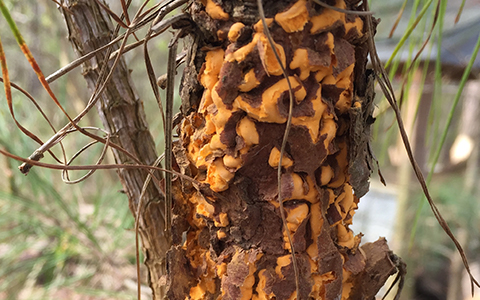
Appearance – In some cases, resin flow may appear near the root collar as the tree attempts to defend itself against attack. Diseased pines may show crown thinning and yellowing. In pine trees, the disease is most active in the sapwood, killing tissues and heartwood as it progresses.
Treatment – Carefully remove and destroy infected trees and stumps. Any stumps left in the ground should be treated with borax.
Prevention – This disease typically enters a pine tree stand when spores land on freshly cut limbs or stump surfaces. The fungus grows from the stump into nearby live trees via root grafts or contacts. For prevention, treat stumps with borax whenever thinning in a high-hazard area.

2. Diplodia Tip Blight (Sphaeropsis sapinea)

Pine tree diseases include sphaeropsis sapinea

Diplodia blight, previously called Sphaeropsis tip blight, is a common fungal disease of stressed conifers, most typically pines with needles in bunches of 2's and 3's.

Appearance – Needles of new shoots will remain stunted, turn straw-colored, and will be glued in place from excess resin. Mature needles on branches end up killed by girdling cankers. Sticky, clear-to-white resin is found on dead twigs, the main stem, or branches with cankers.
Treatment – If you previously had problems with Diplodia, consider applying fungicides as the candles are expanding and then two more applications at 2-week intervals (bud break, half candle, and full candle). This typically prevents any spores from being disseminated from infecting the tree’s succulent new growth.
Prevention – Proper tree care, including increased irrigation during drought, pruning, and equipment sanitation are often effective methods for control of Diplodia tip blight and canker, especially when pines are newly infected.

3. Dothistroma Needle Blight (Dothistroma septosporum)

Pine tree diseases include dothistroma septosporum

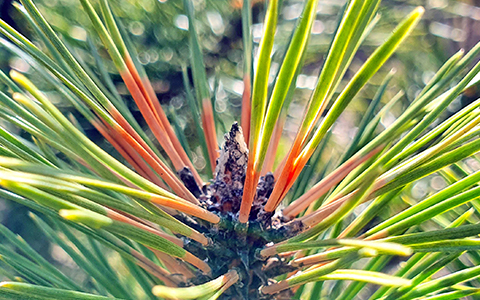
Pine trees of all ages can become infected. Symptoms are typically first seen at the base of the crown on older needles. Infected needles develop yellow and tan spots and bands, which soon turn red. As the disease progresses, the ends of the needles turn reddish-brown while the needle base oddly remains green.

Appearance – Reddish brown spots or bands appear on needles in the fall. Needle spots girdle the pine’s needles. The needle beyond the band dies and turns brown, leaving the bottom portion of the needle green. Tiny black fungal fruiting bodies will appear in the bands or the needle’s dead areas.
Treatment – A copper fungicide spray is an effective method to prevent needle cast. Other useful fungicides are chlorothalonil and mancozeb.
Prevention – If your trees have a history of Dothistroma needle blight, copper fungicides can protect new needles from infection. Fungicides need to be applied before buds open in the spring.

4. Fusiform Rust (Cronartium quercuum)

Pine tree diseases include cronartium quercuum

Fusiform rust is caused by a curious fungus that produces five spore stages and requires an oak and a pine tree to complete its life cycle.

Appearance – Fusiform rust is caused by Cronartium quorum f. sp. fusiforme. It produces bright orange spores on southern yellow pines, especially loblolly pine, in springtime.
Treatment – Avoid planting any rust susceptible pine tree species in locations where fusiform rust is or has been an issue. Pruning branch cankers and completely removing diseased branches can help lower potential trunk infection. However, once the trunk is infected, branch pruning is no longer recommended (careful tree removal and destruction is).
Prevention – Disease prevention is best accomplished by planting resistant pine species and treating all oak trees growing anywhere in the vicinity of your pine trees.

5. Needle Rust (Chrysomyxa ledicola Logerh)

Pine tree diseases include chrysomyxa ledicola logerh

Pine or spruce needle rust is easily identified by pale, white, or orange blisters appearing on infected needles (in summertime). White blisters will appear on the current year's needle growth.

Appearance – Yellow-to-orange spots or bands appear on green needles in spring. In late spring to early summer, tiny, raised, white tubes form on needles breaking open to release powdery, orange spores. These infected needles can remain attached to the tree for several years.
Treatment – Needle rust is considered a minor stress on pine trees and typically requires no management efforts. However, when necessary, the most efficient rust disease control is to carefully prune and destroy affected areas and remove any visible galls (abnormal growths) in late winter or early spring before they can produce spores.
Prevention – Follow these best practices to help prevent spruce needle rust:

• Redirect lawn sprinklers away from pine branches and needles.
• Plant your spruce trees far enough apart to allow good air circulation between them.
• Prune out and destroy wilted or blighted stems and branches.

Note: In most cases, pine needle rust is a cosmetic issue, and no management is needed.

Pine Tree Disease Control

In this article, you discovered essential information and pro tips on identifying, treating, and preventing several pine tree diseases.

Knowing how to identify, control, and prevent deadly pine tree diseases will help you keep your pine trees thriving while stopping these diseases from spreading across your landscape.

Failing to recognize signs of diseased pine trees will lead to their death, potentially causing catastrophic damages and life-threatening injury when they fall.

Sources:
tfsweb.tamu.edu/uploadedFiles/TFSMain/Manage_Forest_and_Land/Forest_Health/Stewardship/Annosum_Root_Disease.pdf
fs.usda.gov/Internet/FSE_DOCUMENTS/stelprdb5299327.pdf
extension.umn.edu/plant-diseases/diplodia-shoot-blight-and-canker
forestry.ces.ncsu.edu/2017/04/so-what-is-the-orange-stuff-on-my-pine-trees/
extension.psu.edu/spruce-needle-rust

Photo Credit: craven.ces.ncsu.edu

This article was first published on: http://www.72tree.com/5-pine-tree-diseases-and-treatments/

Wednesday, November 9, 2022

7 Beautiful Trees for Alpharetta Georgia Landscapes

Beautiful landscape trees for alpharetta georgia include flowering species like the weeping cherry

Avoid planting run-of-mill trees and having a basic landscape. Knowing the unique trees that can grow in your Alpharetta landscape will create a captivating aesthetic and curb appeal.

72tree.com gathered the following species and growing information about 7 of the most beautiful trees to plant in your Alpharetta, Georgia, landscape.

1. Southern Live Oak (Quercus virginiana)

Beautiful landscape trees for alpharetta georgia include live oak

Live oak grows to be a massive, picturesque, sprawling tree with magnificent horizontal and arching branches that form a broad, rounded, and majestic canopy. A squat, tapering trunk supports the massive, irregular limbs, often resting their “elbows” on the ground.

Size at Maturity – On average, this species reaches 50 feet in height with an 80+ foot spread.
Soil Requirements – The live oak thrives in acidic, alkaline, loamy, moist, sandy, well-drained, and clay soils.
Sun Exposure – Full sun to partial shade
Water Needs – While your oak tree establishes its root system and matures for the first 2 to 3 years, you should water it weekly. It will take about 10 gallons of water per inch of trunk diameter to keep this species thriving.
Hardiness Zone – 7 through 10

2. Rhododendron (Rhododendron)

Beautiful landscape trees for alpharetta georgia include rhododendron

Rhododendron, or “red tree,” refers to the red flowers and woody growth of some species, but rhododendrons can range in habit from evergreen to deciduous and from low-growing shrubs to tall, stunning trees.

Size at Maturity – This species can reach 5 to 20 feet tall with a 3 to 8-foot spread (depending on the variety).
Soil Requirements – Rhododendrons thrive in well-draining soil with abundant organic matter.
Sun Exposure – Full sun
Water Needs – Water rhododendrons twice weekly during the first growing season. Once established, only water them during dry periods.
Hardiness Zone – 4 through 8

3. Japanese Maple (Acer palmatum)

Beautiful landscape trees for alpharetta georgia include japanese maple

This incredible maple shows off bright green foliage in spring and summer, then turns golden yellow and red in the fall.

Size at Maturity – This species can reach from 15 to 25 feet tall with a 15 to 20-foot spread.
Soil Requirements – Japanese maples thrive when planted in well-drained, acidic soil high in organic matter.
Sun Exposure – Dappled or Afternoon Shade
Water Needs – Water this species heavily twice weekly during normal weather and increase waterings to three or four times during droughts.
Hardiness Zone – 5 through 8

4. Weeping Cherry (Prunus subhirtella)

Beautiful landscape trees for alpharetta georgia include weeping cherry

This cherry tree variety generally features non-fragrant pale pink to white flowers in spring, pea-sized blackish (inedible) fruits in late summer, and ovate to lanceolate green leaves gently swaying on drooping branches and stems.

Size at Maturity – This species can reach from 20 to 25 feet tall with a 15 to 20-foot spread.
Soil Requirements – Weeping cherry trees are highly-adaptable to a range of soil types but flourish in loose, well-drained, loamy soil.
Sun Exposure – Full sun
Water Needs – A weeping cherry tree should be watered two to three times weekly during its first year. Afterward, it should only be watered when the top three inches of soil are dry.
Hardiness Zone – 4 through 9

5. Eastern Redbud (Cercis canadensis)

Beautiful landscape trees for alpharetta georgia include eastern redbud

This tree species displays a variety of colors throughout the year. Leaves emerge reddish, turning vibrant green as they expand. The tree’s foliage is dark green in summer and yellowish in autumn. The tree’s showy flowers are pea-like and rosy pink with a purplish tinge.

Size at Maturity – This species can reach from 20 to 30 feet tall with a 25 to 35-foot spread.
Soil Requirements – Eastern redbud trees thrive in acidic, alkaline, loamy, moist, nutrient-rich, sandy, well-drained, and clay soil.
Sun Exposure – Full sun to partial shade
Water Needs – Water your eastern redbud two to three times weekly during its first year. Afterward, it should only be watered when the top three inches of soil are dry.
Hardiness Zone – 4 through 9

6. Rainbow Eucalyptus (Eucalyptus deglupta)

Beautiful landscape trees for alpharetta georgia include rainbow eucalyptus

The rainbow eucalyptus is an evergreen tree with drooping spear-shaped, silvery-green leaves and curious clusters of tiny white flowers. The tree’s most stunning feature is the trunk, which grows rainbow bark in vibrant (nearly fluorescent) green, blue, orange, red, and purple shades. When planted in cooler areas, this tree species will require shelter from freezing wind and extremely low temperatures.

Size at Maturity – This species can reach 60 to 80 feet tall with a 20 to 30-foot spread.
Soil Requirements – This species thrives in sandy, loamy soils that are fertile, moist, and well-drained.
Sun Exposure – Full sun
Water Needs – Water your tree daily for best results, never flooding the tree with standing water.
Hardiness Zone – 9 through 11

7. Red Oak (Quercus rubra)

Beautiful landscape trees for alpharetta georgia include red oak

Most red oak leaves fade to brilliant red or orange-red shades in fall and will hold their color longer than other deciduous trees. Some red oak trees have yellow fall foliage instead of red.

Size at Maturity – This species can reach 60 to 75 feet tall with a 45-foot spread.
Soil Requirements – Like other oak species, red oak thrives in acidic, loamy, moist, sandy, well-drained, and clay soils.
Sun Exposure – Full sun to partial sun
Water Needs – While your oak tree establishes its root system and matures for the first 2 to 3 years, you should water it weekly. It will take about 10 gallons of water per inch of trunk diameter to keep this species thriving.
Hardiness Zone – 3 through 8

Beautiful Landscape Trees

In this article, you discovered essential species and growing tips for seven of the most attractive tree species for Alpharetta, Georgia, landscapes.

Knowing which tree species possess beautiful features will help you add intrigue and stunning visuals to your Alpharetta, Ga, landscape.

Not knowing the tree species capable of enhancing your Alpharetta, Georgia yard will leave your landscape dull and impressive.

Sources:
plants.ces.ncsu.edu/plants/quercus-virginiana/
hgic.clemson.edu/factsheet/rhododendron-2/
edis.ifas.ufl.edu/publication/ST023
bellarmine.edu/faculty/drobinson/WeepingCherry.asp
extension.umass.edu/plant-identification/eastern-redbud
gms.ctahr.hawaii.edu/gs/handler/getmedia.ashx?moid=6149&dt=3&g=12
naturalresources.extension.iastate.edu/forestry/iowa_trees/trees/red_oak.html

This article was first published on: http://www.72tree.com/7-beautiful-trees-for-alpharetta-georgia-landscapes/