Showing posts with label Diseased Tree. Show all posts

Tuesday, March 19, 2024

Apple Scab Disease and Treatment

Apple scab is a fungal disease that can devastate apple trees, resulting in disfigured fruit and leaves. Identifying and treating apple scabs is a top priority for growers and is key to maintaining orchard health and productivity. This guide provides the insights needed to detect the disease, understand its life cycle, and implement effective control measures.
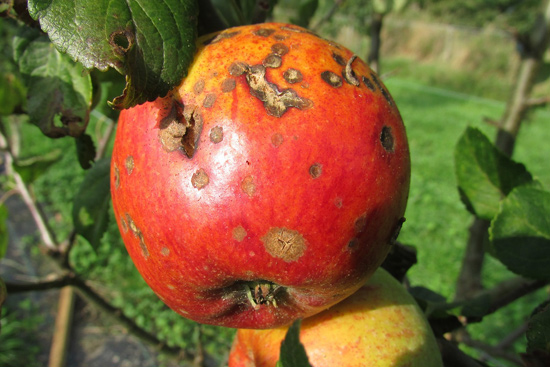
apple scab disease and treatment

Key Takeaways

• Apple scabs caused by the fungus Venturia inaequalis significantly affect apple tree yield and health. Early symptom recognition and understanding of the pathogen’s life cycle are crucial for effective management.

• Preventive measures, including appropriate orchard sanitation, the use of disease-resistant apple cultivars, and cultural practices, are key to reducing the incidence of apple scab; applying fungicides at the right time can also effectively control outbreaks.

• Amidst outbreaks, swift action is necessary, such as pruning to remove infected parts and potentially seeking professional help; maintaining overall tree health and vitality through optimal care practices is essential for disease resistance and orchard success.

Understanding Apple Scab and Its Impact on Orchards

Apple scab, the notorious plant disease caused by the fungus Venturia inaequalis, is a formidable adversary for apple cultivators. This ascomycete fungus has an interesting life cycle that involves the production of ascospores, a type of spore formed within a sac-like structure called an ascus. The apple scab fungus capitalizes on the early spring season to launch its attack, making it a prevalent threat during this period.

The impact of apple scab is not to be underestimated. Infected trees exhibit leaf spots, lesions, and infected fruit, all of which can reduce the yield and quality of the harvest. The disease has a significant impact on orchards, affecting not only the productivity of the trees but also their overall health. This makes it crucial for growers to identify and manage apple scabs effectively to maintain the prosperity of their orchards.

Recognizing Symptoms of Apple Scab

The first step towards managing apple scab is recognizing its symptoms. Infected trees initially exhibit olive green apple scab leaf spots on leaves and fruit, marking the onset of the disease. These spots can appear on both surfaces of older leaves and on the underside of young leaves, making them a key indicator of infection. As the disease progresses, apple scab lesions may also develop on the fruit and leaves.
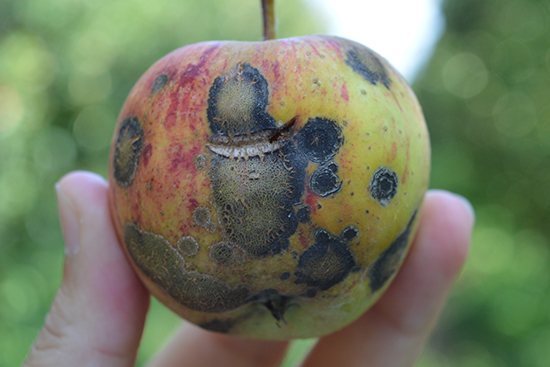
apple scab infection on leaves and fruit

As the disease progresses, the spots evolve into velvety-grey to black lesions that give the plant tissue a blistered appearance. The infection can escalate to the point where the leaves can:

• twist

• distort

• stunt

• fall prematurely

This can lead to severe damage. Recognizing these symptoms early on is crucial for effective apple scab management.

How Apple Scab Fungus Overwinters

The apple scab fungus is a master of survival, overwintering in infected fallen leaves and waiting for the right moment to launch a new attack. During the winter and early spring, the fungus forms pseudothecial initials within these fallen leaves, which later release ascospores capable of infecting new leaves. The fungus relies on sexual reproduction to develop these pseudothecia, a process that takes place in the leaf debris.

With the arrival of early spring and the bud break of apple trees, the primary ascospores mature and become ready for infection. Understanding this overwintering process is key to predicting the timing of apple scab infections and implementing effective control measures.

Identifying Hosts of the Apple Scab Pathogen

Although apple scab primarily affects apple cultivars and various species of crabapple within the Malus genus, it does not discriminate against other hosts. The pathogen can also infect a variety of other plants, including:

• Cotoneaster integerrima

• Crataegus oxycantha (Hawthorn)

• Sarcocephalus esculantus

• Sorbus (Mountain Ash)

• Viburnum

This wide host range makes effective management of apple scabs crucial to maintaining the health of apple orchards and other susceptible plant species.

Timing and Conditions Favoring Apple Scab Infections

Timing and environmental conditions play significant roles in the spread and severity of apple scab infections. The disease favors:

• cool and wet conditions in early spring

• a higher discharge rate of ascospores from the late pink bud stage through petal fall

• temperatures ranging from 61 to 75°F

Infections rarely occur at temperatures above 78°F.

The duration of leaf wetness also influences the infection process. At moderate temperatures between 61 to 75°F, a minimum of 6 continuous hours of leaf wetness is necessary for infection. To calculate the risk of primary apple scab infection, growers can use the Revised Mills Table, considering the average temperature during the leaf wetness period and the duration of this wetness. Understanding these conditions can help growers predict apple scab infection periods and implement preventive measures accordingly.

Preventive Measures Against Apple Scab
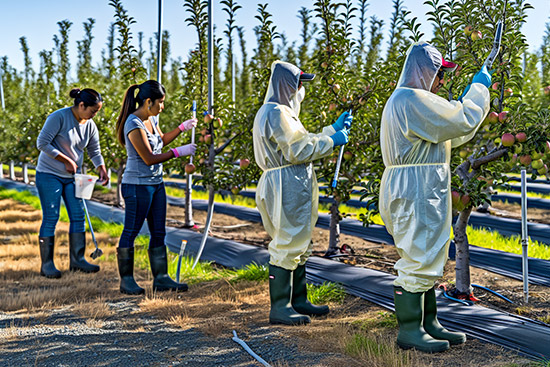
pruning and sanitation for apple scab prevention

Prevention is a crucial part of managing apple scab. Implementing cultural practices such as maintaining proper tree spacing for air movement, pruning for better air circulation, and keeping tree crowns open can significantly reduce the risk of infection. Pruning to open the tree canopy during winter can also aid in lowering apple scab incidence by improving air circulation and sunlight penetration, allowing for faster foliage drying.

Another vital aspect of prevention involves sanitation. Removing and destroying infected leaves and fruit at season’s end can significantly reduce the number of fungal spores that could cause new infections. Choosing resistant cultivars is also an important preventive measure, offering a significant line of defense in managing this disease.

Choosing Scab Resistant Cultivars

Choosing resistant cultivars is one of the best defensive strategies against apple scab. Several apple cultivars exhibit resistance to the disease, including:

• Crimson Crisp

• Enterprise

• Liberty

• Goldrush

• Pristine

Bred for their resilience against apple scab, these cultivars can play a significant role in disease management.

In addition to apples, certain crabapple varieties also show resistance to apple scab. These include Prairiefire, Red Jewel, and Sugar Tyme. Using these resistant cultivars can significantly reduce the incidence of apple scab in your orchard, providing an essential line of defense against this relentless pathogen.

Sanitation Practices to Reduce Infection

Sanitation practices also play a critical role in preventing apple scab. One such practice involves applying urea to apple trees after harvest but before leaf drop in the fall to expedite leaf decomposition. This reduces the number of overwintering spores of the apple scab fungus, which can significantly decrease the potential for new infections in the next growing season.

Another critical sanitation practice is raking and disposing of fallen leaves and fruit, which removes the primary source of fungal spores and breaks the apple scabs’ infection cycle. Pruning and appropriately discarding infected leaves from the tree is also an essential method to diminish the amount of fungal inoculum present, curtailing the start of the disease cycle the following season.

Effective Treatment Options for Apple Scab

Despite the best preventive measures, apple scab may still find a way to infiltrate your orchards. In such cases, effective treatment options are essential. Several chemical fungicides, including Myclobutanil and synthetic options like Organocide® Plant Doctor, have proven effective in controlling apple scabs. These fungicides work by inhibiting the growth of the fungus, thereby preventing further spread of the disease.

Organic treatment options are available for those seeking more natural solutions. These include sulfur-based sprays and biopesticides such as Bonide® Orchard Spray and Serenade ASO. These organic treatments offer a more environmentally friendly approach to managing apple scabs, providing effective control without the use of harsh chemicals.

Applying Fungicides at Key Times
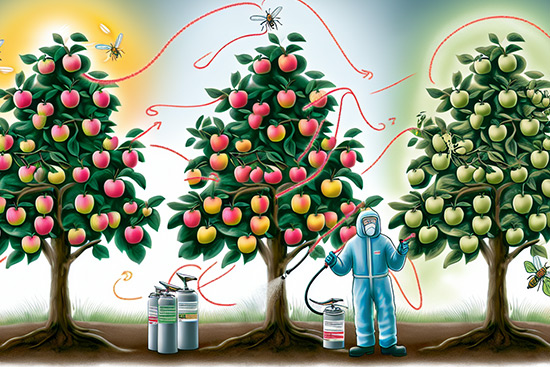
applying fungicides during apple scab infection period

When it comes to fungicide application, timing is everything. Fungicide sprays should begin at the ‘½” green tip’ stage for ornamental and edible crabapple and apple trees when the first green leaf tips appear in the spring. This early application helps to prevent the establishment of the apple scab fungus before it can cause significant damage.

Ascospore dissemination marks a critical period for fungicide applications. It coincides with the time from bud break to the end of bloom. This is when the fungus is most actively spreading, indicating when fungicides are most crucial. Repeat fungicide applications should be guided by monitoring for scab lesions and continued until the majority of the flower petals have fallen.

Fungicide label recommendations generally suggest a spray interval between 7 and 10 days, with the frequency adjusted based on rainfall and previous scab issues. Mid-June examinations of leaves for scab lesions inform the need for continued spraying to manage secondary infections throughout the growing season. Effective fungicide application requires a combination of the right timing, frequency, and persistence.

Organic Approaches to Managing Apple Scab

Organic fungicides offer an effective solution for those seeking a more natural approach to managing apple scab. Organic options like Bonide® Orchard Spray with sulfur, pyrethrins, and liquid copper soap are used as sprays for managing the disease. These treatments work by inhibiting the growth of the fungus, similar to chemical fungicides, but without the potential environmental impact.

Liquid copper soap should be sprayed two weeks before apple scab symptoms usually appear or at the first sign of disease, with subsequent applications at 7 to 10-day intervals up to blossom drop. Wettable sulfur products, such as Bonide® Sulfur Plant Fungicide, can be applied from pre-blossom stages before rainy periods or spore discharge through cover sprays up to the day of harvest. As with any treatment, these organic methods should be used with consideration for protecting pollinators during the apple scab management process.

Tackling Severe Apple Scab Outbreaks

In the face of severe apple scab outbreaks, prompt and assertive action is necessary. Pruning is a critical step in managing such outbreaks to maintain the tree’s health and potential yield. By removing infected leaves and tissues, the spread of the fungus can be minimized, protecting the remaining healthy tissue from infection.

The apple scab fungus can cause significant damage, including fruit drop, by infecting blossoms, sepals, and pedicels. To prevent further infection and enhance tree health, it is important to take the following steps:

1. Properly prune the tree to remove diseased or dead branches. This will improve air circulation in the canopy.

2. Act fast and decisively to limit the spread of the disease.

3. Minimize the impact of the disease on the tree.

By following these steps, you can effectively treat apple scab and protect your tree.

When to Seek Professional Help

There may be instances when apple scab has spread significantly, or the treatment requires a complex schedule, making it necessary to consult tree care professionals. Professional arborists can assess the specific situation of your orchard or garden and offer a quote along with a customized treatment plan.

Booking professional treatment services early, especially from April through July, ensures availability and timely management of apple scab.

The Economic and Aesthetic Toll of Apple Scab

The impact of apple scab extends beyond the health of the trees. The disease can lead to extensive economic losses, in some cases exceeding 70%, for apple growers due to both direct fruit loss and indirect losses like repeated defoliation that stunts tree growth and yield. Infections from apple scabs reduce fruit size and quality, causing distortions and uneven growth, which can lead to cracking in the skin and flesh, thereby diminishing the marketability of the apples.

Apple scab has several negative effects on apple trees:

• It causes deformed leaves and fruit, affecting the trees’ overall appearance.

• This can lower the visual quality perceived by consumers.

• Growers face economic pressures from consumer demands for reduced chemical use.

• Ongoing management of pathogen resistance is necessary.

The battle against apple scab is not just about maintaining the health of the trees but also about preserving the economic viability and aesthetic appeal of the orchards.

Nurturing Healthy Trees Beyond Apple Scab
nurturing healthy trees to reduce apple scab impact

While managing apple scabs is crucial, nurturing overall tree health is equally important. Maintaining tree vigor enhances apple trees’ disease-resistance capabilities, making them more resilient to infections and better equipped to cope with stress induced by apple scabs and other diseases. Optimally planting, timely fertilization, and proper pruning techniques can achieve robust tree health.

Practices such as appropriate watering schedules and protection of the trees’ roots and bark are critical to minimizing stress and bolstering the trees’ disease defenses. Healthy apple trees not only stand a better chance against apple scab but are also more capable of producing high-quality fruit, ensuring the prosperity of your orchards.

Enhancing Tree Vitality

Enhancing tree vitality requires a combination of good planting practices, proper fertilization, and appropriate watering. Maintaining soil pH levels between 6.0 and 6.5 is critical for optimal growth of apple trees. Applying a thick layer of compost under trees can minimize splash dispersal of fungal spores and provide trees with the necessary nutrients. A 2-3 inch layer of organic mulch helps in weed control and preserves soil moisture, both important for tree vitality.

Regular deep watering during the first five years after planting supports establishing a strong root system in apple trees. Fertilization should be based on soil tests to provide necessary nutrients without excessive vegetative growth, which can attract pests and diseases.

To ensure proper fertilization:

• Conduct soil tests to determine nutrient deficiencies

• Apply fertilizers according to the recommended rates

• Avoid over-fertilization, especially with nitrogen, to prevent issues like reduced fruit set, pest problems, and environmental harm.

By following these guidelines, you can promote healthy growth and productivity in your apple trees while preventing apple disease.

By enhancing tree vitality, you can ensure a healthier and more resilient orchard, especially for your fruit trees.

Apple Scab Summary

The battle against apple scab is multifaceted, requiring knowledge, vigilance, and effective management strategies. From understanding the disease and its impact on orchards, recognizing its symptoms, adopting preventive measures, choosing resistant cultivars, and implementing effective treatment options – managing apple scab is a continuous process that extends well beyond the disease itself. It involves nurturing healthy trees, enhancing their vitality, and ensuring their resilience against current and future threats. Armed with this knowledge, you are now better equipped to protect your orchards and maintain the health and prosperity of your apple trees, ensuring a bountiful harvest season after season.

Frequently Asked Questions

These are the more common questions readers have about apple scab in Alpharetta, Georgia:

How do you treat apple scab?

To treat apple scabs, choose scab-resistant apple varieties, regularly remove fallen leaves or fruit, and keep the tree crowns open for good airflow. Consider using fungicides with proper timing as an additional management measure. A synthetic fungicide like Myclobutanil can also be effective, as it is applied from the green tip until after the petals fall.

Is it safe to eat apples with apple scab?

Yes, it is safe to eat apples with apple scab, as the lesions are superficial and do not affect the fruit’s safety.

What are the first signs of apple scab?

The first signs of apple scab, which may often go unnoticed, include twisted and puckered leaves with black, circular, scabby spots on the underside and velvety olive-green spots on the upper surface. Watch out for these symptoms to catch apple scab early.

Does apple scab affect other trees?

Yes, apple scab affects other trees, such as crabapple, hawthorn, mountain ash, and pear, among others. It primarily impacts trees in the rose family.

What is apple scab, and how does it affect orchards?

Apple scab is a fungal disease that primarily affects apple and crabapple trees. It causes leaf spots, lesions, and infected fruit, ultimately reducing the yield and quality of the harvest.

This article was first published on: https://www.72tree.com/apple-scab-disease-and-treatment/

Friday, May 19, 2023

Why Do Trees Suddenly Lean

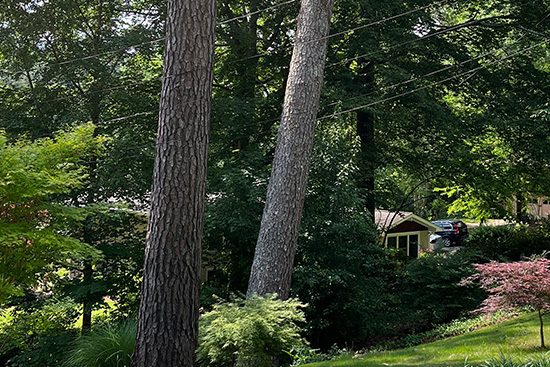
leaning tree

Need help figuring out why your tree is leaning? Understanding why trees suddenly lean will help you prevent catastrophic damages and them falling on your property.

72tree.com gathered the following information to help you accurately identify why your tree is leaning and what you can do to protect your property, home, and well-being.

Why Do Trees Lean?

Some trees lean, and you may have wondered why this happens. Consider the following reasons trees lean, what it means for their health and safety, and what you should do about it.

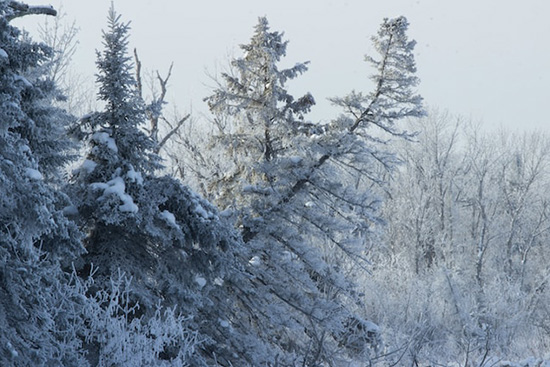
There are multiple reasons why trees lean. The most common cause is strong prevailing winds or heavy snow and ice loads pushing the tree from its vertical axis. Trees naturally tend to grow straight up towards the sun, but environmental factors like wind and snow can cause them to tilt. Over time, this tilt can become more pronounced, resulting in a leaning tree.

tree with snow leaning

Another reason for tree lean is the uneven weight distribution on the trunk. Trees with a heavy canopy (on one side) or those growing on a slope may develop a lean towards the lighter side to maintain balance. This is common in deciduous trees that have lost multiple or heavy branches on one side.

Tree lean can also be a sign of root rot or damage. A tree's root system is fundamental for providing a tree’s stability and anchorage. A tree may lean when roots rot or are damaged due to soil erosion or compaction. This is common in areas with a high water table or soil prone to erosion.

Note: Some tree species are more prone to leaning than others. Conifer trees, like pines, are more likely to develop a lean due to their shallow root system. While trees like oaks have deep taproots that provide greater stability and reduce the risk of leaning.

While some tree lean is natural and harmless, excessive leaning can indicate a severe health issue. A leaning tree may indicate root rot, a fungal disease that can cause a tree's root system to weaken and ultimately fail.

Tip: If you notice a tree leaning significantly, it's crucial to have it inspected by a professional arborist quickly to determine the cause and assess the risk of the tree falling.

When to Worry about a Leaning Tree

For property owners, a leaning tree can be an alarming cause for concern. While some tree lean is natural and harmless, excessive leaning can indicate a health issue that must be quickly addressed. Here are some factors in determining whether a leaning tree is a cause for concern:

Degree of Lean - If your tree is leaning at an angle greater than 15 degrees, it may be a sign of a significant problem. Trees severely leaning can be dangerous and may need to be removed to ensure people’s and property’s safety.

Leaning Speed - If you notice the tree has started to lean suddenly or at a fast pace, it may indicate an advanced health issue. This could result from root damage or other underlying problems that must be addressed quickly.

Tree Condition - If your tree has dead or broken branches, signs of decay, or other visible damage, it may be more likely to lean. A weakened tree may not withstand strong winds or other environmental factors, leading to a more significant lean.

Location - If the leaning tree is growing near a building or other large structure, it could pose a significant risk. In such cases, it's crucial to have the tree inspected by a professional arborist to assess the tree’s health and risk and determine the best course of action.

If you notice a leaning tree on your property, don't delay in deciding when to remove it. Taking prompt action is crucial because waiting can significantly increase the risk of it falling and causing catastrophic or life-threatening injury.

Tip: An arborist can inspect the tree, determine the cause of the lean, and recommend the best course of action, whether pruning, cabling, or removal. Protecting your tree is paramount to ensuring your family and property’s safety.

What is Phototropism

Phototropism is a plant's natural response to light. It's a process in which a plant's cells respond to the direction and intensity of light, causing the plant to grow, lean, or move toward the sun or light source.

Trees also utilize phototropism to grow toward the sun. When a tree's leaves or branches are shaded by other trees or structures, the tree will instinctively grow towards the light source to ensure maximum exposure to sunlight. This allows the tree to produce maximum energy through photosynthesis.

The phototropic response in trees is controlled by hormones called auxins. Auxins are produced in the growing tips of the tree's shoots and are transported down the stem, where they promote cell elongation (on the tree’s shaded side). This process causes the tree to bend towards the sun, resulting in positive phototropism.

Positive phototropism is crucial for a tree’s healthy growth. Without it, trees may be stunted or malformed from inadequate exposure to sunlight.

Note: Phototropism allows trees to adjust growth patterns in response to changing light conditions, like the sun’s shifting angle during different seasons.

Leaning Trees

In this article, you discovered several reasons that trees lean and what you can do to keep your property, home, and loved ones safe.

Knowing what causes trees to lean will help you take swift and appropriate action to save or remove your tree.

Failing to quickly identify and properly address the potential cause of your leaning tree may result in catastrophic damages to your property or injury to a person.

Sources:
extension.tennessee.edu/publications/Documents/sp573.pdf
extension.umd.edu/resource/how-do-you-decide-when-remove-tree
extension.psu.edu/what-to-do-about-leaning-trees
bio.libretexts.org/Bookshelves/Introductory_and_General_Biology/General_Biology_1e_(OpenStax)/6%3A_Plant_Structure_and_Function/30%3A_Plant_Form_and_Physiology/30.6%3A_Plant_Sensory_Systems_and_Responses

This article was first published on: https://www.72tree.com/why-do-trees-suddenly-lean/

Friday, February 22, 2019

Can We Live Without Trees and How to Save Them

Deforestation and climate change lead to desolate land and crop failure

Without trees, we all die. Besides providing oxygen for us to breathe, trees make life on earth sustainable. Discover what is happening to the world’s trees and why we urgently need to stop senseless deforestation.

Trees affect everything from the air we breathe to the rain that falls from the sky. Without a robust population of trees, we die and so does our planet.

72tree.com gathered tree information, statistics, problems, and actions we can all take to preserve our trees and our habitable planet.

What Will Happen if We Cut Down All the Trees?

Right now, just over 3 trillion trees are growing on our planet. Every year, over 15 billion of those trees are felled or lost to natural disasters. At this rate, earth’s last tree will fall in roughly 200 years.

As earth’s tree population nears zero, the following will occur:

Oxygen and CO2 – Trees remove CO2 from the atmosphere and convert it to oxygen through the process of photosynthesis. Without them converting CO2 to oxygen, CO2 levels would begin to rise while oxygen levels would steadily fall.

Deforestation and climate change reduce oxygen and raise co2 levels in the air

Trees are responsible for 35% of the oxygen we breathe. The other 65% are produced by algae and phytoplankton in the oceans.

Flooding and Erosion – Without tree roots to absorb water and stabilize the soil, even the smallest of storms will result in significant flooding, topsoil erosion, and landslides.

Air and Soil Pollutants – Trees work nonstop to filter ammonia, sulfur dioxide, nitrogen dioxide, and carbon monoxide from the air and soil.

Without trees, these pollutants would find their way into what crops are left and into the feed of what animals are left, not to mention the air we breathe.

Evapotranspiration – Without trees, the process of evapotranspiration would stop. This is the process of moistening the air which produces more clouds. Evapotranspiration is responsible for maintaining the delicate balance between fertile land and dry desolate desert.

Deforestation reduces evapotranspiration speeding up climate change

Fewer clouds mean less rain. With less rainfall, fertile land would dry up, fresh water sources would run out or stagnate, and agriculture will begin to fail on a global scale.

Acid Rain – Without trees to remove pollutants, what little rainfall remains would be mostly acidic. All remaining plant life would be crippled.

Global Warming – As the earth’s temperatures rise, the polar ice-caps would melt at an accelerated rate, causing ocean levels to rise and inundate coastal lands and freshwater sources.

As witnessed primarily in the south pole, the ice caps are already receding at an alarming pace, and if this melting isn’t slowed or stopped, it could threaten the survival of all wildlife within that ecosystem.

As the ice melts and causes desalinization in the oceans, weather patterns are subject to erratic change. Off-season snow storms, tsunamis, typhoons, hurricanes, and even blistering summers can all be driven by our raising global thermostat.

Deforestation and climate change cause polar ice to melt

Labored Breathing – With CO2 levels on the rise and oxygen levels depleted, people with respiratory and blood problems would be the first to die along with animals unable to cope with the atmospheric changes.

Extinction – Small animals which once depended on trees for food and shelter would be the first to perish. Within a short period, the natural food chain would begin to lose its structure, leaving carnivorous scavengers to likely last the longest.

As temperatures continue to rise, the oxygen levels in the atmosphere decrease, and food sources become even more scarce, the food chain – in its entirety – would eventually break down, leaving every living creature on the planet on a collision coarse with extinction. Including mankind.

The timeline and events portrayed above are a representation of the first fifty to one hundred years without trees.

Deforestation and climate change leave scavengers at the top of the food chain

What Can We Do to Stop Deforestation?

You alone can make a tremendous impact on the future of our planet’s tree population. The following are ways that you can help stop deforestation:

Plant a Tree – Every tree you plant slows down the effects of deforestation. However, planting a tree isn’t enough. It is just as important to keep that tree healthy and resistant to disease and insect infestation.

Adding to the complexity of this situation is the process of natural deforestation. This is when beetles and other boring insects successfully attack large numbers of trees in either urban settings or forests. As these trees die, they dry out and become fuel for wildfires.

Besides annual inspections of your trees, whenever you detect the presence of an infestation or disease, call an arborist to assess the situation and offer a course of action.

Planting trees to stop deforestation and climate change

you can discover more about tree health problems and solutions by visiting 72tree.com/9-common-tree-health-problems-solutions/

Go Paperless – Whenever possible, receive and pay bills online. With the technological advances we have at our fingertips, we are able to reduce the use of nearly all paper products drastically.

Recycle – For decades, companies and households of all sizes have been recycling. You can push this concept forward by only purchasing recycled paper products and by recycling yourself.

Look for Forest Stewardship Council Certification – This is known as FSC certification and can be found on wood, paper, and food products. Products with this certification are produced in sustainable ways and can be classified as follows:

Recycling to stop deforestation and climate change

• FSC 100% includes products that come from FSC-certified forests.
• FSC Recycled means the wood or paper within a product is sourced from reclaimed material.
• FSC Mixed means at least 70 percent of the wood in a product comes from FSC-certified or recycled material, and that 30 percent is made of controlled wood.

Eat Vegetarian – By eating vegetarian or vegan meals as often as possible, you are reducing the demand for livestock, thereby reducing the need for deforestation to graze the animals.

Teach Others about Sustainability – The most impactful thing you can do to save our trees and forests is to teach others how to live sustainably.

According to recent research, nearly half of the world’s trees have been lost over the past 12,000 years to agriculture and population growth, and at the rate trees are currently being cut down, they will be gone in 200 years unless we take action to prevent it.

Wildlife depends on stopping deforestation and climate change

What Can We Do to Save Trees

As mentioned above, planting a tree helps turn back the effects of deforestation, while saving trees is a bit different. To save a tree, you don’t necessarily need to travel to the forest and stand in the way of a bulldozer.

You can save trees every day by caring for the ones that surround you:

• Plant trees in their hardiness zone.
• Plant trees in locations where they can grow freely.
• Adjust soil conditions to match your trees’ needs.
• Prune your trees as it grows.
• Water your trees during dry weather.
• Learn to identify signs of disease and infestation.
• Schedule annual inspections by an arborist.
• When a tree becomes a hazard, have it removed.

That last bullet point may have confused you. There are times when tree diseases or infestations can pose a grave threat to the surrounding ecosystem. In such cases, removing the tree may be the only practical option to protect other trees.

Tree cutting pruning and removal to protect neighboring woods

Cutting Down Trees Affects Us and Our Environment

All living creatures including mankind need trees to breathe, eat, and live. Life on earth, at all levels, depends on the abundant existence of a healthy tree population.

In this article, you discovered important tree population information, statistics, problems, and actions we can take to care for our trees and keep our planet habitable.

Ignoring that there is a problem only allows the problem to flourish. If we are to preserve our planet, each of us must take action in some way to keep our trees healthy and rely less on the material possessions that encourage deforestation.

Sources:
https://blogs.worldbank.org/opendata/five-forest-figures-international-day-forests
https://www.epa.gov
https://www.greenpeace.org/usa/forests/solutions-to-deforestation/
https://www.ucsusa.org/global-warming/solutions/stop-deforestation
https://ic.fsc.org/en/what-is-fsc-certification
https://www.nature.com/articles/nature14967

This article was first published on: http://www.72tree.com/can-we-live-without-trees-how-to-save-them/

Tuesday, March 21, 2017

Signs of a Diseased Tree – Dieback, Tree Suckers & Water Sprouts

Spruce tree with dieback needs tree care
Spruce with dieback needs tree care to preserve healthy landscape.

Many diverse diseases affect your landscape, shrubs and trees. Identifying these diseases is critical because, not all tree diseases can be controlled. We love to watch things grow when we garden but we must note that not all growth is positive or advantageous to the trees. Some of these growths take energy away from the tree; common examples include water sprouts and suckers. At 72tree.com we often see the damaging effects of tree disease, and in this article, dieback, tree suckers and water sprouts are the disorders we’ll be discussing.

Dieback of a Tree or Its Limbs


In spring as the weather gets warmer, and buds start noticeably leafing out, you might notice that a section or even an entire limb is not leafing out consistent with the rest of the tree. Dieback is a condition in which the ends of the tree branches die. These sections are generally located at the limb tips, but can also be entire limbs or sections of the tree where there will be no leaves. Most times, this is a sign that all is not right with the tree.

Water Sprouts Due to Branch Removal


Water sprouts are dynamic shoots that develop from dormant buds either on large branches or trunks of a tree. They are usually upright and in many cases occur as a result of the removal or trimming of large branches. Heavy pruning may also lead to the production of more sprouts. Tree stress may also result in water sprout growth, but it’s not usually as vibrant as those that occur due to pruning.

Trees should be checked regularly. If you notice new shoots, eliminate them by rubbing them off as they emerge. Large water sprouts can be pruned off close to the trees trunk. Water sprouts can ruin a tree’s shape and they also divert the tree’s energy by blocking air circulation and light. Though not advised, some allow sprouts to grow in the place of missing branches, but it may lead to a reduction in quality of the tree’s ability to bear more fruits. Also, water sprouts are more inclined to promote tears, disease and breaks, as they are generally weaker than other branches.

Tree Suckers


Suckers are un-planned, vegetative growths that stem from a tree’s root system. Suckers grow from rootstock and divert nutrients away from the trees top growth. There isn’t any actual benefit from letting suckers grow because, rootstocks are usually different from the type of tree that you planted (example - a Gala apple tree will not have a Gala apple rootstock).

To find and cut from the base of a sucker, you may have to pull back any ground cover and dig up some soil to fully expose the sucker. Ensure that as much growth as possible is removed to reduce the potential of them popping up again. If they do re-emerge, this simple process will have to be repeated. Although suckers and water sprouts are similar, remember suckers originate from the root or base of the tree.

Tree Disease Prevention and Care


You might be able to deal with a disease that occurs on your trees and shrubs but you ought to consider consulting a local arborist or tree service professional if you are uncertain. The arborist will identify any disease and offer you the best treatment options and the ideal time to care for the tree.

Early spring (during most maintenance pruning) is the best time to remove both water sprouts and tree suckers. However, these unwanted growths sometimes sprout and occur during the growing season, they should be removed as soon as you notice their existence. Your trees will thank you and be fruitful!

This article was first published on: http://www.72tree.com/signs-diseased-tree-dieback-suckers-water-sprouts/