Showing posts with label Tree Removal Roswell Ga. Show all posts

Wednesday, November 17, 2021

Crack In Your Tree Trunk?

Cracks in your tree bark after the winter season could cause severe damage to your tree

Have you noticed cracks and splitting in the trunk of your tree? Is your foliage located in a spot with exposure to frigid winters? If so, it could be a frost crack! These appear as a vertical crack along the trunk of your tree. This damage can be dangerous to a tree because it is severe enough to split through the tree.

Luckily, with a few extra care steps throughout the year, you can prevent these and help your trees stay healthy and in one piece! Read on for advice on how to prevent and treat frost cracks.

Frost Crack Causes

These vertical cracks form when a tree trunk is exposed to extreme changes in temperature between winter and summer. The repeated heating and cooling can cause the molecules to slightly expand and contract just enough that a bark crack can form as a reaction to the extreme changes. Below are ways of helping your tree survive the winter months.

Reversing the Damage

If you notice the cracking, should you do anything about it? Not necessarily, because in most cases, the tree will be able to recover on its own through the natural processes of healing.

However, you can help it recover, and prevent a split trunk, by sealing the crack with plastic. The plastic seal protects the opening from potential infections caused by bacteria and pests. Be careful, though! You should remove any wrapping you place on the tree before summer. Otherwise, it may foster infections instead of preventing them.

Frost Crack Prevention Methods

Insulation – Because frost cracks arise from the changing temperature, you can help prevent the tree trunk from cracking by insulating the base.

Insulation includes wrapping the trunk with a thick protective layer. Ideally, you’d want to use something that would keep warmth, like a tarp, burlap, or cloth.

You can also help insulate your tree’s trunk by planting evergreen plants and bushes around the base. Keeping the bottom of the tree lush with plants and bushes will help keep it warm during the winter and prevent deep freezing.

Keep Trees Healthy – A healthy and vigorous tree will be more capable of healing after a crack and more resistant to bark cracking in the first place. Read on to learn ways to keep your foliage healthy.

Every summer, make sure you give the soil a fresh layer of fertilized dirt to mix into the already present substrate. On top of that, layer some mulch or bark pieces to help pack in the new soil. This mulch technique will also work as a form of insulation during the wintertime.

Watering your tree during dry winter periods is very important too. Even when it’s cold out, your foliage will need to have an ample water supply to stay healthy.

Pruning or trimming the foliage can also encourage it to sprout new healthy growth, improving its overall health status. However, you should hire a professional, as it can be dangerous to do it on your own.

Be Careful Where You Put Your Tree – Location plays a massive role in the health of your foliage during wintertime! To avoid having a split trunk, be careful that your tree is not exposed to strong winter winds because this will cause the bark to become even colder and has a higher chance of cracking.

Winter damage occurs on unprotected trees due to winter wind

Shallow and porous soil/substrate is a bad idea because of how important hydration is for your foliage in winter. Stick to locations where the tree’s roots can extend very far downward for more support and a healthier root system.

Choosing a location with a proven water-retaining soil system always works best. These locations already help your tree stay healthy enough to avoid cracks and heal any cracks that it may have in the future!

Trees Prone to Frost Cracks

Like all organisms, trees have adapted to survive in various climates. Some have adapted better than others to areas with intense winters and are less likely to experience a split trunk.

If you are undecided on what tree species to use, here are a few that are less resistant to winters and more likely to experience bark cracks:

• linden

• sycamore

• oak

• walnut

• willow

• maple

As a rule of thumb, the thinner the bark on the tree, the less resistant it is to cracks. In cold climates, choose trees with thick bark like aspens!

Final Thoughts

Frost cracks result from trees going through extreme cold and heat. The slight expansion and contraction of the molecules inside the tree result in the bark cracking on the surface of the tree.

If you see this happening, it is good to prevent infections and pest infestations by wrapping them in plastic. Consider insulating your tree trunk with either burlap, a tarp, or evergreen shrubbery to avoid cracking in general. Keep your tree healthy by fertilizing, watering, pruning, and adding a mulch layer.

If you keep these tips in mind when placing and taking care of your tree, you will be set for it to resist vertical cracks even in the harshest winters!

This article was first published on: http://www.72tree.com/crack-in-your-tree-trunk/
Thursday, February 18, 2021

What To Do with a Tree Stump

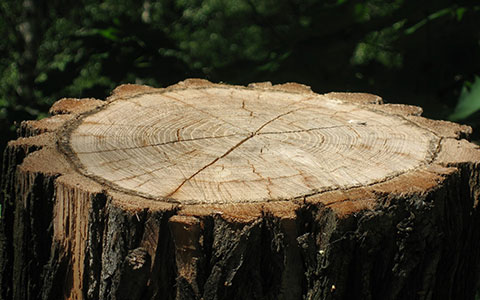
Tree stump freshly cut

Prevent losing the opportunity to repurpose your tree stump. Once you have your dying or dead tree removed, leave the stump and transform it into something special.

72tree.com gathered information on what you can do with a tree stump after having the tree removed.

Tree Stump Repurposing and Decor Ideas

When it’s time to cut down your tree, you’ll want to think ahead and determine what to do with the stump. You could have it ground down or removed by the tree service, or you could preserve and repurpose it in your yard. Consider the following:

• How tall of a stump do you want to keep?
• If you are planning to landscape or hardscape, will the stump interfere with or complement your project?

Here are ten ways to creatively repurpose your tree stump:

1 – Plant a Tree in Your Tree Stump

Tree planted in stump

This may seem odd, but when your stump begins to decay in the center, you can plant a sapling or robust outdoors plant right in the stump. Simply cover the roots with nutrient-rich compost and silty soil, water two to three times per week.

This would most likely work best in a stump cut within one to two-feet of the ground. Taller stumps would work for climbing or crawling plants.

2 – Tree Stump Plant Pedestal

Potted plants displayed on tree stump

Showcase your favorite potted plants by placing them atop the stump. You can also use your stump as a location for your indoor plants to get some sun.

The stump height for this use would depend on your preference. The cut across the stump should be as level as possible for maximum stability.

3 – Tree Stump Statue Pedestal

Tree stump used as a statue pedestal

One way to give your garden statue a more organic look is to use your tree stump as its pedestal. You can complement your statue with surrounding plants or climbing vines.

The stump height for this idea will depend on the statue’s weight and your ability to anchor it to the stump. The statue’s stability will also depend on a level cut across the stump.

4 – Tree Stump Backyard Art

Tree stump used to display art in backyard

Your tree stump can be used to display letters, trinkets, figurines, or any outdoor collectibles. You could even place some lawn chairs around the stump and serve up some tea.

The stump height for this use will depend on what you intend to display and how within reach you want it.

5 – Tree Stump Carving Art

Artwork carved into tree stump

If you’re into carving, a tree stump will offer you a “blank canvas” and a chance to show off your creative skills.

Stump height for this project depends on what you plan to carve.

6 – Tree Stump Large Shapes

Large shapes carved out of tree stumps

In addition to carving artwork into a tree stump, you can use the whole stump to carve or cut out large objects like a giant Christmas ornament or an oversized mushroom.

Stump height for this project depends on what you plan to create.

7 – Tree Stump Chair

Seat made from a tree stump

Depending on the stump’s location and diameter, you might benefit from transforming it into a chair.

The stump height for this idea depends on how tall you want the back of the chair to be.

8 – Tree Stump Chopping Block

Tree stump left in place used as a chopping block

Both useful and somewhat ironic, you could turn your tree stump into a chopping block, giving you a sturdy surface to split logs for a wood-burning stove or fireplace.

The ideal height for a tree stump used as a chopping block is between twelve and sixteen inches.

9 – Tall Tree Stump Caricatures

Tree stump carved into statue

Create striking imagery when you have a life-size or larger-than-life caricature carved into your stump, overlooking your yard. If you ever move, cut the stump at ground-level and take your masterpiece with you.

Stump height for this project depends on how tall you want the caricature.

10 – Let Your Stump Decay

Tree stump allowed to decay naturally

If you enjoy seeing the decay process and the different flora and fauna it attracts, your tree stump will be the gift that keeps on giving. You can start or accelerate the decay process by drilling wide holes deep in the stump, filling them with water, and a high-nutrient-content fertilizer.

Stump height for this is at your discretion.

Tree Stump Removal

In some cases, keeping your tree stump after tree removal may not be in your best interest. Take these scenarios, for example:

• If the tree’s roots were buckling your driveway, you may want the stump removed to guarantee root death.
• If your tree is being removed due to severe vascular diseases like oak wilt or anthracnose, keeping the stump may help spread and perpetuate the disease in nearby trees.
• If your tree suffered catastrophic damages from a boring insect infestation, stump removal may be required to prevent subsequent tree infestations.

If you decide to manually remove your tree stump, read How To Remove a Tree Stump Without a Grinder.

Giving a Tree Stump New Life

In this article, you discovered multiple ways to keep and repurpose a tree stump after the tree has been removed.

By keeping your tree stump after tree removal, you gain an opportunity to express your artistic and design-savvy by creating a useful structure or attractive showpiece.

Removing the stump after felling your tree strips you of the opportunity to create something unique with years of durability.

Sources:
ucanr.edu/blogs/blogcore/postdetail.cfm?postnum=11441
munews.mansfield.edu/?p=757
s3.wp.wsu.edu/uploads/sites/2073/2014/03/Landscaping-with-Dead-Trees.pdf

This article was first published on: http://www.72tree.com/what-to-do-with-a-tree-stump/

Monday, April 20, 2020

Invasive Tree Species

Tree fungi living off of decomposing heartwood producing mushroom conks

That fungus growing on your tree could kill it and turn it into an extreme hazard. By knowing how to deal with tree fungi, you can help your tree thrive for decades.

72tree.com gathered information on identifying harmful tree fungi, how to get rid of it, and what you can do to prevent it.

How To Treat Tree Fungus

Before you start dowsing your tree with fungicides and other chemical mixtures, you need to identify what type of fungus is growing on your tree and if it can be removed safely.

Mushroom Conks – If you have mushroom conks growing out of your tree trunk, it is a sign that the fungi at work have already penetrated the tree’s defenses and are decaying the heartwood of the tree.

For these mushroom conks to appear, there must be decaying wood within the tree to feed the fungus. This type of inner decay is known as heart rot.

When mushrooms grow from the root flare or in abundance on surface roots, you can be certain that the root system of the tree has been compromised and requires immediate attention.

Treatment: Do not try to remove mushroom conks from a tree, you may inadvertently release billions of spores that can infect surrounding trees and plants. Call a professional tree service to evaluate the extent of the damage to the tree and recommend a course of action.

Lichens – A lichen, or lichenized fungus, is two organisms functioning as one. Lichens comprise a fungus in a symbiotic relationship with an alga and typically appear as a flat rounded leafy structure attached to the bark of a tree.

Tree fungi comprised of a fungus and an alga and harmless to trees

Lichens may appear harmful but are superficial, cosmetic eyesores at best. These organisms do not possess roots and rarely cause any damage to the organism they attach themselves to.

Treatment: If you wish, most lichen species can be eliminated from a tree with a mixture of 6 tablespoons of liquid copper sulfate mixed with 1 gallon of water applied during the tree’s dormant season. When applying this mixture, cover the lichen to the point of runoff.

Before using chemicals to control lichens, read the instructions printed on the label. By following the manufacturer’s recommended directions, you can increase the chemical’s effectiveness while preventing injury to the tree.

Fire Blight – Fire Blight can be caused by bacterial and/or fungal infections. It causes twigs and branches to appear water-soaked, then dark, and finally dry and cracked. Twigs and branches die from the terminal end and take on a burned appearance. Branches may bend or curl, commonly referred to as “shepherd’s crook.” As leaves and fruit die, they remain on the branches.

Treatment: Prune out infected branches (at least 8 inches below the damage) during the spring and summer. Do not prune while the branches are wet, as blight is highly transmissible via splashing water. Sterilize all pruning equipment before and after use on an infected tree.

Chemical control of blight is not always effective and should be used as a preventative measure in healthy trees.

Read more about fire blight prevention at 72tree.com/preventing-fire-blight-tree-disease/

Cankers – Cankers are dead, fungus-infected portions of tree bark on the branches or the trunk. They may appear as dark, open, seething wounds, or sunken, darkened, “wet” areas of bark. Most plant pathogens cannot penetrate tree bark directly. Still, they will colonize bark wounded by wildlife, poor maintenance, or mechanical injury.

Canker diseases can cause extensive damage to trees when they kill enough of the bark to girdle a branch or trunk. The fungus causing the canker is also capable of spreading throughout the tree, by way of the xylem and phloem, eventually appearing in other areas of the tree.

Canker causing tree fungi on tree trunks and branches

Treatment: For cankers found on twigs, and branches, prune the affected twig or branch from the tree. While normal pruning activities should be restricted to the tree’s dormant season, cankers are considered urgent. They can be pruned off the tree at any time of the year.

Note: Sterilize your pruning equipment before and after use on an infected tree. By doing so, you can prevent introducing another pathogen to the already sickened tree, and carrying the illness to another healthy tree.

For small cankers on tree trunks, tracing may help to reduce damage and slow its spread. Cut outside the cankered area into healthy bark, shaping the cut as an ellipse (this will allow the tree to compartmentalize the entire wound over time). Care should be taken to avoid infection of the fresh wound with canker or other pathogens.

For larger cankers on the trunk of a tree, call a professional tree service to evaluate the extent of the damage and recommend a course of action to either treat and save the tree or remove it.

Read more about heart rot and other diseases at 72tree.com/5-tree-pests-diseases-avoid-spring/

Tree Fungus Prevention

Trees have evolved over thousands of years to protect themselves against illness and infestations. They are highly efficient at protecting themselves when they are healthy and thriving. You can aide your tree by:

• Carefully apply fungicides during dry weather and before fungal growth
• Making sure pruning activities are done timely and with sterilized equipment
• Promoting its health throughout the growing season
• Using insecticides to prevent insect infestations
• Removing suckers from surface roots
• Preventing soil compaction on or around the root plate
• Immediately addressing storm damage
• Addressing or removing troubled trees from or around your property

Tip: You can help trees fight fungal attacks and heal themselves by promoting their health. These are some of the things you can do to improve the health of your tree:

• Seasonal Pruning
• Annual Tree Inspections
• Organic Mulch
• Deep Watering (without overwatering)
• Fertilization
• Protect Surface Roots and Trunk from Damage

Tree fungi removal by aggressive pruning

The importance of an annual tree inspection cannot be overstated. Detecting problems in their beginning stages helps you eliminate the existing problems and prevent potential issues throughout the growing season.

Killing Tree Fungus

In this article, you discovered the different fungi that can attack and harm your tree, how to treat it, and prevent it.

By taking swift action to remove fungus-infected parts of a tree and use measures to stop future infections, you are extending the life of your tree, and preventing it from becoming a threat to your property and wellbeing.

When you ignore the signs of fungal infections on your tree, you risk the tree dying and causing catastrophic damages when it eventually succumbs and falls.

Sources:
herbarium.usu.edu/fun-with-fungi/lichens
plantclinic.cornell.edu/factsheets/treecankers.pdf
vegcropshotline.org/article/10-useful-rules-for-fungicide-application/
extension.uga.edu/publications/detail.html?number=C871&title=Fireblight:%20Symptoms,%20Causes,%20and%20Treatment

This article was first published on: http://www.72tree.com/how-to-get-rid-of-tree-fungi/

Thursday, July 26, 2018

Crape Myrtle – A Southern Tree for Your Alpharetta and Roswell Yard

Crepe myrtle tree on landscaped yard in Alpharetta Ga

Lagerstroemia, known as crepe myrtle or crape myrtle is a tree that thrives in US Hardiness zones 7 through 10, making it a perfect choice for your Alpharetta or Roswell yard. The genus came to the US over 200 years ago and got its name from the Swedish merchant Magnus von Lagerstrom.

The most popular species is L. indica. It is a native of southern China and Thailand. For centuries, crepe myrtles have been grown in Asia as ornamentals.

Of all the southern trees and plants, crepe myrtles are among the most desired for their outstanding summer display of blooms and their brilliant fall colors. 72 Tree, Seed & Land Co. prepared an extensive article covering the characteristics, environment, and care these trees need to flourish and light up your landscape.

Are Crepe Myrtles Trees or Bushes

The Lagerstroemia genus contains approximately 50 species of trees and shrubs both deciduous and evergreen. So, this species can indeed grow as a tree or shrub, making it ideal for hedges, container planting, or even in groupings along your landscape.

Height – The L. indica species possesses cultivars and hybrids that remain under 5ft in height, some that reach 11 to 15ft in height, and those that tower over the others, reaching heights of 20 to 30ft.

Canopy – At maturity, the canopy can reach from 6ft to well beyond 15ft depending on the species.

Trunk – Crape Myrtles are known to have multiple trunks with beautiful bark which exfoliates in the winter months. Be cautious when pruning or working around these trees, their wood is somewhat brittle, and the trunks may easily crack when put under pressure.

Lifespan – When planted in full sun and fertile soil, Crepe Myrtles can live well beyond 50 years. In fact, dotted along the southeastern landscape, it is common to come across specimens over 100 years old.

Uses – Depending on the species, these trees work as shrubs, hedges, container plants, landscape groupings, and in some cities as street trees.

If you decided you prefer to plant an evergreen instead, visit 72tree.com/3-evergreen-species-alpharetta-roswell-yard/ for some great candidates.

Crepe myrtle lagerstroemia lavender blooms Alpharetta Ga

Crepe Myrtle Tree Care

About two years after planting, these species become very tolerant to drought, heat, humidity, and will do well in nearly any well-drained soil. They become robust enough to resprout even after being completely frozen.

Crepe myrtles are low maintenance. However, you still need to do some planning before planting and a bit of upkeep as they grow.

Planting – Location is critical when planting crepe myrtles. Select a spot that has well-drained soil and gets full sun. Planting in partial or full shade will significantly reduce its ability to flower and may reduce its lifespan as well.

Crepe myrtles have a shallow and very fibrous root system which can extend 3 to 4 times the diameter of the canopy. As with all trees, the planting location should be at least 5 to 10 feet away from cement pathways, foundations, and sidewalks.

Pruning – Very little pruning is required. Improper pruning disrupts the development of a robust branching system and will leave your specimen deformed and vulnerable to weather, pests, and fungi.

If there is a need to prune, it should occur in late winter or early spring to correct the following:

• Removing crossed or rubbing branches.

• Removing suckers from the base.

• Branches growing inward (toward the center).

• Canopy thinning for better air circulation.

• Gradually remove side branches up to 4 or 5 feet as the tree grows.

• Reducing multi-trunk trees to a single trunk (not recommended).

Summer pruning can include:

• Removing old seed pods and spent flowers (removing them after the first bloom encourages further blooming).

• Removing small twig-like growth.

All crepe myrtle species bloom on new wood. The proper and minimal pruning of your tree will encourage this growth and promote a beautiful summer blooming season.

If you are pruning your tree because it has gotten too large for its location, you’ve planted the wrong species.

Watering – Provide newly planted crepe myrtles with a deep and thorough watering. Then, water your tree up to 4 or 5 times per week during hot weather or when planted in sandy soil. When the tree is dormant or during cold weather, your tree will need watering once per week.

Blooms – As previously mentioned, all crepe myrtles bloom on new wood. After the first bloom, removing the spent flowers will encourage further blooming in the season.

Crepe myrtle Roswell Ga pink bloom japanese beetle

Tree Pests and Disease That Attack Crepe Myrtles

These trees like all others on your landscape are susceptible to infestations, disease, and animal damage. The best defense against these threats is to keep your tree(s) healthy, plant, prune, and water them properly and they will be less likely to suffer damage from the following:

Pests that infest crepe myrtles:

Japanese Beetle – This insect is approximately 1/2 inch in length, its body is oval and metallic green, and its wings are copper in color.

Larvae remain underground where they consume grass and young tree roots. Adult beetles feed on the tissues of the leaves and are most active on trees in full sun during the warmest part of the day.

A Japanese beetle infestation can cause severe damage to all of the trees on your landscape. Traps, pyrethrins, and neem oil can help curtail a beetle outbreak. However, this is an urgent situation which needs to be evaluated by a certified arborist.

Crape Myrtle Aphid – These insects are yellowish-green and have black spots on their abdomen. They measure from a sixteenth to an eighth of an inch in length.

Both nymphs and adults feed on the underside of the foliage causing it to droop and yellow leaf spots to appear. Buds, flowers, and branch tips can all be damaged as well from their feeding.

Sooty mold will appear on the leaves when there is an aphid infestation. This mold is a byproduct of the aphid’s excrement and will disappear once the outbreak ends.

Watch this video to learn how to eliminate aphids and “black” sooty mold on your crape myrtle.

When a crape myrtle aphid infestation occurs, apply a 2oz. to 1 gallon solution of molasses and water to the affected areas and release ladybugs around the tree. Neem oil is also very useful in controlling aphids.

Fungi that attack crepe myrtles:

Powdery Mildew – This fungus appears as a white powdery substance and can spread very quickly if not handled properly.

It is worth noting that trees planted in full sun are not typically bothered by this fungus.

To control powdery mildew, spray a fungicide on the affected area and its surroundings.

Sooty Mold – This mold has a tar-like appearance and is a result an aphid infestation (see above).

Bark Shedding – Don’t be alarmed. While it may seem that something has infected your tree, there is nothing wrong with it. Crepe myrtles, once reaching adulthood will naturally exfoliate their bark in winter months, revealing the magnificent color variations of its trunk.

Crape Myrtle with white blooms in Roswell Ga

Crepe Myrtles and Summer Blooms

If you are looking for an incredible addition to your Alpharetta yard or landscape, crepe myrtles are a must have. Besides being low maintenance, they will put on a colorful show every summer.

An added plus in the summer is when the blooms attract birds seeking refuge and nesting and offer their nectar and pollen to the bees.

Sources:
https://en.wikipedia.org/wiki/Lagerstroemia
https://www.leugardens.org/wp-content/uploads/2014/07/Crepe_myrtles.pdf
https://crapemyrtletrails.org/crape-myrtle-history/
http://www.pcmg-texas.org/images/trees/crape_myrtle_pest.pdf
https://crapemyrtletrails.org/pest-control/

This article was first published on: http://www.72tree.com/crape-myrtle-southern-tree-your-alpharetta-roswell-yard/

Tuesday, November 21, 2017

What Is an ISA Certified Arborist?

ISA Certified Arborist tree service Roswell Ga

If you have trees in your landscape, you should already know the immense value they can bring to your property. More-so, you should be aware of the danger they may pose if left uncared for. Keeping your trees healthy, well pruned, and vibrant works to create a diverse landscape ecosystem while boosting your home’s curb appeal.

The Role of an Arborist in Your Tree Care

When in the planning stages or the implementation phase of your landscape, consulting an ISA Certified Arborist will keep you from making potentially costly mistakes. Some trees should never be planted near structures, while others (with invasive root systems) should not be located near water supply lines, driveways or asphalt.

As your landscape grows and ages, the role of a Certified Arborist is to help you maintain your trees properly pruned, trimmed, and more importantly – healthy. When those trees are compromised by disease, pest infestations or severe weather, it is a properly trained and equipped arborist who can determine the best course for its removal.

Watch how our Roswell Ga arborist (https://georgiaarborist.org/Sys/PublicProfile/246617/62524) coordinates the removal of a high-risk tree using a 275 ton crane:

What is an Arborist?

Simply put, an arborist is a tree care professional. They are trained and have invested significant time in the study of planting, caring for, treating, removing, and overall maintenance of trees, either individually or in an ecosystem.

What is an ISA Certified Arborist?

For nearly a century, the International Society of Arboriculture (ISA) has been a fundamental part in both the science and education within the tree care industry.

To become an ISA Certified Arborist, an individual must reach a level of knowledge and practice in the art and science of tree care. To carry the title “certified”, a comprehensive exam (created and developed by leading tree care experts) must be passed. It cannot go without mentioning that this process and certification are completely voluntary.

Roswell Ga tree cutting and removal by ISA Certified Arborist

It doesn’t stop there. In order to maintain certification, Certified Arborists must follow a strict code of ethics and continue their education. Due to this aspect alone, when you call on a Certified Arborist, more-than-likely, the individual will possess the most current knowledge and practice available in the tree care industry.

NOTE: ISA Certification can attest to the knowledge of a tree care professional. It does not measure the standards nor the quality of service or performance.

The Hiring of a Tree Care Professional

All ethical Certified Arborists will agree that the decision to hire a tree professional should not be taken lightly. It is important to do the research and “know” who you are contracting to manage your tree issues. All ISA certified arborist are listed here: http://www.treesaregood.org/findanarborist/findanarborist

Look for reviews, ask for references, check out current or past projects to see (first hand) the quality of their work. It cannot be overstated, the necessity to be comfortable with the services provided by your tree professional, as that relationship may be ongoing for many years.

72tree.com staffs a master arborist to help Roswell residents with tree removal, cutting, disease, or assessment services. We look forward to assisting you and preserving the health of your trees and plants.

This article was first published on: http://www.72tree.com/what-is-an-isa-certified-arborist/